Society
-
- Index - Communalism - Diversity - Effects of Globalization on Indian society - Population and Associated Issues - Poverty and Developmental Issues - Reservation (EWS Judgement) - Regionalism - Secularism - Social Empowerment - Women Issues - Uniform Civil Code - Urbanization, their problems and their remedies
-
- Quotes - “Law determines the direction in which society should move. However, it is the culture which determines the direction in which society actually moves” -ANDRE BETEILLE
Key terms
- Cultural lag
- Patriarchy
- Prejudice
- Chauvinism
- Objectification
Salient features of Indian Society
-
Introduction
- Indian society is rich intermix of diverse tradition, culture and values that gives it a distinct hue.
- Indian society features a paradox where modernity and traditionality exist together.
- Indian society is known for its rich tapestry of traditions and social values.
-
Salient features - PLATFORMED
- Philosophy
- Languages
- Literature
- Art and Architecture
- Temples and Sculptures
- Food/Cuisines
- Festivals
- Family System
- Caste System
- Religion
- Marriage
- Music
- Ethnicity
- Dance Form
- Sect
Marriage
- Marriage as a Sacrament Losing Its Value
- Rising Divorce Rates : increase acceptance of divorce
- Live-in Relationships becoming more accepted in urban areas
- Example: Legal recognition of live-in relationships by the SUPREME COURT OF INDIA.
- Love marriages : growing trend towards love marriages based on compatibility and emotional connection.
- Delayed marriages : shifting priorities to education and career aspiration
- Changing social norms due to globalization and liberalization
- Example: Media and popular culture promoting narratives of personal freedom
- Legal Reforms supporting individuals over traditional roles
- Example: Domestic Violence Act providing protection to women
- Marriage as a Sacrament Retaining Its Value
- Deep-rooted religious traditions consider marriage as sacred ceremony
- Example: Sacred rituals like ‘saptapadi’ in Hindu marriages and ‘nikah’ in Muslim marriages.
- Social and family pressures still has strong influence
- Example: Arranged marriages
- Social security and support system
- Example: Marital bonds help during personal or family crisis
- Legal Recognition : marital benefits still not available to unmarried couples
- Example: Legal benefits like joint property ownership, inheritance rights, and spousal support.
- Essential for family lineage
- E.g. strong importance placed on having children within wedlock.
- Community Celebrations
- Example: Lavish traditional weddings growing
- Deep-rooted religious traditions consider marriage as sacred ceremony
Sect
- Sect: refers to group of people sharing same philosophical beliefs often from different religious and cultural backgrounds.
- Sect vis-a-vis caste
- Created fluid caste boundaries resulting into social mobility and integration
- Bhakti movement’s sects like KABIR PANTH challenged caste hierarchies
- Caste specific sects reinforce caste identities
- E.g. Lingayat Sects from Lingayat caste influenced social and political dynamics
- Sectarian movements reform caste system
- The ARYA SAMAJ movement
- Sect-specific rituals transcend caste boundaries
- E.g. meditation practices in Buddhist sects
- Education and healthcare for different castes
- E.g. BHRAMA KUMARIS running schools and hospital
- Created fluid caste boundaries resulting into social mobility and integration
- Sect vis-a-vis region
- Promote local cultures and regional identities
- Example: The MEITEI SANAMAHI sect in Manipur
- Promote regional leaders and gurus
- Development of regional pilgrimage sites
- Example: The NATHDWARA temple in Rajasthan, a major pilgrimage site for the PUSHTIMARG sect.
- Can exacerbate regional conflicts
- Between different sectarian groups in region
- Promoting regional language and literature
- Example: The VARKARI sect promoting Marathi literature
- Promote local cultures and regional identities
- Sect vis-a-vis religion
- Religious syncretism
- E.g. Sufiism attracting Shias and Sunnis
- Religious reforms : Sects reform religious traditions
- Example: The Sikhism emerged to reform Hindu rituals
- Promote philosophical dialogue
- Example: The ADVAITA VEDANTA sect’s non-dualistic philosophy within Hinduism.
- Develop interfaith dialogue and cooperation
- E.g. Art of Living
- Proselytizing and conversion
- Religious syncretism
Caste system
Conclusion
-
The strength of Indian society lies in it’s ability to embrace modernity while cherishing it’s traditional values.
-
Article 51A(h) - develop the scientific temper, humanism and the spirit of inquiry and reform
How does Indian Society maintain continuity in traditional social values
- Joint Family System : reinforces traditional values
- Arranged marriage practices : marital alliances reinforce social, economic, and cultural compatibilities
- Religious rituals and festivals
- Example: Festivals like Diwali, Eid, Christmas, and Guru Nanak Jayanti
- Pilgrimages to Temples
- Religious organizations and sects
- Community Gatherings : such as weddings, village panchayats
- Durga Puja in Bengal or Ganesh Chaturthi in Maharashtra
- Strong spiritual and Philosophical foundation
- Vedas, Upanishads, Puranas
- Ramayana and Mahabharat
- Traditional social hierarchies like caste system
- Education system and role of teachers
- Remarkable historical resilience in face of invasions, colonization, and globalization due to adaptation and assimilation
- E.g. syncretic traditions like Mughlai cuisine and Indo-Islamic architecture.
- Arts and Crafts
- Example: Government initiatives like the Geographical Indications (GI) tag help protect
- SANGEET NATAK AKADEMI
- Music and literature
- Literary festivals
- Cuisines
- Preservation through Institutions
- ICCR and National Museums
Changes taking place in Indian Society
- Urbanization and modernization
- Nuclear families
- Educational Attainment
- Women’s Empowerment
- Digitalization
- Globalization influences
- Rise of new middle class
- Dilution of caste system particularly in urban areas
- Greater emphasis on environmental conservation, health, and sanitation
Customs and traditions suppress reason leading to obscurantism
- Suppress reason
- Blind adherence without critical thinking
- Example: The caste system
- Rigid customs based on outdated beliefs and practices
- E.g. dowry practices, animal sacrifice
- Perpetuate gender inequality
- E.g. child marriages
- Obscurantism : where knowledge is deliberately withheld to maintain status quo
- E.g. traditional gender roles by limited educational opportunities
- Lead to systemic discrimination
- E.g. untouchability
- Blind adherence without critical thinking
How Customs and Traditions Can Foster Reason
- Custom can transmit knowledge, values, and skills from generation to generation
- E.g. Ayurveda and Yoga
- Create a sense of belonging and community
- E.g. festivals and community gatherings
- Example: The concept of “Vasudhaiva Kutumbakam”
- Traditions evolve with time
- Example: The Bhakti and Sufi movements
- Traditions promote sustainable practices
- Example: Traditional water conservation methods in villages
- Customs and traditions are not inherently good or bad for reason. By fostering critical thinking along with respect for traditions we can enrich our lives.
Impacts of Work From Home on Family Relationships
-
Positive Impact
- Increased family time can foster stronger bonds
- Example: Parents can help children in homework’s
- More opportunities for shared activities : like shared meals, games, movies
- Work-life balance
- Example: Parents can take care of sick children without taking leaves
- Reduced Commute Stress
- Example: More time for morning routine to stay positive
- Role modelling
- Increased family time can foster stronger bonds
-
Negative Impact
- Work-Life Conflict : Blurring the lines between work and home time
- Constant availability for work can disrupt family routines
- Example: Late-night work calls
- Uneven Workload : women often bearing a disproportionate share of domestic responsibilities
- Social Isolation : due to limited interaction with colleagues and friends
- Lack of Private Space for work can lead to distraction and conflicts
- Household noise and interruptions can disrupt work
- Example: Children playing or household chores
-
Way forward
- establish clear boundaries, share domestic responsibility, maintain open communication within the family.
Characteristics of mainstream knowledge system
- Compartmentalized Knowledge : separation of disciplines
- Global standardization and universalization of principles
- Economic and Utilitarian Perspective emphasize individual growth, resource exploitation and technological advancements
- Focus on individual achievements often sometimes at expense of the environmental and social cohesion
- Knowledge hierarchies and intellectual property restrictions
- Competitive and exploitative tendencies
Diversity of India
-
Introduction
- Our ability to reach unity in diversity will be the beauty and test of our civilization - MG
- “Indianness is an inheritance that is falsified as soon as it is rigidly defined.”
-
CERTS (Caste, Culture, Ethnicity, Religious, Race, Tribal, Social, Linguistic)
Caste
- ‘Caste form mosaic of Indian Society. It is present in subconsciousness of Indians’
- Static nature of caste
- Endogamy
- Over 90% marriage still inter-caste marriages in India.
- Associated with inherited status
- Example: Occupations like priesthood and manual scavenging traditionally linked to specific castes.
- Physical segregation in villages
- Example: Separate living areas for different castes in rural communities.
- Caste based organization
- Example: Jat and Maratha associations
- Strong cultural and religious norms
- Example: Practices like untouchability still prevalent in some rural areas.
- Politicization of caste
- Caste-based vote banks
- Endogamy
- Fluid nature of caste
- Urbanization
- Example: Mixed-caste neighborhoods in metro area
- Social mobility through reservation policies
- E.g. employment in public services
- Education and awareness
- E.g. reservation in education institutions
- Professional integration : skills and qualifications are the factors in modern workspace rather then caste
- Example: Merit based IT and corporate sectors in India
- Sanskritization
- Example: Dalit communities emulating Brahmin rituals
- Economic mobility
- Example: OBC rise after Green Revolution
- Political representation
- Example: The rise of Dalit leaders like MAYAWATI
- Growing acceptance of intercaste marriage
- Legal provisions
- Anti-discrimination laws like POA Act 1989
- Urbanization
- Reasons for paradox
- Uneven changes
- Caste still used as marker of identity
- Complex interplay of social, economic, cultural and political factors
Religious diversity
- Section(2) of NCM Act, 1992 - designated by Central Government
- Christian
- Muslims
- Sikhs
- Buddhists
- Zoroastrians
- Jains
Linguistic diversity
- With over 1,600 languages and dialects
- Eighth schedule - 22 language
- Indo-Aryan languages - Hindi, Bengali, Punjabi, Gujarati
- Dravidian languages - Tamil, Telugu, Kannada and Malayalam
- Austroasiatic languages - Santali, Khasi
- Tibeto-Burman languages - Manipuri Sherpa
- Andamanese languages -
- Indo-European languages - English, French, Portuguese
- Tribal languages
- Garo language
- Nicobarese language
- Swahili - Siddhi tribe of Gujarat
- Toda - TN
- Santhali, Ho, Munda - Odisha.
Racial Diversity
- Indo-Aryans
- Dravidians
- Mongoloids - Garo, Khasi, Jaintia, Naga
- Negritos - Uralis of Nilgiri, Kadors of Kochi
- Proto Australoid - Bhils, Kols
Tribal Diversity
- as a Single Category
- Constitutional and Legal rights
- Affirmative action policies
- Forest rights
- Forest Rights Act, 2006
- Poverty Alleviation
- Health and Nutrition
- Sickle Cell Anemia
- Education
- Example: Eklavya Model Residential Schools (EMRS)
- Promoting cultural heritage
- Example: National Tribal Festival - Aadi Mahotsav by MoTA
- Common issues of land alienation and displacement
- Implementation of integrated welfare schemes
- Example: Vanbandhu Kalyan Yojana
- Not a single category
- Recognizing internal diversities : cultural practices, traditions, language
- Economic Conditions : differ significantly from hunting-gathering to agrarian lifestyle
- Regional development needs
- Local governance based on customary laws within constitutional framework
- Religious beliefs and practices
Uniqueness of tribal knowledge system when compared with mainstream knowledge and cultural systems.
- Deep connection and reverence for nature :
- E.g. sacred groves
- Detailed ecological understanding about local flora and fauna, weather patterns
- Integrated knowledge : including agriculture, medicine, spirituality and social organization
- Focus on community wellbeing including human, animals and environment
- Oral traditions : transmitted through storytelling, songs, rituals, and apprenticeship
- Example: The Kani tribe of Kerala uses collective knowledge of medicinal plant
- Respect for elders
- Sustainability : culture that ensure well-being of future generations
- Focus on collaboration and collective decision-making
Impact of LPG reforms on ethnic identities
- Positive
- Economic opportunities for ethnic minorities
- Example: IT sector providing employment to ethnic minorities
- Social mobility for backward ethnicities based on education and employment
- Globalization increased cultural exchange
- Example: Mixed-ethnicity neighborhoods in metro cities
- Revival of traditional art because of expanded market
- Access to education
- Political mobilization : ethnicity based political parties
- Economic opportunities for ethnic minorities
- Negative
- Regional disparities leading to feeling of resentment fuelling ethnic nationalism
- Son of soil movements : because of competition for jobs and resources
- Westernization threatening traditional way of life
Challenges posed by Diversity
- Regionalism, Communalism, Casteism, Ethnic Discrimination ….
Challenges posed to diversity
- Homogenization, Westernization, Globalization (WHG)
- Inequality and Exclusion
Pluralism
- Pluralism: is the acceptance and respect of diversity in society. It involves recognizing multiple viewpoints and coexisting peacefully despite differences.
- Contrasted with monolithic or homogeneous societies.
Unity in Diversity
- Features
- Role of government - cultural organizations, museums, Ministry of Culture, ICCR.
- Geographical
- Single citizenship
- Constitution
- Same political culture
- Religious places
- Regional
- Caste common language, culture
- Socio-cultural
- Language
- Religion
- Other factors
- Festivals, cinema, cuisines, educational institutions.
- Cultural pockets of small India all over the nation
- Metro cities : Delhi, Mumbai, Bengaluru, Hyderabad
- Educational institutions : IITs, IIMs, NITs, AIIMS
- Government Services : AIS, Public institutions
- MNCs and PSUs
Conclusion
-
Article 51A to promote harmony and the spirit of common brotherhood.
-
“Diversity is to be prized, not policed”.
Role of Women
-
Introduction
- IMF calculates that equal participation of female workforce can raise India’s GDP by 27%.
-
Women are the largest talent of untapped reservoir in the world - HILLARY CLINTON
-
The WORLD BANK notes that over 43% of Indian STEM (science, technology, engineering and mathematics) graduates are women.
-
If you invest in women, they invest in everybody else, that’s what lifts up societies.
-
The Global Gender Gap Report places India at 141 rank out of 185.
Constitutional provisions
- 14,15,16,39(a), 39(d), 42, 51A(e), 243D and 243T.
Case laws
- Vishakha Case, Shayara Bano case, NALSA, Puttaswamy , Joseph Shine(decriminalized adultery)
Continued challenges for women in India against time and space
- Socio-cultural
- Deep-rooted patriarchal attitudes
- Example: Preference for male children
- Gender Stereotyping
- Confining women to traditional roles of homemakers and caregivers.
- Domestic Violence
- E.g. physical, emotional, and sexual abuse within their homes.
- Sexual Harassment and Assault
-
MeToo movement
-
- Dowry System leading to financial strain
- Example: Cases of dowry harassment and dowry deaths
- Child Marriage
- 1/5 girl is married below legal age
- Deep-rooted patriarchal attitudes
- Economic challenges
- Low Workforce Participation
- Wage Disparity
- Glass Ceiling; Glass Cliff
- Economic Dependence on spouse and families
- Example: Lack of property rights and access to credit for women
- Educational
- Gender Gap in Education
- Example: Lower enrollment and higher dropout rates for girls
- 23 million girls drop out/yr
- Quality of Education
- Example: schools lacking proper sanitation facilities affecting girls attendance and performance
- Lower literacy rates among women
- Gender Gap in Education
- Health
- High Maternal Mortality
- Limited access to reproductive health and family planning services
- Malnutrition and anemia
- Inadequate healthcare infrastructure
- Political
- Underrepresentation in decision-making bodies
- limited active participation in politics
- Women face barriers in accessing justice due to societal pressure and stigma
Stereotyping - SPECS
- Soft skills - pink collarisation of jobs
- Passive, weak and dependent - violence against women
- Emotional - glass ceiling and glass cliff
- Only 5% women are CEO in India (Deloitte)
- Caring and nurturing - justify domestic division of labour
- Self sacrificing nature - exploitation
Patriarchy
- Patriarchal: refers to domination and control of women’s thought, actions and behaviour by the male members of society. It puts them into an inferior position permanently irrespective of their achievements.
- Perpetuate through
- Family
- Knowledge system
- Symbolism
- E.g. Great Indian Kitchen movie highlights how modern patriarchy is practiced.
- Religion
- Media
- Caste
- Social division of labour
- Sexual division of labour
- Notion of purity and pollution
- Example
- Preference for male child
- Rituals like ‘Kanyadaan’ implying women as property.
Nari Shakti Vandan [Constitution (106th Amendment)] Act, 2023
- Article 330A and Article 332A Inserted:
- Article 334A : Reservations shall come into effect after delimitation is undertaken
Women at workplace
- Agriculture employs 80% of all economically active women in India
- State of Working India Report (Azim Premji University)
Lack of FLFPR
- 37% (PLFS-2023)
- Ratio of female to male LFPR - 0.33 as against 1 -Niti Aayog SDG index
- Access to resources
- E.g. 14.7% operational land holding owned by woman
- Issues
- Lack of avenues for technical and vocational education
- Wage gap
- 34% gender wage gap (Deloitte)
- 82% labour income captured by men
- Glass ceiling and glass cliff
- Only 5% CEOs are Women (McKinsey)
- Dual burden
- Patriarchal social norms
- Lack of education
- 57% girls drop out by the time they reach class 12(ASER Survey)
- Lacks literacy
- 60% of all illiterates are women
- Lack of awareness
- Career break due to reproductive responsibility
- Sexual harassment
- Self alienation
- Pink collar jobs
- Violence
- Private patriarchy -> Public patriarchy
Violence against Women (draw hexagon)
- Post pandemic, crime against women increased by 100% as reported by NCW. WHO has called it shadow pandemic.
- Issues
- Hexagon
- Pre birth - sex selection
- Infant - infanticide
- Child - child marriage, lack of nutrition, stereotyping
- Adolescence - trafficking
- Adulthood - sexual harassment, domestic violence, Honour killings, Dowry
- Old age - abuse against women
- Lack of deterrence
- 90% pendency, only 32% conviction rate (NCRB)
- Hexagon
Technology facilitated sexual violence (TFSV)
- E.g. Deepfakes, cyber harassment
- Online abuse (especially of women) - TK VISHWANATHAN committee
Health concerns
- E.g. 57% anaemic
- Caste-based discrimination
- Limited political representation
- Current LS 14%, at state level it is 8% and at PRI level it is 45% -Niti Aayog SDG index
- World average - 24%
- Current LS 14%, at state level it is 8% and at PRI level it is 45% -Niti Aayog SDG index
Gender Social Norms Index 2022, by UNDP
- 90 % of both men and women are biased against women.
- 50 % believed males are better political leaders.
- 40% of them believe men are better corporate executives.
- 28 % believe that it is fine for a husband to beat his wife.
127/146 - Global Gender Gap Index 2023
Women empowerment
- Autonomy; opportunities and resources; leadership; equality
- According to UN WE have 5 components LOSWC
- How women empowerment?
- Provides formal employment opportunities
- Addressing gender pay gaps ensures fair compensation for all
- Upskilling and training opportunities
- Financial literacy and entrepreneurship
- Challenging gender stereotypes
- Promoting inclusive education

Monetize care economy through women empowerment
- Quantify care work in GDP
- Formal employment in care sector : nursing, pink collar jobs
- Expansion of childcare services
- Example: Anganwadi centers
- Develop eldercare infrastructure
- Vayoshri Yojna
- Access to microfinance for women
- SHG
- Provide training and skill development for women in care-related role
- PMKVY, DAY-NRLM
- Ensure social security benefit for caregivers
- Example: Maternity benefits and pension scheme
- Promote women’s entrepreneurship in care services.
- Mudra Yojana loan
Women excelled in various fields
- Politics - PM INDRA GANDHI
- Space - KALPANA CHAWLA
- Sports - MARY KOM , SAINA NEHWAL, PV SANDHU
- Business - INDRA NOOYI
- Entrepreneurship - FALGUNI NAYAR (Nykaa)
- Defence - TESSY THOMAS
Laws and Mechanism
- Gender Budgeting
- National Policy for Women (Pam Rajput committee)
- National commission for women
- The Immoral Traffic (Prevention) Act
- The Indecent Representation of Women (Prevention) Act
- The Dowry Prohibition Act, 1961
- The Commission of Sati (Prevention) Act
- Protection of Women from Domestic Violence Act
- Sexual Harassment of Women at Workplace (Prevention, Prohibition and Redressal) - POSH Act
- Pre-Conception and Pre Natal Diagnostic Techniques (PC&PNDT) Act
Domestic Violence Act, 2005
- Maternity Benefit (Amendment) Act, 2017
- 33% reservation in PRI
- Equal Remuneration Act, 1976
- NARI SHAKTI VANDAN [CONSTITUTION (106TH AMENDMENT)] ACT, 2023
- Beti Bachao Beti Padhao
- Target of institutional deliveries rate of 95%
- 1% increase in enrolment at secondary education level
- Sukanya Samriddhi Yojana (SSY)
Stand Up India Scheme
- MISSION SHAKTI: AN INTEGRATED WOMEN EMPOWERMENT PROGRAMME
- Encompasses two sub-schemes: Sambal & Samarthya
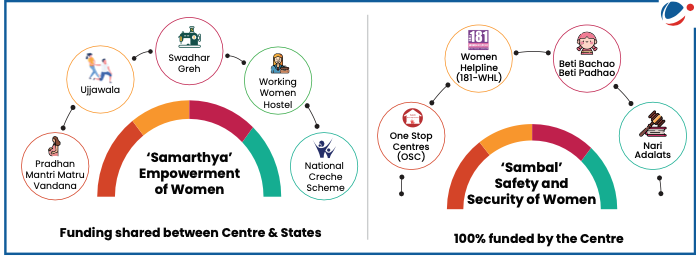
- WISE-KIRAN
Exacerbated by the COVID-19 pandemic, where women have been disproportionately affected by the socio-economic impacts of the pandemic
Prevention of sexual violence
- Technology solution
- Emergency Mobile Apps
- Smart Surveillance System : using AI to identify and respond
- Online reporting portal
- GPS tracking
- E.g. Uber app
- Social
- Community Policing
- Training in self defence
- Legal reforms
- Fast-Track Courts
- Education
- Comprehensive sex education : awareness about sexual rights and consent
Medical Termination of Pregnancy
Way forward
-
Education : Beti Bachao, Beti Padhao.
-
Economic Empowerment : SHGs like SEWA by ELA BHATT
-
Media Campaigns : # HeForShe.
-
Modernizing laws
- e.g. POCSO, UCC etc.
-
Training women in self Defence
- Narishakti NGO
-
Support Systems for victims
- E.g. TechSakhi Platform
-
Moral education
- E.g. RAMAMURTHY committee recommendation on imparting value education
-
Gender sensitization
- E.g. using gender neutral language in school textbooks
-
De stigmatization
- Through persuasion, conditioning, reward and punishment.
-
Role modelling
-
Using technology to break stereotypes
- aazadiSAT satellite launched by schoolgirls.
-
Empowering women entrepreneurship
- herStart - Women Startup initiative
- 70% MUDRA loans to women
- Standup India - 80% women
-
Financial inclusion
- Ladali Laxmi and Ladali Behna Yojna
-
Organizing women In SHG’s
- E.g. 12 million SHG’s 88% women
-
Digital inclusion
-
Redeploying and reemploying women in emerging jobs
- E.g. Artificial intelligence, Space
- E.g. 43% STEM graduates are women
-
Mid career reskilling policies
-
Promote unbiased hiring and promotional practices
-
Women’s basic income scheme
Conclusion
-
Article 39 makes it duty of state for Men and Women to have equal and adequate means of livelihood.
- Equal pay for equal work for men and women
-
Article 51A(e) to renounce practices derogatory to the dignity of women.
-
Article 42 provides for provisions of just and humane conditions of work and maternity relief.
-
You educate a man; you educate a man. You educate a women; you educate a generation.
Women issues
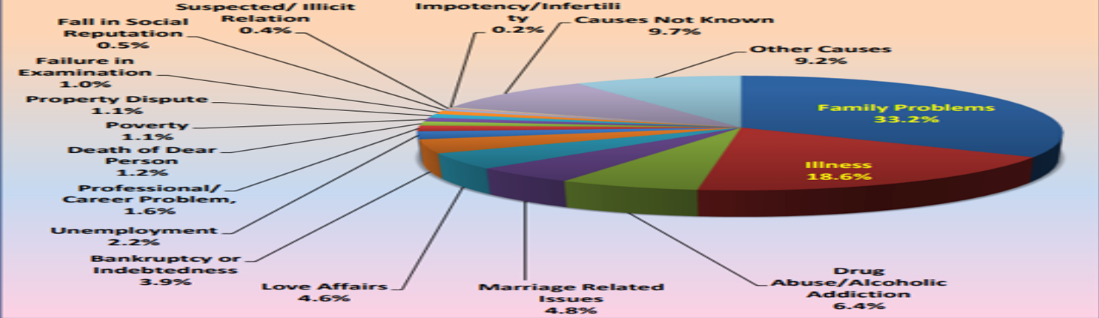
Suicides among young women
- Patriarchal norms create limitations on personal autonomy and career choices
- Honour killings
- Societal pressure to marry and the burden of dowry can create immense stress
- Domestic violence and abusive relationships with no support
- Substance abuse
- Health issues in general and mental health issues in particular like depression and anxiety
- Academic and career stress due to high expectations to perform well in competitive environment
- Cyberbullying and online harassment
- Sexual harassment
- Social isolation
- Unrealistic standards of beauty and success on social media can lead to feelings of inadequacy
- Way forward
- Empowering young women - education, skill development, job opportunities
- Challenging patriarchal norms through social awareness campaigns
- mental health awareness and support
- stringent measures against domestic violence and abuse
- building supportive social networks
Empowering Aspects of the Gig Economy
- Flexible Working environment
- Example: Platforms like UrbanClap allow women to offer services that suits their schedules
- Remote Work Opportunities
- Example: Freelance writing, graphic design, and virtual assistance work
- Financial Independence
- Skill Monetization : Example: Selling handmade crafts online or tutoring on YouTube
- Access for Rural Women :
- Proliferation of home-based businesses selling products on Amazon
- Entrepreneurship and Microfinance
- Example: proliferation of women entrepreneurs in rural areas and SHGs
Challenges in the Gig Economy
- Job Insecurity
- Absence of Employee Benefits : health insurance, maternity leave, PF
- Unregulated Work Environment creating problems of wage gap, exploitation
- Digital Divide : barrier for women with lower socio-economic backgrounds
- Limited upskilling opportunities
Measures to truly ameliorate women
- Strengthening Gender-Sensitive Laws
- Promoting Positive Media Portrayals
- Campaigns like “Beti Bachao, Beti Padhao”
- Encouraging Female Leadership in Media
- Supporting women journalists
- Inclusive Workplace Policies
- Supporting Women Entrepreneurs
- Community-Based Programs like SHGs
- Political Representation : reservation in PRIs and legislatures
Women’s Organization
Women’s organizations example
- Self Employed Women’s Association (SEWA)
- Kudumbashree initiative - Microfinancing
- Jay Ambe SHG in Rajasthan - Microfinancing
- JEEVIKA in Bihar
Types of women’s organizations (STAPLE)
Level of penetration
19th Century Social Reform Movements and Early Women’s Organisations –
- Agrarian Struggles and Revolt
- Participation in Freedom Struggle
Problems faced by women’s organizations
Is a larger vocal role possible and ways to achieve the same
Role of SHGs, Micro finance Institution
Population and Associated Issues
- Introduction
- As per World Development Report (WB), 64% of India’s Population bulge in working age group i.e. 15-59 years
- It opens a window of opportunity for realizing demographic dividend.
Indian’s median age
- 25, US, China - 40, Europe - 50
Population depends of
- Fertility
- As per NFHS-5
- India - 2.05
- MP - 2.0
- Bihar - 3.0
- Kerela - 1.8
- As per NFHS-5
- Mortality
- Migration
- Push Factor/Pull Factors (SPEC)
- 37% of Indian population are migrant of which 68% are women.
- Rural/Urban PnC
- Waves of migration
- First Wave - Colonial period - Indentured labourers - Mauritius, Caribbean islands, Fiji and South Africa - Girmit Act (Indian Emigration Act).
- Second wave - In search of economic opportunities - ASEAN, Africa etc.
- Third wave - Professionals - USA, Canada, UK, Australia, New Zealand and Germany.
Basic Demography of India
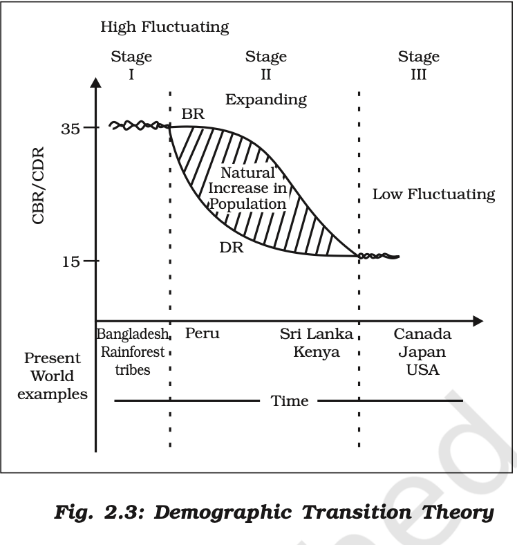
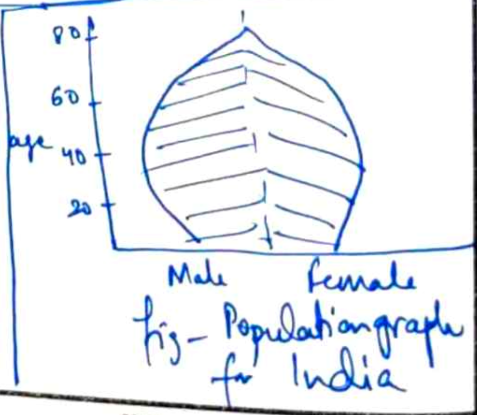
Census 2011
- Density - 382 persons/sq km
- Religion
- Hindu - 79.8%
- Muslims - 14.2 %
- Christians - 2.3%
- Sikhs - 1.7%
- Caste
- SC - 16.6%
- Tribal - 8.6%
- OBC - 52%
- Sex ratio
- India - 943 (W/1000M)
- Kerela - 1084
- MP - 931
- Age
- 25.69 percent - 0-14 year category
- 67.51 percent - 15-64 age group
- 8.6 percent > 65 years
Population Trends in India and their Implications
- There are four distinct phases of growth
- Phase I : 1901-1921 : Stagnant phase
- Phase II : 1921-1951 : Steady population growth
- Phase III : 1951-1981 : Population explosion
- Phase IV : 1981 till present : The growth rate high, has started slowing down gradually
- TFR < 2.1
- Declining child sex ratio lowest in 2011 census (914) since independence.
Causes and Effects of Over Population
- Source area
- Destination area
- On migrant
Challenges of Population Explosion
- Resources, Environment, Infrastructure, Housing, Unemployment, 1,2,3,4, Migrants, Displacement.
Changing Age Structure of Indian Population
Demographic Dividend: Boon or Bane for India
- Demographic dividend: is the economic growth potential due to increase in working age population.
- It depends on quality of workforce and Employment opportunities.
Population Aging in India
- 4-2-1 phenomenon (each single child is responsible for two parents and four grandparents)
India’s Population Policy & Initiatives
- 1952 : National Family planning program
- 1978: First National Population Policy - Implementation of child marriage restraint Act
- 2000: Second National Population Policy
Controlling population through women empowerment
- Increased educational level more likely lead to
- family planning, reproductive health
- Delayed marriages due to pursuing higher education and career opportunities will contribute to lower fertility rates
- Women employment reduce fertility rates
- Women prioritize career aspirations
- Greater autonomy in decision-making
- Help make informed choice about family size
- Access to healthcare - promote reproductive health and child care services reducing mortalities
- Empowered women more likely to use contraceptives
- Changing gender role with men sharing responsibilities in child care will promote balanced family planning
Main Objectives of Population Education
- Promote Responsible Reproductive Health : education about contraception, preventing unintended pregnancies and reducing spread of STDs.
- Family planning : making informed choices about family size, spacing of children and healthy sexual practices
- Improve the Quality of Life
- Promoting healthy practices : like proper nutrition, hygiene and childcare
- Gender Equality and Women’s Empowerment
Measures to deal with overpopulation
- Integrating into School Curriculum and teacher training
- Women’s Empowerment
- Public awareness campaigns
- Entrepreneurship Development
- Technology and Innovation
- Social Security and Welfare Programs
- Supportive Policies
- Partnerships with NGOs and international organizations
- Global Collaboration
- With international organisations and neighbourhood countries
Measures to deal with aging population
- Increasing the age of retirement
Conclusion
- Overall, A comprehensive approach that takes into account needs of women empowerment, health, education and well being of all communities.
Poverty and Developmental Issues
- Introduction
- According to NITI Aayog’s Discussion Paper ‘Multidimensional Poverty in India ’, 11..28% of Indians are reportedly multidimensionally poor.
Data
- 24.82 crore Indians escape Multidimensional Poverty in last 9 years.
- Steep decline in Poverty Headcount Ratio from 29.17% in 2013-14 to 11.28% in 2022-23.
Concept of Development and Poverty
- Poverty: The state of being extremely poor
Types of Poverty
- Absolute poverty (measured by poverty line)
- Relative poverty
- Urban poverty
- Rural poverty
- Intergenerational poverty
- Gender-based poverty
- Chronic poverty
- Hidden poverty (high cost of living)
Measurement of Poverty – Poverty Line
- Poverty line: the estimated minimum level of income needed to secure the necessities of life.
- Rangarajan committee
Causes of Poverty
- Agricultural issues
- Overdependence on Agriculture
- Land Fragmentation
- Socio-economic
- High Population Growth
- High Dependency Ratio
- Jobless Growth
- Skill mismatch
- Health and education
- Inadequate and poor quality education
- Limited access to healthcare services leads to loss of income and high out-of-pocket expenditure
- Malnutrition affects productivity
- Climate change
- Extreme Weather Events like cyclones destroy homes and displace poor people, pushing them back into poverty
- Erratic rainfall and draughts
- Heatwaves and urban flooding
- Lack of Social Security Nets : informal workers, migrant workers lacks benefits like pension and health insurance
- Urban Poverty due to rapid migration and proliferation of slums
Poverty as a Social Problem
- Social isolation
- Violence and crime
- NCRB Data - PSI Report
Socio-economic Spread of Poverty
- Income, minorities, geographical, gender, vulnerable groups, migrants, refugees etc.
Consequences of Poverty –
- Inequality
- Continuation of Vicious Cycle
- Who is worst affected by poverty?
Problem of Rising Urban Poverty
- Policy shifts from “Trickle Down” Economics to Inclusive or Pro-poor Development to Reduce Poverty
- Relation between Poverty Reduction and Development: Poverty-Inequality-Development Nexus
Poverty Alleviation Initiatives
- MGNREGA
- PM Rozgar Yojna (PMRY)
- National social assistance program
- National Rural Livelihood Mission (DAY-NRLM)
- Pradhan Mantri Garib Kalyan Ann Yojana (PMGKAY)
- Pradhan Mantri Awas Yojana
- NFSA
- Swachh Bharat Abhiyan
- Jan Dhan Yojana
- Ayushman Bharat
- Pradhan Mantri Jan Arogya Yojana
- Jal Jeevan Mission (JJM): Har Ghar Jal
- 13 Crore Rural Households Tap Connections
- PRADHAN MANTRI UJJWALA YOJANA (PMUY) 2.0
- 9.67 Crore active LPG Connections under PMUY.
Human development fail to keep pace with economic development
- Economic inequality
- Inadequate social infrastructure
- Healthcare system - India’s public health expenditure is only around 1.5% of GDP
- Education System - Quality and access to education remain problematic
- Caste and Gender Discrimination
- Urban-Rural Divide
- Digital inequality
- Unemployment and Underemployment
- Skills Mismatch
- Regional disparities
- Corruption and Inefficiency
- Environmental Degradation and pollution
- Climate Change
- High Population Growth
- Unplanned urbanization
- Example: Slum proliferation
Core strategies for development
- Data driven governance
- Real time monitoring
- Focus on key sectors -
- Health - primary healthcare services, reducing malnutrition, child and maternal health
- Education - quality of education, increase enrollment and retention rate, improve learning outcomes
- Skill development - vocational skills, digital literacy
- Agriculture and water resource management - irrigation, sustainable agriculture, water harvesting
- Basic infrastructure - all weather roads, electrification, affordable housing
- Participatory approach - Gram Sabha’s
- Tailored solutions
Way forward
- Promoting Inclusive Growth - creating job opportunities, skill development, healthcare and education for all.
- Supporting and empowering MSMEs - access to credit, training, tax breaks
- Investment in infrastructure - roads, irrigation, energy, digitalization
- Financial inclusion - access to affordable credit, financial services like bank accounts
- Agriculture - productivity and resilience
- Social security nets - pension schemes, maternity leaves
- Women empowerment
- Income support schemes - PM KISAN
- Efficient service delivery
- Transparency and accountability in governance
- Digital literacy and access
Conclusion
- Poverty is the worst form of violence – MAHATMA GANDHI
- A38 - mentions that state shall secure a social order for the promotion of welfare of the people and strive to minimise the inequalities between individuals and groups.
Urbanization, their problems and their remedies
- Introduction
- A McKinsey report on urbanisation quote a figure of $1.2 trillion will be required to meet the needs of urban infrastructure by 2030.
- out of the 50 most polluted cities in the world, 39 are in India.
Urbanisation Trends in India and Their Implications - Demographic and Social Dimensions.
- Urban population contributes 63% of India’s GDP. -> 75% by 2030
- Around 36% of India’s population is living in cities and by 2047 it will be more than 50%.
- By 2036, 650 Mn People, about 40% of Indian population will be living in cities.

Economic importance
- 60% GDP but 3% land
Current financing of urban infra
- CG 48% SG 24% City govt 15% PPP 3% Commercial debt 2%
Types of urbanization
- Over urbanization
- Sub-urbanization - Urban sprawl
Factors Driving Urbanisation
- Heterogeneity
- Anonymity
State of Service Delivery and Challenges posed by Urbanisation
Problems of Urban Areas - social/environmental/governance/financial/hazards/planning
- Spatial Segregation:
- Slum Proliferation : 30% of urban population
- Gentrification : Urban renewal projects displacing low-income residents
- Unaffordable Housing for poor
- Access to Services
- Healthcare Disparities
- Educational Inequity
- Public Utilities: Inequitable access to water, electricity, and sanitation services
- Social Exclusion : discrimination faced by lower castes and minorities
- Lack of Political Representation
- Over Migration
- Environmental
- Pollution
- Land use change
- Urban Hazards - floods, heatwaves, disease burden
- Water stress
- NITI Aayog: Approx. 21 cities will run out of groundwater
- Urban capital expenditure are highly dependent on government spendings (~private financing)
- Only 3% PPP
- Lack of investment
- India spends 100 global bench mark and $116 by china- Mckinsey
- Lack of government spending
- Combined expenditure of all urban bodies is 1% of GDP - NITI Aayog
- Pollution
- 14/15 most polluted cities in india
- Motorised transport alone is the cause for 60% of urban pollution
- Unplanned urbanization
- census 2011- 17% of urban population lives in slums
Positives of Urbanization
- Urban Amenities : cities offer better access to education, healthcare facilities, and economic opportunities compared to rural areas
Issue in Urban planning of India
- Limited space
- Financial constraints
- Climate change
- Integration with existing infrastructure
- Technical expertise
- Absence of Master Plans: urban sprawls and unplanned urbanization
- Lack of people’s involvement in decision-making process
Social Consequences of Urbanisation
Impact of Urbanisation in Rural Areas
Urban Planning and Role of Urban Local Bodies (ULBs)
Environmental implications of the reclamation of water bodies into urban land use
- Heat island effect
- Habitat destruction of aquatic and terrestrial species
- Urban flooding
- Water quality degradation
- Groundwater depletion
- Pollution
- Loss of recreational and cultural spaces
- Disruption of hydrological cycles
Urban flooding
- Causes
- Unplanned and rapid Urban Growth
- Led to encroachment of lakes and nalas (drains)
- Impervious Surfaces
- construction of roads, buildings, and pavements reduce natural absorption increasing runoff
- Inadequate Drainage Infrastructure that cannot handle high volume of water during rainfall
- Poor Maintenance leading to clogged drains
- Increasing intensity of rainfall due to climate change
- Loss of natural water bodies due to encroachment
- Deforestation and loss of green cover
- Unplanned and rapid Urban Growth
- Lasting remedial measures
- Comprehensive urban planning that integrate water management, green spaces and sustainable infrastructure
- Floodplain zoning : Strict enforcement of laws to prevent construction in floodplains and natural waterways.
- Upgrading and expanding drainage infrastructure
- Example: Installing larger diameter stormwater drains and separate sewer systems
- Ensuring regular cleaning and maintenance of drainage system
- Incentivizing rainwater harvesting systems across residential, commercial and industrial buildings
- Retrofitting infrastructure to withstand extreme rains
- Flood barriers, retention basins, underground storage tanks
- Rejuvenating and restoring wetlands, lakes, and ponds
- Promoting urban forestry and the green buildings
- rooftop gardens
- Public Awareness Campaigns about waste segregation, water harvesting
- Some immediate measure when water clogged
- Evacuating people from waterlogged areas to safe neighborhoods
- Using water pumps to remove stagnant water from streets and buildings
- Identify and clear blocked drains
- Disinfect contaminated water to prevent outbreak of disease
- Inter-Agency Coordination involving disaster management teams, municipal authorities, police, health and utility services
- Infrastructure repairs including damaged roads, potholes, and buildings.
Way Forward
- Planning and Infrastructure:
- Sustainable Urban Planning
- green spaces, walkable neighborhoods, and public transportation
- Public Transportation:
- Expand and improve network of buses, metros, trains, cycling
- Improved Infrastructure
- water supply, sanitation systems, waste management, and energy grids
- Atal Mission for Rejuvenation and Urban Transformation (AMRUT)
- AMRUT 2.0
- Sustainable Urban Planning
- Governance and Finance:
- Strong Local Governance
- 3Fs: finances, functions, and functionaries.
- Manishankar Iyar committee - devolution of powers to municipalities
- Property tax collection should be improved
- Public-Private Partnerships
- Land Management (because of limited space)
- Implementing and monitoring clear land use policies to prevent sprawls
- Smart cities mission
- Developing Municipal cadre and provide specific training
- Strong Local Governance
- Social Inclusion and Equity:
- Affordable Housing
- Pradhan Mantri Aawas Yojana (PMAY)
- Social Services
- Expanding access to health, education, and community centres
- Jal Jeewan Mission
- Swachh Bharat Abhiyan
- Slum Upgradation:
- Robust safety measures: Enhancing surveillance, gender-sensitive design
- . E.g., Kakodkar Committee report.
- Affordable Housing
- Environment and Sustainability:
- Climate-resilient infrastructure
- Renewable Energy
- Waste Management
- Urban forestry -
- Miyawaki method
- Sponge cities for rainwater harvesting and groundwater recharge
- Technology and Innovation:
- Smart City Initiatives : data-driven solutions in areas like traffic management, resource management, and public service delivery.
- Disaster Preparedness : early warning system
- Integrated flood warning system - IFLOWS-Mumbai
- National Urban Digital Mission
Government policies
- Smart Cities Mission
- Deen Dayal Antyodaya Yojana- Urban (National Urban Livelihoods Mission): DAY-NULM
- Swachh Bharat Mission Urban 2.0 (SBM-Urban 2.0)
- Pradhan Mantri Aways Yojana-Urban (PMAY-U)
- Urban Infrastructure Development Fund (UIDF) with the outlay of ₹10,000 crore.
Conclusion
- K.C. Siva Ramakrishnan committee recommended urban growth engines for social justice and inclusive growth.
Effects of Globalization on Indian society
- Introduction
- Globalization: refers to the increasing interconnectedness and interdependence of the world’s economies, cultures, and populations, driven by cross-border trade, investment, and the exchange of ideas and information.
Understanding Globalisation – Its Different Dimensions
- Economic - Trade, FDI, Movement of Capital and Labour(Remittances), GDP growth
- Cultural - Exchange of music, art, literature, cultural practices, values and ideas through the media and popular culture.
- E.g., cosmopolitan culture, decriminalization of homosexuality etc.
- Political - UN, WTO, MNC’s, NGO’s, Foreign Governments.
- Environmental - climate change and the loss of biodiversity
- Social - migration, transnational communities, internet and social media, women empowerment
- Technology - growth of India’s IT sector, global satellite launches, space economy
- E.g., NISAR mission, Artemis Accords
- International cooperation - Vaccine diplomacy during covid-19
Globalisation & Culture
- Cultural Homogenization
- McDonaldization of food habits
- Obsession with English language
- Globalization of Popular Culture
- Hollywood films, Netflix series, and K-pop (Korean pop culture)
- Cultural Hybridization : blending of local and global
- Jeans and kurta
- Hinglish
- pizza burger, India chinese!
- Bollywood hip-hop
- Erosion of Traditional Values:
- Global Awareness and Solidarity on issues like climate change, human rights, and social justice
- Fridays for Future, # MeToo
- Social and political fragmentation within societies
- Brexit, Make America Great Again campaign
- Revival of local culture
Factors Driving Globalisation
Globalisation & India
Impact of Globalisation on India - Socio-cultural, economic, on women, agrarian sector etc.
- On Family
- Positive impact
- Gender equality - leading to more equitable gender roles.
- Connections with family living apart through internet and social media
- Better living standards
- Higher aspirations for education and employment
- Negative impact
- Nuclearization of Families
- Value Shift towards materialism and individualism
- Increasing work pressures have reduced family time
- Childcare and elderly care issues
- Generational gap in expectations and values
- Brain Drain
- Positive impact
Young students/professionals migrating to foreign land
Instant Gratification
- Information Abundance
- Virtual Relationships
Cryptocurrency
- Cryptocurrency: Is a digital currency based on cryptography and blockchain technology for security. It is primarily decentralized in nature.
- Decentralized finance (DeFi) - Transactions are recorded on public ledger.
- Positive Impact
- Argued that would lead to financial inclusion
- Negative Impact
- Regulation
- High degree of risk and volatility
- Cyber crime and money laundering
- Other issues
- Cryptocurrency exchange (FTX, Vauld)
- RBI - CBDC
Does Globalisation cause Poverty and inequality
- Economic Inequality: Oxfam
- Rural-Urban Divide :
- Non-inclusive growth: 34% lives in slum(WB)
- Class divide:
- E.g. domination of English
- 220 languages in India are on the verge of extinction (UNESCO)
Relationship between globalization and new technology in a world of scarce resources
-
Positive aspects
- IT and services sector growth
- Vibrant startup ecosystem
- Example: Startups in fintech, edtech, and healthtech
- Improved resource management : precision agriculture and micro irrigation can help improving agricultural productivity
- Industrial Automation : can optimize resource use reducing waste material
- E.g. 3D printing
- Renewable energy development can reduce India’s energy dependence
- Example: Adoption of solar and wind energy
- Water Conservation
- drip irrigation and rainwater harvesting can prevent draughts
- Digital platforms can provide access to global markets and information.
-
Negative aspects
- Environmental degradation : unsustainable mining and resource extraction
- Overextraction of resources : lithium and rare earths for advanced tech
- Rising inequalities
- Digital divide - access and literacy
- Example: Internet penetration in rural India is considerably lower than in urban area
-
Way forward
- Inclusive growth
- Sustainable development
- Social equity
New middle class
- Economic
- Increased Disposable Income
- Dual-Income Households
- Education, Health, Employment
- Higher Education Levels
- Employment in Formal Sector
- Greater Focus on Health : gyms membership, yoga classes, health check-ups, healthy eating
- Lifestyle
- Consumerism : lifestyle products, electronics, fashion, and dining out.
- High demand for branded clothing, smartphones, gadgets
- Strong desire for Home Ownership
- Personal Vehicles
- Example: Families owning multiple vehicles
- Consumerism : lifestyle products, electronics, fashion, and dining out.
- Social
- Exposure to Global Culture : through media, internet, and travel, leading to cosmopolitan lifestyle
- dining habits, fashion, and entertainment preferences
- Exposure to Global Culture : through media, internet, and travel, leading to cosmopolitan lifestyle
- Technological
- Digital Savvy : high digital literacy, greater use of smartphones, the internet, and social media.
- Online Shopping
- Strong focus on career growth and professional development
Globalization and women
- Positive (only which I can’t recall)
- Changing traditional gender roles
- Increased awareness of rights
- Negative
- Work life conflicts : women have to bear brunt of dual responsibilities
- Human trafficking
- Lifestyle related health risks
Globalization and local identity
-
Losing local identity
- Western influence : dominance of Western media, fashion trends, entertainment, consumer goods and multinational corporations
- E.g., cutting cakes on birthday
- Consumerism : emphasis on global brands and standardized products
- Fast Food and Chain Stores
- Macdonaldization and Denimisation of food and clothing
- English Language Dominance
- Global competition threatening local artisans and small-scale industries
- Example: Handloom weavers competing with MNC
- Rural-urban divide due to globalization can lead to cultural disconnect
- Erosion of Traditional Values : due to rise in individualism and consumerism
- Social media platforms and the internet connecting people across world
- Western influence : dominance of Western media, fashion trends, entertainment, consumer goods and multinational corporations
-
Arguments Against Losing Local Identity
- Revival of local cultures : traditional arts and crafts appealing to global audience
- Example: The global market for Indian textiles, handicrafts, and traditional music
- Local Food and Fashion : growing interest in locally sourced food, traditional clothing, and handicrafts
- Rising nationalism and cultural assertion
- Cultural pride : Increased global visibility of Indian culture enhancing cultural pride
- E.g. International Yoga Day
- E.g., celebration of Diwali at 10 downing street
- Fusion cuisines, music, fashion
- Local Goes Global: empowering local artists, musicians and businesses to reach to global markets
- Example: Indian cuisine, yoga, and Bollywood films gaining popularity worldwide
- Namaste salutation gaining prominence
- Digital Preservation and promotion through online platforms
- Example: Online archives, digital museum, social media
- Racial acceptability
- E.g. Rishi Sunak, Kamala Harris getting to political helm
- Revival of local cultures : traditional arts and crafts appealing to global audience
-
The Reality: A Mix of Both
-
What Can Be Done?
- Support Local Businesses:
- E.g. Make in India
- Learn about Local Cultures : engage with local traditions, languages, and art forms.
- Support Local Artists and Craftspeople
- Cultural exchange
- Travel with Purpose : to explore local cultures and supporting local communities
- Support Local Businesses:
Explore and evaluate the impact of ‘Work From Home’ on family relationships
Liberalization
Socio-economic implications arising out of services driven growth
-
Positive implication
- Economic Growth
- Job Creation
- Major Contribution to GDP
- Entrepreneurship and Startups
- Urban Development
- Infrastructure Improvement : better roads, public transport, and utilities.
- Real Estate Growth
- Educational Advancements
- Growth of educational institutions
- Greater emphasis on skill development
- Social
- Increased Incomes improved standard of living.
- upward social mobility for lower castes
- Women empowerment
- Development of social infra - schools, hospitals, community centers
- Economic Growth
-
Negative implications
- Unplanned Urbanization
- Socio-Economic Inequality
- Lifestyle Changes : more consumerist lifestyle
- Environmental degradation
- Pollution and Waste
Social Empowerment
Which are the Socially Disadvantaged Groups?
Meaning and concept of social empowerment
- Empowerment: The process of becoming stronger and more confident, especially in controlling one’s life and claiming one’s rights.
Dimensions of Social Empowerment
Why do we need social empowerment?
Government Initiatives to Aide Social Empowerment
Empowerment in reality and India’s experience
Reservation (EWS Judgement)
-
For reservation
- Substantive equality of opportunity
- Universal representation
- Upward mobility in existing caste system
- Reducing gap and historical inequalities
- Prevent social conflict and promote national cohesion
- Breaking stereotypes
- Women empowerment
-
Against reservation
- Merit gets compromised
- Class within caste
- Opportunities restricted to few
- Reverse discrimination (50% reservation ceiling breached)
- Violence against people from reserved categories
- Further consolidate caste identities
- Reinforce stereotypes and aggravates prejudices
-
Conclusion
- Article 38 directs the state to secure social order and promote welfare of the people
Communalism
- Communalism: refers to the tendency of people to identify with and actively support their own community(religious, ethnic, etc) over the interest of society as a whole.
Communalism – Its Characteristics
- Assimilationist - melting pot
- Welfarist - socio economic upliftment
- Retreatism - forbids political participation, focus on unity
- Retaliatory - hostility, communal violence (Gujarat riots)
- Separatist - demand for autonomy based on religion under Indian union (Kashmir)
- Secessionist - nation based on religion (Khalistan)
Communalism in India in the Past
- Banquo’s Ghost - The partition led to mass migration and communal violence.
Power struggle
- communal rhetoric to mobilize support and gain power, fuelling communal tensions. AIMIM, Hindu Mahasabha and Shiv Sena
- Electoral Politics :divisive rhetoric to consolidate vote banks
- Babri Masjid Demolition (1992)
- Struggle for dominance and independence
- Partition of India
Relative deprivation
- Upper caste feel deprived of reservation, Muslims - lack of representation (Sacchar Committee 2.9% of Muslims are IAS and only 2.2% in Judiciary)
- Unequal development between communities
- Assam movement due to perceived economic advantages of Bengalis over Assamese
- Scarce employment opportunities and economic hardship
- Son of Soil Movements in Maharashtra
- Social marginalization and exclusion from mainstream society may develop communal tensions
- Struggle for recognition and respect for one’s identity
- Example: The rise of Tamil nationalism in Sri Lanka
Causes of Communalism
- Intolerance
- Historical background
- Lack of cultural integration (cultural lag) -> Stereotype formation -> Prejudice attitude -> Violent manifestation -> Ghettoization
Consequences of Communalism
- Loss of lives, property damage, displacement of communities, trauma, fear, and mistrust among different religious groups.
Impact of LPG Reforms on Communalism
- Politicization of religious identities
- Example: Communal rhetoric during elections
- Increase in communal tensions due to misinformation and hate speech over social media
- Intensified competition for resource and opportunities
- Widened economic disparities between different communities
- Rise of social movement for and against communal rhetoric
- Increasing influence of pressure groups on government policies
Way forward | Measures to Control & Eradicate Communalism
- Multiculturalism and secularism
- Inclusive growth -
- Addressing economic, political and social factors
- Promoting dialogue and understanding
- Combating hate speech and propaganda
- Building effective institutions for communal harmony
- Secularism as an Antidote to Communalism
- Pluralism
- E.g. Amar Akbar Anthony
- Conclusion
- Communalism is political policy to exploit ethnic differences for advantage of few at the cost of society at large.
- 51A(i) to safeguard public property and to abjure violence;
Regionalism
- Introduction
- Regionalism: Promotion of the interests of a particular geographic region or group over those of the broader community.
Concept of Region & Regionalism
- Region -
- HDI
- Homogeneity
- Distinct
- Identity
Reasons for regionalism
- Cultural -
- Language as Identity
- Separate state movement - Andhra 1954
- Protection of cultural heritage
- E.g. protest against homogenization and Hindi in Tamil Nadu
- E.g. Northeast
- Cultural symbols, festivals and rituals foster regional pride and identity
- Example : Durga Puja in West Bengal, Pongal in Tamil Nad
- Language as Identity
- Economic grievances - to fair share of resources
- Example: The demand for statehood by the Jharkhand
- E.g. Son of Soil movements by Marathas and Jats
- Developmental Aspirations
- Example: Vidharba in Maharashtra
- Political Mobilization by regional parties to assert regional interests
- Example: Shiv Sena in Maharashtra and DMK in Tamil Nadu
- Demands for regional autonomy (Punjab)
- E.g. Northeast states
- Challenges due to fiscal federalism
- Historical legacies reinforcing regional identities
- E.g. Punjab Partition and demands for Khalistan
- Inter state disputes
- Ethnic
- Bodoland movement in Assam
- International diplomacy (Tamils - TN, Teesta - WB)
Consequences of Regionalism
- Threat to national unity and fraternity
- Example : Khalistan Movement in Punjab
- Inter-Regional Conflicts
- Belgaum
- River water disputes
- Separatism and insurgency(NE)
- Violence against migrants
- Example: Violence against North Eastern students and workers
- Political
- Fragmentation of politics : instable coalition government
- Populist policies can threaten fiscal health
- Cooperative federalism to confrontational federalism
- Example: The Andhra Pradesh-Telangana water dispute
- Economic disparities
- Uneven resource allocation neglecting national priorities
- E.g. state like Bihar and Odisha lag behind.
- Uneven resource allocation neglecting national priorities
- Social tensions
- Ethnic and cultural conflicts
- E.g. Manipur
- Regionalism can marginalize minority communities within regions
- Example: The Assamese nationalism movement targeting Bengali-speaking Muslims
- Parochialism : preventing development of broader perspective
- Limit cross cultural understanding
- Ethnic and cultural conflicts
- Administrative challenges
- Inefficient policies : regional governments prioritize local over national policies
- Fragmentation of governance structures
- Example: Differing state-level policies on industrial regulation, education, and health care
Concept of ‘Sons of Soil’
Federalism & Regionalism
Role of Regional Parties
Measures to Contain Regionalism
- Promoting equitable economic development
- Strengthening federalism
- Decentralization of Power
- Example: Strengthening Panchayati Raj institutions and urban local bodies
- Inter-State Councils
- Decentralization of Power
- Inclusive Governance : representation and participation of all regions in decision-making bodies
- National Integration Campaigns
- Example: The “Ek Bharat Shreshtha Bharat” initiative
- Cultural Exchange Programs
- Kashi-Tamil Sangamam
- Multilingual Education
- Improving Connectivity
- Digital Inclusion
Regionalism in the International Sphere
Reorganization of states
- Favour
- Economic Survey 2016-17 stated that smaller states in India trade more than the rest.
- New states are growing faster than the old states
- Against
- Internal displacement
- Small states do not generate enough revenue for the state
- Spending in administrative expenses
Conclusion
-
Article 51A(e) - To promote harmony and the spirit of common brotherhood
-
Unity, Integrity and fraternity of nation as espoused in preamble.
-
Healthy reconciliation between regionalism and nationalism.
Secularism
- Introduction
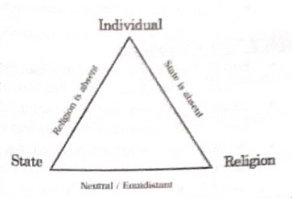
- Secularism: is a contested concept. For west it means absence of religion from public sphere, but for India it means equal respect and celebration for all religion.
- Article 25-28
| Western | India |
|---|---|
| Influenced by The Renaissance - Machiavelli and Hobbes | Derived from long tradition of tolerance and peaceful coexistence from centuries |
| Strict separation of state and religion | State respect and promote all religion equally |
| Policy of non interference | State can interfere in religion (principled distance) E.g. abolition of triple talaq E.g. essential religious practice doctrine |
| No community based rights | Individual and community rights |
| No state support to any religion | - Positive Secularism: (“Sarva Dharma Sama Bhava”) - encourages interfaith dialogue - promotes mutual understanding - celebrates the diversity |
| Melting pot | - Salad Bowl - Syncretic Traditions - Salad Bowl - Interfaith Festivals: - Sufi Shrines - revered by both Muslims and Hindus, serve as powerful symbols of inter-faith harmony |
| Religion confined to houses | Public display of religion |
Nature & Practice of Secularism in India
- Based on Idea of equal respect and celebration of all religion (not on tolerance)
- Based on integration(salad bowl) rather then assimilation(melting pot)
- Based on Pluralism and Multiculturalism
Keywords for examples of Indian Secularism
- Constitutional provisions - 25,26,27,28 - equal respect for all
- Articles 29 and 30 - pluralism
- Ganga-Jamuna Tehzeeb
- Din-i-Ilahi of Akbar
- The Bhakti and Sufi movement
- Interfaith dialogues
- Diwali and Eid being celebrated together
- Idea of “unity in diversity promoted by JL Nehru
- IIT, IIM, NIT - Cultural assimilation
- Growing interfaith marriages
- National holiday on Diwali, Christmas, Eid
Challenges faced by Secularism in India
- Minority appeasement
- E.g. Muslim personal law
- Legitimize vote bank politics
- Religious extremism
- Feeling of discrimination in majority
- Ghettoization of minorities
- Illiberal Cultural practices
- Triple talaq and polygamy
- Devadasi
- Sabarimala
- Jallikattu issue
- Food and clothing - Beef , Burkha
- Tribal practices
Challenges to culture by secularism
- Intervention in Religious Affairs is seen against religious freedom
- Sabarimala Temple case
- Uniform civil code could undermine cultural autonomy
- Tribal cultures
- Secularism in Education : some believe leads to neglect of moral and ethical education
- Restriction on public display of religion seen as infringement on expression
- E.g. Ban on Burkha in educational institution
- E.g. restriction on loudspeakers
- Legal Reforms seen in contrast with religious beliefs
- decriminalization of homosexuality (Section 377)
- Politicization of Secularism to gain votes
Challenges faced by secularism worldwide
- E.g. France - Laicite is not suitable for multi-religious societies
- Recent rioting in France post Nahel M. killing
Measures to Make India Truly Secular
- Interfaith dialogue : for trust and confidence building
- Inclusive policies promoting social justice and equality
- Balancing individual and community rights
- Develop the scientific temper, humanism and the spirit of inquiry and reform (51A(h))
- Fostering tolerance and acceptance
Conclusion
-
सर्व धर्म संभव, वसुधेव कुटुंबकम्
-
Article 51A(e) - to promote harmony and the spirit of common brotherhood amongst all the people of India transcending religious, linguistic and regional or sectional diversities.
-
Secularism is a political necessity for a diverse society - MICHAEL SANDEL.
-
India’s secularism is based on multiculturalism that recognises individuality of every religion.
Uniform Civil Code
- Introduction -
- Article 44 - The State shall endeavour to secure for the citizens a uniform civil code throughout the territory of India.
Matters concerned
- Marriage, divorce, Inheritance, adoption, guardianship
For UCC
- Gender Justice : equal rights to women
- SC - Shah Bano case - in favor UCC
- Equality - same law apply to all citizens irrespective of religious beliefs.
- National integration - promote unity and sense of common identity
- Reduce arbitrary interpretation and legal burden
- Better adjudication of civil matters
- Progressive law
- Would promote scientific temperament
- RAJKUMARI AMRIT KAUR and HANSA MEHTA members of constituent assembly fought vehemently for UCC
Against UCC
- Protection of Minority Rights -
- Article 25, Article 29
- Undermine Cultural Diversity:
- Tribals have their own customary traditions
- Can aggravate religious conflicts
- Infringement on religious freedom
- Practical challenges : diversity in India
Implementation Challenges: -
- Lack of consensus
- Lack of Blueprint
- Ambedkar - purely voluntary
Special Marriage Act, 1954
Way forward
- Inter faith council to debate and find common ground
- Piecemeal approach should be adopted - Reform personal laws of different religions.
- Codification of laws are not necessarily guarantee of justice, socio-cultural changes are required at it’s base.
Conclusion -
-
As per 21st law commission - ‘UCC at this point is neither necessary nor required’ but agreed on having certain uniform laws pertaining to marriage, divorce.
-
Gender equality is quintessential feature of constitution, ways and means can differ, not the goals.