Security
Security is about protection from harm or threats.
Vocab
Confidentiality Grey zone operations Hybrid Warfare Risk insurance Smart Grid Weaponization of everything
Linkages between development and spread of extremism
Development
-> Infrastructure, Improvement in living standards.
-> Displacement, Environment
Extremism
Introduction
Naxalism is a form of armed insurgency against the State motivated by leftist/Maoist ideologies.
Extremism is a ideology of promoting extreme political, social or religious motives, often by violent means.
Where
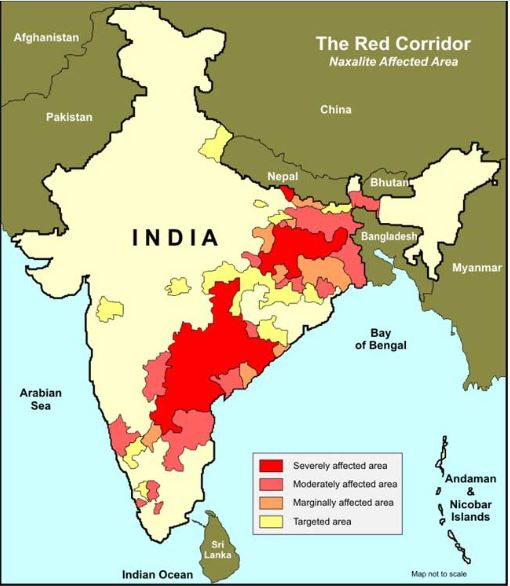
Severely affected - CH, JH, BR, OD
Partially affected - WB, AP, TL, MH
Naxalite-Maoist insurgency in Chhattisgarh
Reasons
Economic
Unemployment, poverty, distress migration
Land related issues - Landlessness , Exploitative landlords
Deprivation of traditional rights over forest produce
Social
lack of access to basic service
Displacement due to mining and industrial projects
Marginalization : Denial of access to public facilities, untouchability
Perceived tribal cultures and identities leading to alienation
Forest Management and Livelihood of Tribals
Developmental
Poor infrastructure, limited access to education, healthcare, and employment opportunities.
Dam construction - 40% people displaced after independence are tribals.
Forced evictions without compensation and rehabilitation
Governance
Corruption, and inadequate implementation of government schemes.
lack of political representation
Lack of essential pubic services, lack of rule of law
Poor-implementation of constitutional safeguards
Article 244 - Tribes Advisory Councils (TAC)
Insufficient security presence
Maoist propaganda and radicalization
Emerging issues
Urban Expansion : for recruitment, fundraising, and terror attacks.
Shifting Tactics : using technologies like Cryptocurrencies; internet; AI in operations
Revolutionary Strategy
Organization, consolidation and preservation in difficult and isolated terrains
Progressive expansion
Destruction, Guerrilla warfare and Armed Struggle.
Destroy infrastructure, roads, telecom networks, keep population isolated form mainstream.
Propaganda and disinformation
Measures | Way forward
Good governance
Democratic decentralization : Effective implementation Panchayati Raj Extension to Scheduled Areas (PESA)
Inclusive Development Program : focusing on healthcare, education, infrastructure, employment opportunities
Recognition of forest rights
DBT transfers
Social welfare policies
Vanbandhu Kalyan Yojana etc.
Bridging trust deficit - Rule of law, Prevent illegal police actions
Inclusive growth programs
Aspirational Blocks Programme
NRLM; MGNREGA
Economic development
Livelihood generation; infrastructure development; vocational training
Proper implementation of FRA
Security related measures
Special Anti-Naxal Forces
E.g. GREYHOUND in Andhra Pradesh.
Commando Battalion for Resolute Action (COBRA) forces
Strengthen Intelligence
Modernize equipment - Drones
Humane approach
Reasonable, necessary and proportional application of AFSPA
Community policing
Joint operations between CAPF and state police
Training and capacity building
Jungle Warfare School (CIJWS) in Mizoram.
Civil administration
Trust-Building and community engagement
Organizing Jan Sunwais (public hearings)
Effective delivery of government schemes
Capacity-building programs for PRI members
Media Action Plan - to counter Naxal propaganda
Surrender and Rehabilitation Policy.
Social
Eklavya Schools
Chhattisgarh Government’s Chulo Asman program
Tribal youth exchange programme
Economic
Skill development
Pradhan Mantri Kaushal Vikas Yojana (PMKVY)
FRA, 2006 - Ensure rights over minor forest produce.
Rehabilitation and Resettlement Policy of 2007.
Land reforms and titling
Infrastructure
E.g. Pradhan Mantri Gram Sadak Yojana.
Development related measures
Road Connectivity development
Electrification and Telecommunication:
Special Central Assistance. (SCA)
Modernization and upgradation (MPF Scheme)
District Mineral Development Fund - for tribal area development
LWE mobile tower project
Cooperation with neighboring countries
Operation Sampriti - Indo-Bangla anti terror mission
Operation all clear - Indo- Bhutan anti insurgent mission
Security Related Expenditure (SRE) Scheme
Conclusion
Security Challenges & their Management in Border Areas
Introduction
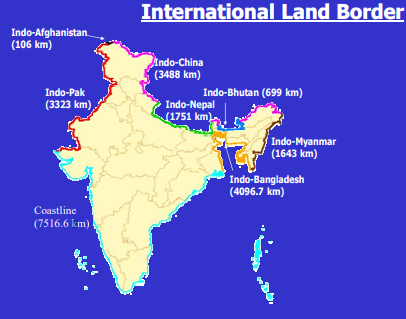
India has over 15000 km of land and a coastline of over 7500 kms.
Effective border management becomes crucial for sovereignty and territorial integrity of the nation.
Factors responsible for issue
Historical Factors - Colonial past
Geographical Factors - Terrain, Topography, Connectivity
Socio-economic Factors - Infrastructure, Unemployment
The Ethnic Conflicts - diversity, scarce resources
Lack of devolution of autonomy - Political aspirations of various ethnic groups
Culture of Violence - organized crime
Psychological Isolation - integration, awareness, media
Illegal Immigration - Threat to Cultural Identities
External Factors - China
Security challenges
Territorial Disputes: with China, Pakistan and Nepal lead to occasional standoffs and tensions
Transnational Crimes like smuggling, human trafficking, money laundering
Insurgency and cross border terrorism
Maritime security : piracy, illegal fishing
Porous Borders making patrolling difficult
Management
Diplomacy and dialogue
E.g. India-Bangladesh peaceful resolution
Strengthening border infrastructure
Socioeconomic development in border areas
Intelligence gathering and sharing
Counter-terrorism operations
Steps required to be taken to deny local support to militants
Increase the presence of security forces
Identify and neutralize militant sympathizers
Village Defence Committees (VDCs)
Infrastructure development to boost economy
Border Area Development Programme (BADP)
Educational and vocational training facilities to empower youth
Himayat and Udaan initiatives in J&K
Project Sadhbhavana
Improve access to healthcare
Community policing to develop trust with locals
Creating favorable perception among locals
Democratic decentralization and participatory governance
Respect and promote local customs, traditions, and language
Media campaigns to counter extremist propaganda and share positive stories
Legal Support and access to Justice
Setting up Lok Adalats and ADR mechanisms
Provide essential services like clean drinking water, electricity, and sanitation
Encourage sports and recreational activities to engage youth positively.
Support local NGOs and community groups working for peace and community development
Promoting cultural exchanges and social integration
sports tournaments and youth exchange programs
Government Initiatives
Border Area Development Programme
Vibrant Villages Programme (VVP) - infrastructure in villages along India’s border with China
Border district coordination committees
Community engagement
Village Defence guards(VDG)
Measures
Enhance surveillance, fencing and patrolling
Israeli-made SMADAR radar systems deployed along the Punjab border to detect low-flying drones.
Integrated border management
Comprehensive Integrated Border Management System (CIBMS)
Border Infrastructure and Management (BIM) Scheme
Detection and surveillance
Deploying radar systems
Electronic Surveillance
Legislative and legal framework
Strengthening border security
Laser fencing, Barbed wire fencing (MADHUKAR GUPTA Committee)
Smart Fencing of borders
Thermal imaging in difficult terrain
Advanced technology - GPS, Drones, AI into ISR systems
Inter agency coordination
Single coordination nodal agency
Enhance combat capability (SHEKATKAR Committee)
Development of integrated check posts
E.g. Biratnagar - Nepal
E.g. Sutarkandi - Bangladesh
Community engagement and reporting mechanism
Village volunteer force (VVF)
International Cooperation
E.g. settling border disputes
E.g. Operation Sunrise with Myanmar
training and capacity building of security personnel’s
Thus, border management is not just fencing our border, but transforming them into frontiers of development.
Role of Non-State Actors
Introduction
Non state actors are new frontiers of war in fourth generation warfare, says NSA AJIT DOVAL. They include NGO’s, MNC’s, Terrorist, Religious groups, etc.
Challenges and Threats
Organized Crime Terrorism - LASHKAR-E-TAIBA (LeT), JAISH-E-MOHAMMED (JeM)
Insurgency - Northeast (Nagaland), Naxal areas etc.
Cyber threats
Funding Separatism - J&K
Radicalization and Propaganda
Maritime Security Threat
Somali pirates and Houthi rebels disrupting shipping lanes
Measures
Intelligence Sharing and Cooperation
E.g. - INTERPOL, FIVE EYES ALLIANCE
Counterterrorism Measures
Inter agencies coordination
Border Management (MADHUKAR GUPTA committee)
Strengthening Cybersecurity
Counter-Insurgency Operations:
Operation All Out in Jammu and Kashmir
Counter-Radicalization Initiatives:
‘Operation Sulaimani’ in Kerala
Conclusion
Neutralizing non-state actors is essential for promoting safety, security and prosperity of the nation.
Role of External State Actors
Introduction Challenges
Pakistan - J&K
State sponsored terrorism
Support to LASHKAR-E-TAIBA and JAISH-E-MOHAMMED
Increased activities in Rajouri and Poonch
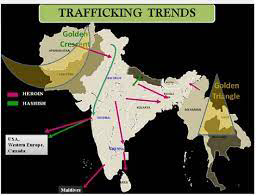
Drug trafficking, Arms trafficking - GOLDEN CRESCENT
Counterfeit Indian currency notes
Espionage
Cross-Border Shelling in violation of ceasefire
Afghanistan
China - NE
Border standoff
Cyber attacks
AIIMS ransomware and Mumbai power grid attacks attributed to China
Covertly support insurgency in NE
Economic - Dumping cheap chinese goods
Hydro diplomacy - Building dams over Tsangpo
Myanmar-
Insurgency : ULFA, NSCN active in Northeast
GOLDEN TRIANGLE - smuggling of arms, drugs, timber and contraband goods
Rohingyas
Free movement regime
Sri Lanka
Fisherman
Spillover of Tamil ethnic issue
Nepal
Naxalism, Insurgency
Counterfeit Indian currency notes
Organized crime
Bangladesh
Illegal immigration (> 1.9 Million out of NRC)
Insurgency in Assam, Tripura
Smuggling of animals and endangered species
Measures Conclusion
Recommendations of MADHUKAR GUPTA and SHEKATKAR committee like using technology and integration of security forces should be considered.
North-East
Way forward -
Proportionate use of force
Suspension of operation agreements (SoO)
Memorandum of settlement agreements (MoS)
Scheme of surrender-cum-rehabilitation of militants in NE
Free movement regime
Vibrant Villages Programme
For villages along northern and north eastern borders
essential infrastructure and the creation of livelihood opportunities
promotion of social entrepreneurship, youth and women empowerment etc.
Actors -
NATIONAL SOCIALIST COUNCIL OF NAGALAND
UNITED LIBERATION FRONT OF ASSAM
NATIONAL LIBERATION FRONT OF TWIPRA
Kashmir issue
External state actor
Internal state actor
Sense of alienation, marginalized (SPE), humanitarian abuses
Over ground workers
Provide logistical support : safe house, transport, food and communication channels
Financial support through raising funds by extortion, donation or contribution
Collect information about security forces, potential targets and recruitable individuals
Persuade vulnerable individuals to join insurgency
Spread propaganda and create support base for extremist ideologies
Stone-pelting, mob-violence, radicalization, recruitment of militants.
Measures -
Counter- terror operation
Intelligence based string operations
Psychological and social rehabilitation
Empower agency of social control - community based
Government schemes -
UDAAN Scheme - skill development for youth, travel, training and transit to work.
Himayat mission - generate sustainable livelihoods
Surrender and rehabilitation policy
Positives after Abrogation of A370 -
RTI,2005, RPA,1951, POCSO.
Good governance - social security measures
Infrastructure development
Way forward - 4D
Dialogue
Demilitarization
Devolution of powers - local self government
Development
Maritime border
Introduction
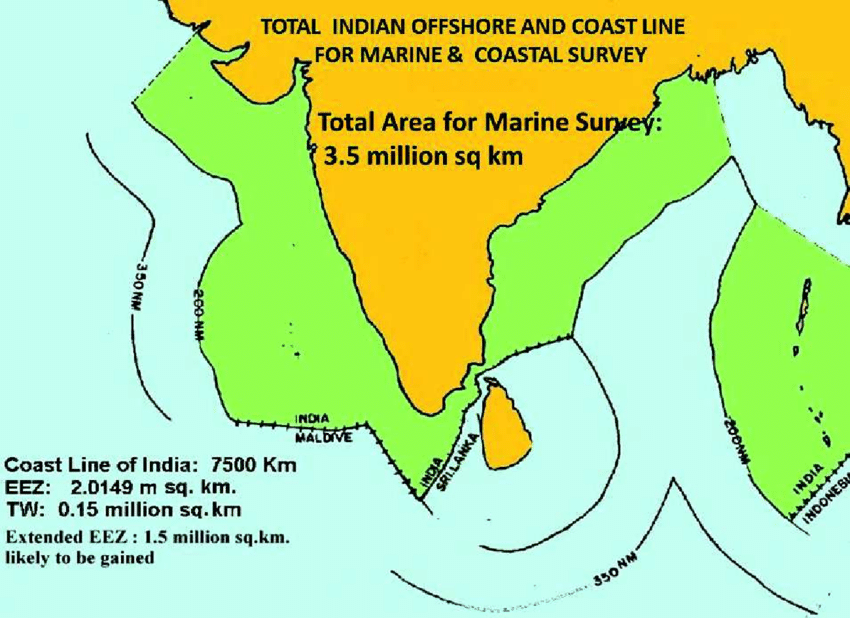
Owing to 7500 km long maritime border, Maritime security It imperative for India’s national interest.
India’s long coastline of 7,516 km and Exclusive Economic Zone (EEZ) of approximately 2 million square km make maritime security a critical concern.
Maritime borders
Significance
Economic
90% of India’s international trade by volume and 70% by value occurs through sea routes
National security
26/11 terrorist attack in Mumbai using the sea route.
Protection of vital infrastructure
Major ports, nuclear power facilities (Tarapur, Kalpakkam)
Disaster response
2004 Indian Ocean tsunami.
Environmental protection
illegal fishing, smuggling, and hazardous waste dumping
Maritime Security Challenges
Piracy;
off the coast of Somalia affecting commercial shipping
Houthi rebels attacking ships
smuggling;
Seizure of heroin worth millions off the Gujarat coast.
illegal fishing;
Frequent incursions by Sri Lankan fishing boats
terrorism;
Environmental Threats:
Oil spills, marine pollution, cyclones
Cyberattacks on maritime infrastructure including ports and shipping companies
Vulnerable areas close to Horn of Africa, Strait of Malacca
Governance, social and economic issues in coastal states
Complex jurisdictional issues
Territorial disputes
E.g. Sir. Creek with Pak
E.g. Kachchatheevu island
China’s Maritime Expansion
Measures to strengthen maritime security | Government Steps
Organisational
Indian Navy Modernization:
Induction of INS VIKRANT and MQ-9B drones
Coast Guard Expansion
new offshore patrol vessels (OPVs) and interceptor boats are inducted
Centralized monitoring system
National Maritime Domain Awareness (NMDA)
Inter-Agency Coordination between Navy, coast guard and intelligence agencies
National Committee on Strengthening Maritime and Coastal Security (NCSMCS)
Tri service integration (SHEKATKAR committee)
Inter-Services Organisation (Command, Control and Discipline) Bill, 2023
Technical
Coastal Security Infrastructure -
Electronic coastal surveillance network (CSN)
Sagar Kavach radar system
Automatic Identification System (AIS) for vessel movement
National command control communication and intelligence network (NC3I)
Procedural
Maritime Security Policy having state wise SOP’s
Port Security Measure
Adapting Ship and Port Facility Security (ISPS) Code
Joint exercise - MALABAR, CORPAT, JIMEX
Legal - Maritime Anti Piracy Act
Piracy - acts of violence, robbery, or detention of a ship or its crew for private ends.
Coastal Community Engagement
E.g. Sagar Prabhari Bal
E.g. Operation Sagar Kavach
Infrastructural development
International cooperation
IORA, IONS, BIMSTEC
SAGAR Doctrine
Conclusion
In the vastness of the oceans, maritime security becomes the anchor that holds nations together.
Linkages of organized crime with terrorism
For any linkages word
Linkages
Funding : terrorist rely on funding from organized crime activities like drug trafficking or extortion
Logistics : Organized crime groups provide terrorist with transportation, forged documents, and safe havens.
Recruitment : both exploit marginalized communities. With people working for both groups
Cross border infiltration : organized crime group help movement of weapons, terrorist across border on their network
Share resources and expertise : in technology like blockchain, communication network, social media use
Cyber crimes : both coordinate cyber attacks for mutual financial and tactical benefits
Terrorism
Introduction
“With guns you can kill terrorists, with education you can kill terrorism.” - MALALA YOUSAFZAI
The BHARATIYA NYAYA SANHITA (BNS) 2023 defines terrorism as an act that intends to:
Threaten the unity, integrity, or security of the country
Intimidate the general public
Disturb public order
According to 2nd ARC, Terrorism is unlawful use of violence or intimidation specially against civilians in pursuit of ‘political’ power.
Challenges in Tackling Terrorism
Extreme ideologies - Jihad
Diverse actors with different motivations
Religious Extremism
Political Ideologies
Ethno-Nationalist Causes
State sponsored
Evolving Tactics :
Conventional Attacks: Bombings, shootings, and hijackings, kidnapping, and hostage takings.
Unconventional Warfare: Cyberterrorism, bioterrorism, attack on CII, missile attack
Psychological Warfare: Spreading fear through social media
Globalized networks -
Transnational Links - over ground workers, recruit fighters
Diverse Funding Mechanisms : cryptocurrency, Hawala networks
Lone wolf attacks to State-Sponsored Terrorism
Access to new and emerging technologies - Instantaneous and Unpredictable attacks
E.g. Drones, Modern Firearms, cyber attacks, dark web etc.
Access Encrypted communication - cryptography
Recruitment - target vulnerable individuals
Radicalization - exploiting grievances, sense of injustice
Global reach
Targeting Urban areas
Easy spread of fear, High cost of counter-terrorism operation
E.g. 26/11 Attacks
Highly publicised atrocities
E.g. Public execution, claiming responsibility over media.
Targeting civilian population
Gaining political power
Cyberterrorism
Causes of terrorism
Political Grievances : lack of political representation, feeling of oppression
Historical grievances : historical conflict and perceived injustices
Israeli-Palestinian conflict
Socio-Economic Factors : Poverty, unemployment, lack of minimal facilities
Religious Extremism : charismatic leaders using ‘Jihad’ to justify violence
State-Sponsored Terrorism: to achieve strategic objectives
Ethno-national causes
Obnoxious Nexus:
Terrorist-State Nexus: state sponsoring and providing safe havens for strategic objectives
Terrorist-Organized Crime :
Terrorist Use of Technology
Linkage with organized crime
Drug trafficking
E.g. TALIBAN through opium production in Afghanistan
E.g. AL-QAEDA involvement in tobacco trade ( > $1 B according to INSTITUTE OF ECONOMICS AND PEACE)
Money laundering
Money laundering using Hawala transactions
E.g. Terrorism in Jammu and Kashmir
Cryptocurrencies - Blockchain network
Human trafficking -
Forced Labour, sexual exploitation, illegal trade of organs, forcefully recruited for armed conflicts
E.g. Recent activities of ISIS, BOKO HARAM, Northeast India
Intellectual property crimes
E.g. Trade in counterfeit and pirated goods
Measures
Enhancing Border Security
Enhance Intelligence gathering and surveillance networks -
Countering Extremist Narratives : Promoting tolerance, interfaith dialogue
Inclusive growth : creating economic opportunities, education, healthcare, infrastructure
Democratic decentralization and participatory governance
cybersecurity measures
International Cooperation : FATF and the EGMONT GROUP
Target financial networks - FIU-IND, FCRA
Legal Frameworks - UAPA, PMLA,
Training and Operations - IB can play greater role
Investigation - NIA
Prosecution - NIA Act, 2019 provided for setting up special and session courts
CCTNS Database - crime and criminal tracking network system
National cyber coordination center (NCCC)
Global Measures Taken to Combat Terrorism
FINANCIAL ACTION TASK FORCE (FATF): combats money laundering and terror financing
RATS
UNODC
Way forward
Policy of Zero-Tolerance Against Terrorism
Pre-emptive measures
Socio-economic development
Early prevention and de-radicalization
Ensure non-proliferation of weapons of mass destruction to terrorist organization
International cooperation
CCIT
Adequate funding to counter terrorism bodies
UN office on drugs and crime (UNODC)
Coordination
UNSC, SCO (RATS - Regional Anti-Terrorist Structure), UNODC
Strengthening role of INTERPOL
360 degree approach to curb terror funding
Coordination between FATF and UNSC
Removing distinction between good and bad terrorists
Strengthening border security
crisis management response framework at national level
National Investigation Agency : national level counter-terrorist task force
Comprehensive Integrated Border Management System
Conclusion
Weapons can kill terrorist but education can kill terrorism -MALALA YOUSAFZAI
Terrorism continues to be the gravest threat to mankind. Through international cooperation, we must adopt zero tolerance policy towards terrorism.
Organized Crime
Introduction
Organized crime refers to a structured criminal enterprise to carry out illegal activities for financial gain or power.
Hawala money involves the laundering of money through hawaladar’s, often without any physical movement of cash.
According to UNODC Report, about 2-5% of global GDP, or 800 bi l l i o n t o
Process of Money Laundering - PLI
Placement stage
Layering stage
Integration stage
Significance -
Social
Drug addiction, Corruption, weakening of social institution’s, organized crimes
Environmental
Economic
Financial risk, unfair competition
Security
Drug trafficking, sex trafficking, terrorism
Ethical - loss of morality
Technological - Cyber crimes
Contribution of emerging technology
Cryptocurrencies and NFT - Provide anonymity
VPN - encrypted networks for communication
Peer-to-peer platforms : like PayPal and Venmo used for small, untraceable transactions, that accumulate into significant sums.
Dark Web : illicit goods marketplace
Silk Road - dark web marketplace
Drones - Cross border delivery without detection
E.g. Arms and drugs seizure in Punjab
Increased Use of Shell Companies
Contribution of globalisation
Offshore Financial Centres - Tax Heavens
E.g. Singapore, Mauritius
Shell Companies used to launder money and evade taxes.
Seamless Cross-Border Transactions:
Trade-based Money Laundering
E.g. Over/under-invoicing
Measure for prevention
Effective KYC norms and AML regulations
Improving financial surveillance
E.g. ‘Financial Intelligence Units - (FIU-IND)’
CERT-FIn
Monitoring transactions
Cybersecurity frameworks
Public Awareness Campaigns
RBI’s “Money Matters” campaign
Reporting suspicious activities
Improved Coordination Among Agencies
Strengthening AML Laws
Prevention of money laundering Act, 2002
FEMA, 2000, FCRA, 2010
Benami Property Act
Enhancing international cooperation
Mutual legal assistance treaty
India achieved an ‘Outstanding Outcome’ in FATF Mutual Evaluation
Global AML Standards
FATF - Financial action task force by G7
BASEL committee
Multilateral Agreements
VIENNA convention
UN global programme against money laundering (GPML)
Double Taxation Avoidance Agreements (DTAA)
Digitalization and Financial Inclusion
Digital India campaign and Jan Dhan Yojana
Enhancing regulatory oversight
Enforcement Directorate
Outline role of bankers
MiCA (Markets in Crypto assets - EU)
Inter agency coordination
Asset Forfeiture Laws:
The Fugitive Economic Offenders Act, 2018
International Cooperation
Conclusion
The fight against organized crime requires a united front, relentless pursuit, and unwavering determination.
SDG 16
Cyber Security
Cyber security involves protecting computer systems, networks, and data from cyber threats.
Introduction
CERT-IN in its India Ransomware Report 2022 stated that there is a 51-percent increase in the number of ransomware attacks across multiple sectors including critical infrastructure.
INDIAN COMPUTER EMERGENCY RESPONSE TEAM (CERT-In) highlights that India encountered a considerable number of cybersecurity incidents in 2022, with a total of 13.91 lakhs reported cases.
NCRB data suggests growing cyberattacks at staggering rates.
Majority belong to financial fraud
Ransomware is malicious software that encrypts files or locks a computer, demanding a ransom payment for restoring access.
India ranked 10th in Global cyber security index
Elements of cyber security - ADVANC
Application security - keeping applications free from vulnerabilities
Network security - preventing unauthorized access, intrusion, and disruption
Data Security - protecting sensitive data from leak, theft, unauthorized access
Information Security: Maintaining confidentiality (privacy), integrity (accuracy), and availability of information.
Identity and Access Management (IAM)
Availability, Authentication, Authorization
Disaster recovery plan
Vulnerability management
Types of Cyber Threats
Cyber Crime
Phishing
“Bank Account Verification” Scam
“Lottery Winner” Scam
Malware attack
Identity Theft
Cyberstalking, Harassment, Cyberbullying
Data breach
Facebook-Cambridge Analytica Scandal (2018)
Online frauds - fake website and online payment scams, deceptive advertising, pyramid schemes
Espionage
DDOS attacks
Ransomware attack
E.g. AIIMS Ransomware attack
BlackCat
Cyber Attacks on CII
UIDAI Database, 2021
Mumbai Power Grid, 2020
Child Pornography
AI Vulnerabilities - Deepfakes
Terrorism - convergence of terrorism in cyberspace targeting CII.
Cyber Warfare - disruption in the activities of state, attack on CII
Information warfare
Challenges in Cyber Security
Increasing Cyber Attacks
13.91 lakhs reported cases in 2023 [CERT-In]
Rapidly evolving technologies -
Diffused and intangible threat -
low cost of mounting attacks
No geographical constraints
Limit law and order jurisdiction
E.g. CrowdStrike bug has led to Global Halt (2024)
Attitudinal challenges
Out of sight, out of mind syndrome
Lack of reporting
Only 2% reported (CERT-In)
Capacity
90% companies don’t have any nodal officer for cyber security threats (KPMG Survey)
Lack of awareness
KPMG survey: 85% of Indians not aware of threats such as malware, trojans
Lack of Skilled Professionals
Privacy Concerns
Controversies over data privacy in Aadhaar
Impact of cyber attacks
Threat to national security
Chinese cyber espionage targeting Indian defence networks
Economic losses and disruption of financial systems
2018 Cosmos Bank cyber attack led to loss of ₹94 crore
Sabotage : attacks on critical infrastructure such as power grids, transportation, and communication networks
Mumbai’s power grid in 2020
Data security breach : leak of personal and sensitive information.
Psychological Impact on users undermining confidence in digital services
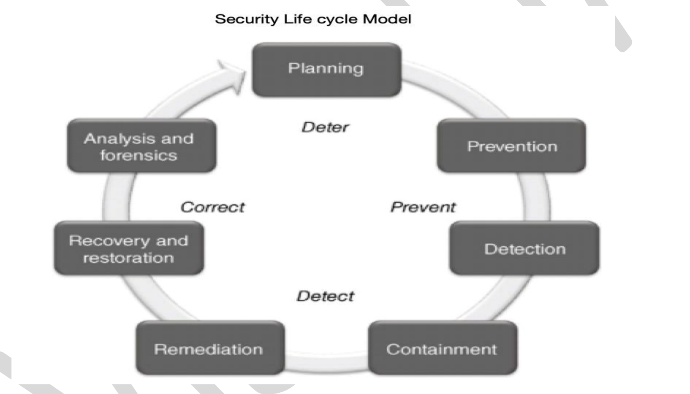
Security Framework to Prevent Cyber Attacks:
Protect : Implement security measures like firewalls, intrusion detection systems, data encryption
Detect : Robust detection system for suspicious activity
Respond through containment, eradication, remediation
Recover : DR plans and backups
Need for Data localization - (AP SHAH Committee)
Maintain data sovereignty
Domestic push to digital economy and high value digital products
Increase the tax revenue and curb tax evasion by MNC’s
Citizens data privacy
Currently data exchange between countries happen through Mutual Legal Assistance Treaties(MLAT)
Measures | Government Initiatives -
Institutional arrangements
CERT-In and National Cyber Coordination Centre (NCCC)
Policy Framework
National Cybersecurity policy, 2013
Public awareness and participation
Citizen Financial Cyber Fraud Reporting and Management System (CFCFRMS)
Enhancing Cyber Forensics
Indian Cyber Crime Coordination Centre (I4C)
Incident Response Mechanisms
Digital Criminal Case Management System (CCMS) Platform
Robust legal and regulatory frameworks
Digital India Bill, Telecommunication Bill, Digital personal data protection bill
IT Act, 2008
National digital communication policy, 2018
Setup data protection authority
Digital personal data protection bill
Continuous monitoring and threat intelligence
CERT-In
CERT-Fin (for financial security)
Cyber and information security division (CIS)
Cyber warfare police force
Collaboration with Ethical Hackers to identify zero day vulnerabilities
Proactive approach
Reducing zero-day vulnerability
Cyber Swachhta Kendra (Botnet Cleaning and Malware Analysis Centre)
TechSagar platform
Capacity building
Digital Army Programme
Cyber Surakshit Bharat initiative
spread awareness about cyber-crime and build capacities of frontline IT officials
Develop offensive capacities National Cyber Crime Training Centre (NCCT)
Technical Measures like implementing firewalls, encryption, and multi-factor authentication.
RSA technology, quantum encryption
Using new technologies
PPP model for cybersecurity
CyberDome project by govt of Kerela
Secure network infrastructure
Developing zero trust architectures
Public awareness
Cyber Jagrukta Diwas (CERT-In)
International cooperation
BUDAPEST convention - India is not a member
Adopt TALLINN Manual
Ground zero summit
Paris Call for Trust and Security in Cyberspace
GULSHAN RAI Committee
Creation of Cybercrimes cells in district
Separate agency
Conclusion
India will have more than 1 Billion internet users by 2025, ensuring safe, secure and inclusive cyberspace.
Communication Network
Introduction
A communication network is a system of interconnected devices that allows the exchange of information.
E.g. LAN, Internet, Wireless networks
Challenges
Security threats:
Cyber Threats Terrorist and non-state actors
‘Advanced persistent threats(APT)’
E.g. adversarial sovereign nations like China, Pakistan etc.
Privilege of anonymity
Network reliability and resilience
Consistently Evolving nature of Threats
Inadequate understanding and inter-dependencies
lack of concrete regulation and poor enforcement of existing one
Jurisdiction on adjudication of crimes - Nature of Crimes is transcending physical state boundaries
Lack of testing capacity, skilled Human Resources
Outsourcing risks
Hybrid warfare - unrestricted warfare - growing attacks on civilian infrastructure
Measures | Government Initiatives -
PD-CR-RA
Conclusion
Securing communication networks is of utmost importance to protect India’s digital sovereignty in today’s interconnected world.
Introduction
Social networking sites are online platforms that empowers individuals in fostering social interactions in a digital environment.
According to STATISTA, over 850 million Indians were active on social media.
Social Networking
Social Media : Facebook, Twitter, Instagram, Snapchat
Professional Networking: LinkedIn
Interest-Based Platforms: Reddit, Pinterest
Role of Media - AWRI
Information Dissemination
Share perspectives
Shape perceptions
Democratization of public life
Deliberative platform [H. ARENDT]
News Reporting and Journalism
To help people understand and interpret event.
Public Watchdog
Holding officials accountable
Investigative journalism exposes corruption
Education and Awareness
Agent of bringing social change
Agency to inculcate values
Help In nation building, unity and integrity of nation
Media is the fourth Estate of democracy
Issues
Hate speech
Media trial
E.g. Sushant Singh Rajput case
Misinformation and Fake News
E.g. WhatsApp forwards shown on national televisions
Perverted debates
Demagoguery and political bias
Consumerism
Promoting profligacy among citizens
Commodification, Objectification of women
Radicalization - anti social behaviour
Commercialization
Social media specific
Data security concern
Example: The Cambridge Analytica scandal
Phishing and Social Engineering to deceive users in revealing sensitive information.
Cyberbullying and Harassment
Addiction and Mental Health : affect overall well-being.
Echo chambers : conforms existing beliefs and bias
Political harassment - individual targeting, Soft targets (women harassment, children’s)
Fake news
Unequal participation
Cyber bullying, trolling, anonymity, jurisdictional challenges
Incidence of misuse by non-state actors (Challenges)
Spread of propaganda
Recruitment and Radicalization
E.g. ISIS, AL-QAEDA
E.g. Kerela Story
Incitement of Violence
Rioting in Paris
January 6 Capitol riot in the USA
Online Harassment and Intimidation
Funding and Financial Crimes
Coordinating attacks and operations
The 2019 Easter bombings in Sri Lanka
Measures
User Education and digital literacy
Sensitize about sharing limited personal information
Creating strong passwords
online privacy settings
Strengthening Cyber Surveillance
Regulating Social Media Content
Digital Media Ethics Code
Counteracting Misinformation
Ensure crime and violence is not glorified
Promoting ethical journalism
Strengthen legal and statutory framework
Digital data protection bill, digital india bill, telecommunication bill
National social media policy
Broadcasting Bill
Independent regulating body
Statutory status to News broadcasters associations
Privacy is respected
Data localization
Protect personal information and data ownership rights
Fact checking mechanism
Public reporting frameworks
Sanchar Saathi portal - citizens can report suspected fraudulent communication
Monitoring and Intelligence Sharing:
Conclusion
“The media is the watchdog of democracy, ensuring transparency, accountability, and freedom of expression.”
Advantage of social media -
Participation
Openness
Connectedness
Heterogeneity
Active engagement rather then passive communication (broadcasting media)
Negative impacts -
Money Laundering
Introduction
Money laundering is the process of making illicitly obtained money appear legitimate by concealing its true source.
Hawala money involves the laundering of money through hawaladar’s, often without any physical movement of cash.
According to UNODC Report, about 2-5% of global GDP, or 800 bi l l i o n t o
Process of Money Laundering - PLI
Placement stage
Layering stage
Integration stage
Significance -
Social
Drug addiction, Corruption, weakening of social institution’s, organized crimes
Environmental
Economic
Financial risk, unfair competition
Security
Drug trafficking, sex trafficking, terrorism
Ethical - loss of morality
Technological - Cyber crimes
Contribution of emerging technology
Cryptocurrencies and NFT - Provide anonymity
VPN - encrypted networks for communication
Peer-to-peer platforms : like PayPal and Venmo used for small, untraceable transactions, that accumulate into significant sums.
Dark Web : illicit goods marketplace
Silk Road - dark web marketplace
Drones - Cross border delivery without detection
E.g. Arms and drugs seizure in Punjab
Increased Use of Shell Companies
Contribution of globalisation
Offshore Financial Centres - Tax Heavens
E.g. Singapore, Mauritius
Shell Companies used to launder money and evade taxes.
Seamless Cross-Border Transactions:
Trade-based Money Laundering
E.g. Over/under-invoicing
Measure for prevention
Effective KYC norms and AML regulations
Improving financial surveillance
E.g. ‘Financial Intelligence Units - (FIU-IND)’
CERT-FIn
Monitoring transactions
Cybersecurity frameworks
Public Awareness Campaigns
RBI’s “Money Matters” campaign
Reporting suspicious activities
Improved Coordination Among Agencies
Strengthening AML Laws
Prevention of money laundering Act, 2002
FEMA, 2000, FCRA, 2010
Benami Property Act
Enhancing international cooperation
Mutual legal assistance treaty
India achieved an ‘Outstanding Outcome’ in FATF Mutual Evaluation
Global AML Standards
FATF - Financial action task force by G7
BASEL committee
Multilateral Agreements
VIENNA convention
UN global programme against money laundering (GPML)
Double Taxation Avoidance Agreements (DTAA)
Digitalization and Financial Inclusion
Digital India campaign and Jan Dhan Yojana
Enhancing regulatory oversight
Enforcement Directorate
Outline role of bankers
MiCA (Markets in Crypto assets - EU)
Inter agency coordination
Asset Forfeiture Laws:
The Fugitive Economic Offenders Act, 2018
International Cooperation
Conclusion
Money laundering is a global challenge that requires international cooperation and strong institutions (SDG 16 )
Security forces, Agencies
Forces
Central Armed Police Force (6)
They are central police organizations under the Ministry of Home Affairs of India.
Total sanctioned strength of CAPFs is around 11 Lakhs.
BSF
Pak and Bangladesh border
LOC along with army - maintain law and order, civil policing
CISF - Central Industrial Security Force
PSB, airports , Metro, PSU, Critical infrastructure
Security of protected persons, Z Plus, Z, X,Y.
CRPF - Central Reserve Police Force -
RAF - Rapid Action Force (communal Riots)
Crowd control
Riot control
UN peacekeeping , rescue and relief operation
COBRA - Commando Battalion for Resolute Action (LWE)
Counter militancy, insurgency operation
ITBP - Indo-Tibetan Border Police
Vigilance, border out posts(BOP )
SSB - Sashastra Seema Bal
Nepal, Bhutan
Prevent transborder crimes
Prevent unauthorized entry-exits
NSG - National Security guard
Counter terrorism, VIP Security
Paramilitary force
Central Intelligence and Investigative Agencies
Intelligence Bureau (IB)
National Investigation Agency (NIA)
Central Bureau of Investigation (CBI)
Research and Analysis Wing (RAW)
Enforcement directorate (ED)
National Security Council Secretariat (NSCS)
Inter agency coordination
Sikkim scouts
Indian coast guard
Marine police force
Role
Patrolling, preventing infiltration, and curbing smuggling.
Infrastructure development, and assists local communities.
Counterinsurgency operations
Prevent organized crime across border
Protection of critical infrastructure , strategic establishment (CISF )
Unauthorized entries and exits
Maintain law and order
Combat-readiness : to any incursions or aggressive actions
Civic Support in Remote Areas : Healthcare camps in border villages
Intelligence Gathering: Monitoring Chinese road construction
Coordination with Armed Forces: Joint operations
Issues Faced -
HR issues
High vacancies
Overburdened
Limited avenues of promotion
Keeping up with evolving technologies used by criminals and terrorists
Operational issues
Quality of investigation
Shortage of arms and ammunitions
Institutional
Lacks inhouse grievance redressal mechanism
Accountability - political interferences
Inadequate Infrastructure
Police-public relations :
Concerns about violation of civil liberties
Shortage of Advanced Equipment: night-vision capabilities, UAVs, advanced radar systems
Health and Morale Issues:
Inter-agency coordination sometimes face bottlenecks
Legislations
Inter-Services Organisations (ISOs) (Command, Control, and Discipline) Act
Police
SMART policing
Strict and sensitive
Modern and mobile
Alert and accountable
Reliable and responsible
Tech savvy and trained
PRAKASH SINGH Case
State security commission
Police establishment board
Police complaints authority
Security & Intelligence Agencies
IB
Role: Domestic intelligence, counter-terrorism, and counter-espionage.
R&AW
Role: External intelligence gathering, monitoring foreign threats.
CBI
Role: Handling complex criminal cases including corruption, economic offenses, and special crimes.
Issues - independent functioning
Reform - 2nd ARC suggest to give it Statutory Backing
NIA
Role: Investigating and prosecuting offenses related to terrorism and other national security threats.
ED
NCB - Narcotics Control Bureau
Role: Combating drug trafficking and related offenses.
Article 47
NDPS Act
NTRO - National Technical Research Organization
Role: Technical intelligence and cyber surveillance.
Directorate of Revenue Intelligence (DRI):
Role: Countering smuggling, customs frauds, and economic offenses.
Institutional Framework to Tackle Challenge of Internal Security
MAC - Multi Agency Centre
NCTC - National Counter Terrorism Centre
Laws
UAPA
Concerns
Potential for misuse because of broad and vague definition
Individuals may be designated terrorist without sufficient evidence
Infringement on the fundamental rights to personal liberty and fair trial.
Increase in preventive detention and making it harder to get bail
Reduced judicial oversight can lead to arbitrary actions
Can be used to curb free speech and the right to dissent
Seen as conflicting with UDHR 1948
TADA
POTA
AFSPA, 1958
Sections which are controversial
Section 4 -
power to shoot to kill, on mere suspicion
Arrest without a warrant
Section 6
grants immunity from prosecution acting in “good faith” during operation.
Section 7
search and seizure any premises without a warrant
Why needed
maintain law and order
to protect the armed force from false allegations
View of supreme court in Extra Judicial Execution Victim Families Association v. Union of India (2016),
Striking a balance between maintaining national security and protecting human rights.
Principles of proportionality, necessity and reasonability in using force.
Way forward
security forces should also abide by the guidelines set out by the Apex court, JEEVAN REDDY Commission, 2nd ARC
In line with Principle 24 of the UN Basic Principles on the Use of Force and Firearms by Law Enforcement officials
Where applicable right now?
Nagaland, Arunachal Pradesh, Assam, Manipur, J&K
Measures and Way Forward | Government initiatives
Intelligence Sharing and Collaboration
E.g. NATGRID
E.g. Crime and Criminal Tracking Network System (CCTNS)
Modernization of armed forces
Enhancing Operational Efficiency : integrating AI in decision-making and threat analysis
Self-Reliance (Aatmanirbhar Bharat):
Force Multiplier with emerging technologies
UAV; advanced radar systems; anti-missile systems
Capacity Development (SHEKATKAR Committee)
Boost Defence production
Naval innovation and indigenization organization
SWAVLAMBAN
SRIJAN - portal lists items for indigenization
International Cooperation
MURLI MANOHAR JOSHI Committee:
Capacity development of states, updating training curriculum, workshop on stress management
ACING DEVELOPMENT OF INNOVATIVE TECHNOLOGIES WITH IDEX (ADITI) SCHEME
To develop about 30 deep-tech critical and strategic technologies
Conclusion
Balancing security interests with the fundamental rights
SMART policing