Vocab
- Agroecology
- Afforestation and Eco-development
- Benefit sharing obligations
- Biological Magnification
- Coral reef: algae - zooxanthellae, Builders - Polyps
- Schedule 1 of Wildlife protection act
- Carbon Sinks
- Carbon sequestration
- Carbon capture and storage
- Compliance obligations
- Carbon Trading -
- Carbon emission trading, marketplace to allow other companies to emit certain amount of CO2.
- Desertification
- Decomposition
- Eutrophication - reduce dissolved oxygen(DO)
- Ecological niche
- Environmental footprint
- Energy Flow
- 5F’s - food, fodder, fuel, fiber and fertilizers
- Fly Ash - combustion of solid material
- Silicon dioxide - SiO2, Calcium oxide
- Can be used by replacing cement
- Green economy
- Nutrient Cycle
- NDC - nationally Determined contributions
- Process upgradation
- Pollution abatement
- Pollinators and their role in plants fertilization
- Integrated pest management (IPM)
- Rejuvenation
- Risk assessment
- Sand acts as an aquifer, natural carpet on bottom of the river.
- Speedier appraisal process
- Sand Dredging
- Transmission of diseases
- Man animal conflict
- Family forestry
- Eco-development
- Opportunity cost of negative environmental impacts are high
- Ecological civilization
- Evil Quartet for biodiversity loss - HOLI
- Habitat loss and fragmentation
- over exploitation
- Co-extinction (लापता)
- Invasive species invasion
Environment
Introductions
-
According to Climate Action Tracker, India is the only G20 country with “2°C compatible” targets.
-
UNEP’s Emission Gap Report 2022 highlighted that without substantial mitigation measures, global temperature can rise by 2.8 degree by the end of century.
-
According to Living planet report, 2022 by WWF -
- More then 85% of wetlands have been lost
- 32% of the world’s forest area has been destroyed
- 50% of the coral reef systems have been destroyed
- 60% of the decline across vertebrate species
Conclusion
-
Article 48A - The State shall endeavour to protect and improve the environment and to safeguard the forests and wild life of the country
-
Article 51A of the constitution requires all citizens to protect and improve the natural environment and to have compassion for living creatures.
-
“Prakruti Rakshati Rakshita” (Nature protects if protected) requires substantive and sustainable action.
Data
- Tropics is 1/4 of the area and home to 3/4 of the humans
- India has 2.4% land Area, 7% recorded species, 18% humans
- 200% increase in number of wetland sites
- Only country among top 5 emitters with 2 degrees compatible targets
- Last 9 years solar power was increased by 25 times
Examples
-
Chipko movement - Uttarakhand
-
Appiko movement - Karnataka
-
Save soil movement - Sadguru
-
Narmada Bachao Aandolan
-
Recent Examples of Climate disaster
- Floods in AP and Gujarat
- Flash flooding in Delhi, Mumbai
- California wildfires
- Heatwave in summer
- Worst Draught in Somalia
- Bomb cyclone in US
Policy contradictions and environmental impact
- Economic Growth vs. Environmental Protection
- Agricultural Expansion vs. Forest Conservation
- Agricultural Policies vs. Water Conservation
- Example: Government subsidies on rice and sugarcane
- Industrial Development vs. Air/Water Quality:
- Expansion of industries in Delhi NCR
- Untreated effluents discharged from industries in Ganga
- Mining Activities vs. Forest Conservation
- Buxwaha diamond mining issue
- Illegal mining and construction in Aravalli Hills
- Urbanization vs. Wetland Protection
- Rapid urban development encroaching on wetlands
- Energy Production vs. Wildlife Protection:
- Example: Wind farms in Rajasthan threatening Great Indian Bustard
- Transport Infrastructure vs. Habitat Protection
- Example: Highway construction leads to habitat loss and fragmentation
- Tourism Development vs. Ecosystem Preservation:
- Example: Unregulated tourism results into pollution and lopsided development
- Fisheries Policy vs. Marine Conservation
- Example: Overfishing in the Gulf of Mannar
Measures to address
- Integrated Policy Framework
- Implementing Strategic Environmental Assessments (SEAs)
- Promoting Sustainable Practices
- Adopting Green Technologies
- Stakeholder Engagement
Conservation
Biodiversity
- Importance of Biodiversity
- Ecosystem Services
- Bio Resources of Economic Importance
- Social Benefits etc.
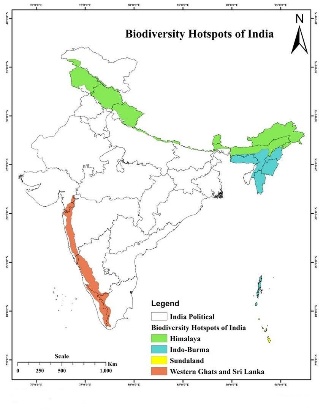
- Biodiversity hotspot
- High Species Diversity
- Endemism
- Threatened Ecosystems
- Small Area, Large Impact
- Unique Flora and Fauna
- Conservation Priority
- Reasons for Loss of Biodiversity - natural | anthropogenic
- Natural
- Floods, earthquakes, wildfires, tsunami, etc.
- Loss of habitat
- 30% forest lost (Living Planet Report)
- Pollution
- Overexploitation
- Coextinction
- Invasion by alien species
- E.g. Prosphis Juliflora
- Toxicity
- Rapid Urbanization in mountains
- Extension of Agriculture
- Fragmentation
- Natural
Mangrove conservation
- Mangroves are a type of coastal vegetation specifically adapted to survive in saline and waterlogged environments. They play a vital role in maintaining coastal ecosystems.
- Benefits
- Maintaining coastal biodiversity
- Providing ecosystem services
- Coastal protection from erosion and storm damage
- Mitigating the impacts of climate change
- Water filtration
- Fisheries
- Livelihoods
- Tourism
- Government Initiative
- MISHTI
- PM PRANAM
Wetland conservation
-
Wetlands are land areas that are partially or fully inundated with water for all the year or varying periods of time during the year.
-
Wetlands include marshes, swamps, bogs, and similar areas.
-
‘wise use’ is defined as the maintenance of their ecological character of area while using for economic purpose, within the context of sustainable development
-
Objectives
- Conservation of wetlands
- Wise use
- Community involvement in wetland management
- Financial assistance
-
Key Elements of the ‘Wise Use’ Concept
- Balancing Use and Conservation
- Holistic Management : considering entire ecosystem including water, soil, plants and animals
- Participatory Management involving local communities
- restore degraded wetlands
-
Amrit Dharohar Scheme
-
National Wetland Conservation Programme (NWCP)
Water conservation
-
Namami Gange and National mission for clean Ganga
- Recognized by the United Nations (UN) in Top 10 World Restoration Flagships programmes.
-
Jal Shakti Abhiyan
- Water conservation campaign
- Features
- Targeted Campaign for 256 water-stressed districts
- Water Conservation and Rainwater Harvesting
- Features
- Water conservation campaign
rooftop rainwater harvesting, check dams, farm ponds, and recharge wells
E.g. catch the rain campaign
E.g. Amrit Sarovar’s
- Watershed Development
Afforestation, contour trenching, and contour bunding
- Revival of Traditional Water Bodies - desilting, repairing, and restoring - Efficient Irrigation Practices: - drip irrigation and sprinkler irrigation - Community Participation and Awareness
Jan Andolan (People’s Movement)
E.g. कृषि विज्ञान केंद्र मेला
E.g. Swachh Bharat Abhiyan
- Integrated Water Management through convergence of schemes like MGNREGA, PMKSY and Atal Bhujal Yojna - Multi-Stakeholder Engagement including CSO, NGO, private sector and local communities - Regular Monitoring and impact assessment of interventions
Way Forward
- Disaster Resilient Infrastructure (DRI)
- Not exceeding the carrying capacity of Ecosystem
- Ecotourism
- Institutional structures at local level
- Promotion of local - artifacts, communities, natural produce etc.
Expected questions
- COP27 | Shram E09/08/23 8:05 AM l-Sheikh
- United Nations Convention on Biological Diversity (CBD) - COP15
Biodiversity (Detailed)
Consequences of spreading of ‘Dead Zones’ on marine ecosystem
- Loss of biodiversity due to suffocation
- Disruption of food webs
- Death of planktons affects all trophic levels
- Decline in fisheries leading to economic loss
- Reduced tourism and recreational potential
- Health risks due to harmful algal blooms
- Altered nutrient cycles
- Increased greenhouse gas emission
- Measures
- Preventing nutrient runoff from agriculture and industries
- Wastewater treatment
- In-situ cleaning and addition of fresh water
Biological Diversity Act, 2002
- Conservation of Biological Diversity : by management through BMCs
- Sustainable Use of Biological Resources
- Access and Benefit Sharing (ABS)
- Protection of Traditional Knowledge
- Recognition of Biodiversity Heritage Sites
- Support for Research
Mangroves
- Causes of Mangrove Depletion
- Human Activities:
- Coastal infrastructure development like housing, industries, and aquaculture farms encroaching on mangroves
- Large scale aquaculture farms particularly shrimp farming
- Overexploitation : timber, fuelwood, medicinal plants
- Unsustainable Fishing Practices e.g. bottom trawling
- Unsustainable Tourism
- Pollution : Industrial waste, agricultural runoff, and untreated sewage discharge.
- Sedimentation
- Natural Factors:
- Sea Level Rise : Inundate mangroves leading to habitat loss
- increased frequency of cyclones and storms due to climate change
- Human Activities:
- Importance of Mangroves
- Ecological
- Coastal Protection : natural barrier against storms
- Filtration and Water Purification : trapping sediments and pollutants from runoff
- Biodiversity hotspot : rich variety of plant and animal life.
- Ecological
The Sundarbans mangrove
- Nutrient Cycling : - Carbon sequestration
Up to four times more carbon than terrestrial forest
-
-
-
- Economic
- Livelihoods : providing resources such as timber, honey, and medicinal plants.
- Fisheries Support : vital breeding and nursery grounds for a variety of fish, shellfish, and crustaceans
- Cultural and Recreational Value: e.g. birdwatching and ecotourism
- Economic
- Livelihoods : providing resources such as timber, honey, and medicinal plants.
- Fisheries Support : vital breeding and nursery grounds for a variety of fish, shellfish, and crustaceans
-
-
Carrying capacity
-
Carrying capacity means maximum number of individuals or population size of a species that an environment can sustainably support without degrading the ecosystem
-
It depends on availability of resources such as food, water, habitat and other resources
-
Exceeding carrying capacity can lead to resource depletion, pollution, and ecosystem collapse.
-
Determinants of Carrying Capacity
- Resource Availability: Includes food, water, shelter, and space.
- Environmental Conditions: Climate, weather patterns, and natural events.
- Interactions Among Species: Predation, competition, and symbiotic relationships.
- Human Impact: Pollution, land use changes, and resource extraction.
-
Importance of Understanding Carrying Capacity in Sustainable Development
- Resource Management : ensuring sustainable extraction and use of natural resources
- Population Control : preventing overpopulation-related issues.
- Environmental Impact Assessment : evaluating the potential impact of development projects
- Land Use Planning : carrying capacity help in optimizing land use in agriculture, forestry
- Disaster Preparedness : identifying vulnerable populations and develop DM strategies
Pollution and degradation
- Pollution is defined as introduction of harmful substances into the environment in excessive amount making it less fit for life.
- Air Pollution - It is contamination of the indoor or outdoor environment by any chemical, physical or biological agent.
Food waste
- 1.05 billion tonnes food wasted about 19% of available food
- Contribute to 8-10% global GHG emission
- India - 78.2 million tonnes food wasted every year
Causes/Sources of Pollution & Degradation
Air pollution
- According to the IQAir World Air Quality Report, 39 out of the 50 most polluted cities in the world are located in India.
- Two types
- Outdoor
- Indoor
Global Air Quality Guidelines(AQG) - World Health organization
- Focus on 6 pollutants - SO2, NO2, O3, CO, PM
- Revised thresholds setting individual limits for each pollutants
- Sectoral policies - Industry, Energy, Transport, Urban Planning, Waste
Indian’s National Clean Air Program
- Key features
- Target oriented : aims to reduce PM2.5 and PM10 concentrations by 20-30% over five years.
- City-specific Action Plans - 102 Non-attainment cities not meeting NAAQS
- Source-specific Interventions - industries, vehicles, biomass burning, and dust
- Technology Adoption - electric vehicles, renewable energy source, emission control
- Installation of flue-gas desulfurization (FGD) units in thermal power plants
- Inter-Agency Coordination : central and state governments, local authorities, and civil society.
- Strengthening Monitoring and Compliance (MC)
- Continuous Ambient Air Quality Monitoring Stations (CAAQMS)
- SAFAR (System of Air Quality and Weather Forecasting and Research) network for real time data
- Capacity Building and Awareness
Photochemical smog
- Photochemical smog is a type of air pollution formed in urban areas when nitrogen oxides and volatile organic compound(VOC) react with sunlight forming ground level ozone (O₃)
- Causes
- Stubble burning, vehicular pollution, industrial pollution, construction activities, garbage dumps.
- Impact
- Reduced visibility, ground level ozone, respiratory problems, environment, economical
- Mitigation
- Catalytic converters, renewable energy, LPG, CNG rather then petrol, public transportation, renewable energy, urban planning
- Gothenburg Protocol, 1999
- Aims to abate acidification, eutrophication and ground level ozone
- Objectives
- Control and reduce - SO2, NOX, NH3, VOC, PM
- IPCC 6th Assessment Report
Causes
- Anthropogenic
- Power Generation
- Industrial activities : Fly ash
- Lead, PM 2.5, PM 10, CO, CO2 suspended particulate matter
- Agricultural - Traditional Fuel - firewood, cow dung etc.
- Transport - Nitrogen oxides and particulate matter.
- Use catalytic converter filters, lead free petrol, ammonia
- Over 3.38 million private cars in Delhi
- Construction and demolitions activities
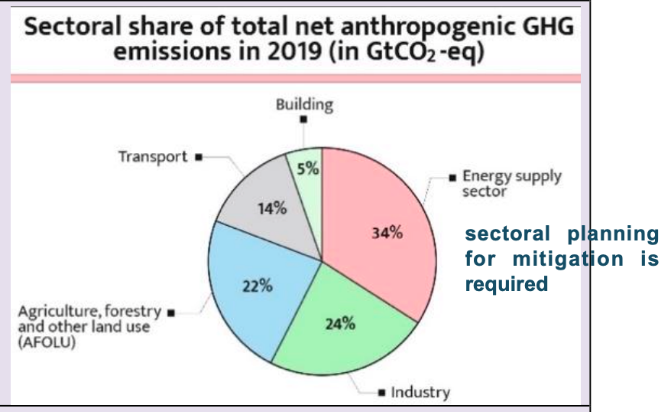
- Natural sources
- Volcanos, Forest Fires
- Climatic conditions - Temperature inversion, low wind speed, high humidity can trap pollutants near surface
Impact
- Health Effects : - Respiratory (asthma), cardiovascular, nervous and circulatory system disease.
- Life expectancy in india has reduced by 2.6 years due to air pollution - WHO study
- Air pollution has caused 8.1 million deaths [State of Global Air Report, 2024]
- Economic loss
- Reduced productivity, damage to property, healthcare costs
- Air pollution costs 1.4% of GDP of India- ICMR
- Environmental Impact:
- Damage crops and forests
- Contribute to the acidification of lakes and rivers.
- Climate Change : Greenhouse Gas Effect & Global Warming
Government initiatives
- National Clean Air Program (NCAP)
- Pradhan Mantri Ujjwala Yojana
- Bharat Stage VI Emission Norms
- National Solar Mission
- Air (Prevention and Control of Pollution) Act
- National Ambient Air Quality Standards - NAAQS
Measures
- Transition to cleaner technology in transportation, industries and energy generation
- Improved Industrial Practices
- Carbon sequestration
- Bio decomposers
- Burning in boilers, thermal power plant
- Pyrolysis
- Sustainable Transportation
- Catalytic convertors
- Strict Emission Standards
- Waste Management
- Individual actions : public transportation, lifestyle for environment
- “Breathe India” Initiative suggested by NITI Aayog needs to be implemented for sustainable solution
Water Pollution
- Causes
- Natural - erosion, landslides, decay and decomposition of plants and animals, etc.
- Anthropogenic
- Point source pollution
Agriculture Runoff - Fertilizers and pesticides
Industrial Discharge - Concentrations of heavy/toxic metals
E.g. fluoride and nitrates
Domestic Sewage - without proper treatment
63% of sewage flowing into rivers is untreated - CPCB
Oil Spills - Nord stream
Thermal pollution from nuclear power plant
-
Non-point source pollution : diffused sources - Improper Waste Disposal - Eutrophication - Biodegradable material - bacteria, algae blooms consumes a lot of oxygen - Plastic pollution
-
Impact
- Ecological
- Reduce dissolved oxygen(DO) - threatens aquatic ecosystem
- disruption of food chains.
- Biological magnification
- Desertification
- Human Health -
- water-borne diseases - cholera, diarrhoea, typhoid, hepatitis, etc.
- Economic impact
- fishing, agriculture, and recreation
- Global warming and climate change
- Ecological
-
Measures
- Sustainable Agricultural Practices:
- E.g. organic and natural farming, crop rotation
- E.g. use of nano urea
- E.g. Developing water saving technologies like micro irrigation etc.
- Industrial Best Practices
- Wastewater Treatment :- sedimentation, filtration, biological treatment, and chlorine treatment.
- Reusing and recycling
- Public Awareness and Education
- foster a culture of environmental stewardship.
- Regulation and Enforcement -
- International Cooperation
- Sharing best practices, knowledge, and technologies
- Watershed development - prevention of runoff and storage and recharge
- E.g. Haryali Project, Neeru-Meeru Programme
- REWARD Scheme of Karnataka got recognized by world bank
- Rainwater harvesting
- Lakes, Kund or Tanka
- Ralegan Siddhi
- Sustainable Agricultural Practices:
-
Government initiatives
- Water (Prevention and Control of Pollution) Act 1974
- National Water Policy
- National Mission for Clean Ganga (Namami Gange)
- Jal Kranti Abhiyan
- Water Quality Monitoring
- Pollution Control Boards - Central Pollution Control Board (CPCB)
- Jal Shakti Abhiyan
- Jal Jeewan Mission
- PM PRANAM
-
Way forward
- Mihir Shah Committee recommendations for prevention of ground water
- Sponge Cities
- LIFE Campaign
Solid waste pollution
- Solid waste pollution refers to the contamination of the environment with unwanted or discarded solid materials.
- 1.5 lac tonnes of municipal solid waste generated every day, only 83% collected and 30% treated -CPCB
- By 2050 there will be more plastic than fishes in ocean -UNEP
- Solid waste
- household garbage, pieces of metals, broken glassware, PET , polythene bags, ash, etc.
- Type of solid waste
- Biodegradable
- Non-biodegradable
- Global Plastics Treaty
Plastics are solid material which can undergo permanent deformation in response to applied stress.
-
-
-
- Recyclable
- E-Waste
-
-
-
Impact
- Environmental
- Degradation of Soil Quality : nutrient content, and fertility
- Water Contamination:
- Biodiversity Loss:
- Air pollution
- Human health risks :
- Respiratory illness, typhoid, malaria and cholera, etc.
- Food Safety Concerns: : enter the food chains
- Economic costs : dealing with pollution and health impacts
- Environmental
-
Measures
- Segregation of waste
- Circular economy
- Common hazardous treatment, storage and disposal facilitates
- Polyblending
- Incineration plants
- Scientific disposal of hazardous waste
- Sanitary landfills rather then open dumping
- For filling bio-degradable wastes
- Using Bioremediation Techniques
- Bioventing
- Biosparging
- Bioargumentation
- Phytoremediation
- Public awareness and education
-
Government initiatives
- Solid waste management rules, 2016
- Waste minimization circles
-
Examples
- Daurala near Meerut UP
Sand Mining
- How it is threat to environment
- Impact on Indian coast
- Issue
- Deplete groundwater tables
- Measures
- Manufactured sand
- Fly ash
- Prudence and tight monitoring
- Periodic assessment
- Sustainable mining
Land degradation
-
As per global land outlook report, about 28% of India’s land is degraded or facing a desertification. Impacted 2.5% GDP.
- 25% of global land under threat.
-
India to restore 26 million hectares land by 2030 as a signatory to UNCCD
-
Land degradation is generally understood either as a temporary or a permanent decline in productive capacity of the land.
-
National Remote Sensing Centre (NRSC) - classify wasteland by remote sensing
-
Causes
- Natural (WEMDT)
- gullied /ravinous land, desertic or coastal sands, barren rocky areas, steep sloping land, and glacial areas due to weathering
- Anthropogenic
- shifting cultivation area, degraded land under plantation crops, degraded forests, degraded pastures, and mining and industrial wastelands.
- Soil erosion, waterlogging, salinisation and alkalisation of land lead to land degradation.
- Natural (WEMDT)
-
Examples
- Partnering with NGO’s
- Jhabua, MP - reclamation of land
- Community involvement
- Alwar role model
- Partnering with NGO’s
-
Land Resource Inventory portal of Karnataka
E-waste
-
E-waste is discarded and end-of-life electronic products ranging from mobiles, laptops, home appliances, peripheral devices, etc.
-
Issues
- Global e-waste monitor report - e-waste growing in india at 30% per annum.
- Short lifespans
- Disposal in landfills
- Only 22% of India’s e-waste is collected
- Only 1.5% of e-waste gets recycled.
- Dominance of the Informal Sector - resort to unsafe practices - releasing toxic like lead, mercury, and cadmium into the environment.
-
Measures
- E-waste management rule 2022
- R2 Code (Responsible recycling for e-waste)
- Designing durable and easily repairable devices
- e-waste collection and recycling program
- Public awareness about responsible disposal
- Extended Producer Responsibility (EPR)
Oil pollution
- contamination of the environment, particularly water bodies, with petroleum or its by-products.
- Impacts on marine ecosystem
- Suffocation of fishes due to oil coat on their bodies
- long-term health issue because of toxic compounds
- Bioaccumulation and Biomagnification
- Oxygen Depletion
- Food chain disruption
- Habitats destruction - corals, mangroves, sea grasses
- Economic Impacts on Fisheries and Tourism
- Impact on India
- High Vulnerability : 7500 km coastline
- Livelihood dependency on fisheries and tourism
- Rich biodiversity
- Limited infrastructure for effective oil spill response and clean-up
- Health issues due to exposure to contaminated seafood
Impact of Pollution & Degradation
-
Human Health risks
- Impairs vision, judgement and reflexes
- Respiratory disease
- Carcinogenic effect
- Hypertension
- Nervous disorders
- Destroy cell tissue, leukemia
-
Effect on environment
- Soil Quality Degradation
- Water Contamination
- Reduced Agricultural Productivity
- Hazardous Waste, etc.
- Extreme events
- Acid Rain
- Retards photosynthesis
- Biodiversity loss
-
Food Safety Concerns:
-
Cultural and Aesthetic loss
-
Economic Impact:
- increase healthcare cost
- financial burden of cleaning up
-
Climate Change : exacerbating global warming
Prevention & Control of Pollution & Degradation
- Sustainable Agricultural Practices:
- Soil Conservation Techniques:
- Waste Management and Recycling:
- Implementation of Pollution Control Regulations:
- Phytoremediation and Bioremediation:
- Promoting Afforestation and Reforestation:
- Integrated Water Management:
- Awareness and Education:
Government initiatives
- National ambient air quality standards
- National clean air program
- Swachh Bharat Abhiyan (Clean India Campaign):
- National Mission for Sustainable Agriculture
- Forestry and Afforestation Initiatives
- Green India Mission and the National Afforestation Program
- Waste Management Rules:
National Environment Agencies, Legislations and Policies
- Central Pollution Control Board (CPCB)
- Environment Protection Act 1986
- International Environment Agencies & Agreements
Climate Change and global warming
Introduction
- According to United Nations, Climate change refers to long term shift in temperature and weather patterns.
Data
- World Bank, Climate Change could cost 2-8% GDP of India
- India’s per capita emission - 1.5 metric tonnes, Worlds - 4.2 metric tonnes
- High vulnerability - India’s fifth rank in global climate risk index 2022
- 85% land mass vulnerable to CC
- Climate change performance index - 8/59
Global warming
- long-term increase in Earth’s average temperature due to build-up of greenhouse gases in the atmosphere.
Climate change
- encompasses a broader range of changes in Earth’s climate system.
- Rising temperatures (global warming)
- Alterations in precipitation patterns, wind patterns, sea levels, ocean circulations
- Extreme weather events like cyclones, droughts, and heatwaves, wildfires.
Causes
Anthropogenic causes
- Greenhouse gas emission - CO2, CH4, N2O
- Deforestation
- Industrialization and Urbanization
- Agricultural Practices - livestock farming, rice cultivation - produce CH4
- Waste management
Natural causes
- Volcanism
- Sunspots
- Milankovitch oscillations (Axial tilt, eccentricity, obliquity)
Impacts
- Global warming
- Melting of polar ice and glaciers - permafrost thaw, polar ice sheet collapse
- Ocean acidification - calcification - Coral bleaching , shellfish, planktons loss.
- Rising sea levels
- Changing global ocean currents and climates
- E.g. weakening of AMOC
- Extreme weather events - flooding, draughts, cyclones and heat waves, wildfires, extreme dipole events
- Biodiversity loss - Extinction and co-extinction of species due to habitat loss
- Soil degradation, erosion and leaching
- Health risks - Spread of disease, heat-related illness, food and water insecurity, zombie virus
- Changing migration patterns
- Changing precipitation patterns
Climate change impacts on food security
- Desertification and land degradation - decline in crop yields
- Extreme weather events - crop failures
- Decline in nutritional profile of crops
- Pest and disease vulnerability
- Reduce water availability
- Ocean warming and acidification reduce fish availability
- Adaptation
- Climate resilient crops
- Crop diversification
- Precision agriculture
- Extension of irrigation infrastructure
- Sustainable farming practices
Sea level rise - impacts
- Ecological
- Coastal erosion and shoreline retreat
- Increased flooding
- Saltwater Intrusion into freshwater aquifers
- Destruction of coastal ecosystems such as mangroves, coral reefs, and wetlands.
- Sundarbans, A&N, Chilika Lake
- Economic
- Damage to coastal infrastructure like ports, roads, buildings
- Increased pressure on coastal megacities like Jakarta, Dhaka, and Colombo
- Displacement of coastal communities
- Existential threat for small island nations
Kyoto protocol
- Binding emission reduction targets for industrialized countries
- Carbon Trading Mechanisms through carbon credits market
- Clean Development Mechanism (CDM)
- Joint Implementation (JI)
- Focus on technological innovation : such as carbon capture and storage (CCS) and renewable energy
- Focus on afforestation and reforestation
Measures
Comprehensive national plan
- NAPCC with 8 sub missions
Mitigation
- Transition to renewable energy : solar, wind, and hydropower
- Energy Efficiency
- Carbon Capture and Storage
- Afforestation and reforestation : natural carbon sink
- Carbon sequestration - Ocean, geological, terrestrial
- MISHTI Scheme
- Adapting electric vehicles
- Restoration of wetlands
- E.g. Amrit Dharohar Scheme
- Geo engineering
- Sustainable Land Use and Climate smart agriculture
- adoption of millets
Adaption
- Sustainable urban planning
- Urban lakes - City of Lakes’ project of Delhi
- Urban forests (Miyawaki model); public transport; urban waste
- Sustainable lifestyle - LiFE
- Infrastructure resilience, enhancing disaster preparedness, and implementing early warning systems.
- E.g. GRIHA Scheme
- E.g. CRDI
- Managed retreat
- For climate related migration
International cooperation
- common but differentiated responsibility
- Green Grids Initiative
- Technology cooperation
- Emission trading
- Joint implementation of projects
- Market mechanism
- Financial and Technological support
- Green climate fund
- Adaptation fund
- Clean technology fund
Empower local communities
- E.g. Maiti Andolan in Chamoli Uttarakhand
- E.g. Odanthurai TN
Scientific Research and Monitoring
- NISAR Mission
Government initiatives
National Action Plan on Climate Change (NAPCC): 8 Missions
- National Solar Mission
- National Mission for Enhanced Energy Efficiency
- National Mission on Sustainable Habitat
- National Water Mission
- National Mission for Sustaining the Himalayan Eco-system
- National Mission for a Green India
- National Mission for Sustainable Agriculture
- National Mission on Strategic Knowledge for Climate Change
- Faster Adoption and Manufacturing of Hybrid and Electric vehicles (FAME)
- Atal Mission for Rejuvenation & Urban Transformation (AMRUT) for Smart Cities.
- Pradhan Mantri Ujjwala Yojana
- UJALA scheme
- Sovereign green bonds
- Green Credits Program
- PM-PRANAM and GOBARdhan Scheme, MISHTI, Amrit Dharohar
India’s 5 point pledge or Panchamrit (Glasgow 2021):
- Net-zero by 2070
- To increase its non-fossil fuel energy capacity to 500 GW by 2030.
- Increase the share of renewables in the energy mix to 50% by 2030.
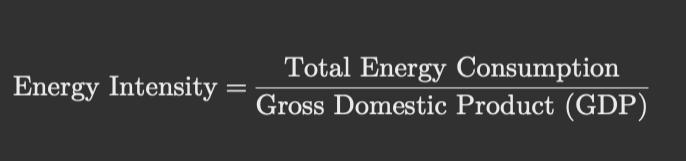
- Reduce the emissions intensity of its economy by 45%.
- Reduce emissions by 1 billion tonnes of CO2.

Conclusion
- To achieve the ancient ideals of “Prakruti Rakshati Rakshita” (Nature protects if protected) requires substantive and sustainable action.
Sustainable development
Environmental Impact Assessment
Introduction
- EIA is a regulatory framework used to identify, predict, evaluate and mitigate the potential environmental impacts of development projects.
EIA Process - SSB-APM-Public-MPC
- Screening
- Scoping
- Baseline Data Analysis
- Impact prediction
- Assessment of alternatives, delineation of mitigation measures
- Public Hearing
- Environmental Management Plan
- Monitoring and Environmental Clearances(EC)
Significance
- informed decision making
- identifying mitigation measures (Delhi Metro project)
- Compliance with environmental regulations (CRZ for projects in coastal areas)
- Assessment of the social impact (Tehri dam )
- public consultations allow local communities to voice their concerns (POSCO case)
- inclusiveness in decision making - overall quality
- protection of biodiversity (harmful impact of Gundia hydropower project on Western Ghats);
Shortcomings of EIA(notification), 2020
- Exemptions - strategic projects, ‘economically sensitive areas’ beyond preview of EIA
- Post-Facto Clearance : raises concerns about accountability
- Public Consultation: Reduced to max 40 days and only 20 days
- Expert Committees nominated by government : concern about independence and autonomy
- Transparency and accountability concerns:
- instances of manipulating data, inadequate monitoring
- Government Initiatives
- National Green tribunal
- PARIVESH - pro-active and responsive facilitation by interactive, virtuous and environmental single-window Hub
Measures | Way forward
- Sectoral EIA is needed
- Creating institutional capacity - clearance, monitoring and compliance
- Independent EIA Authority
- Insurance and penal action
- Risk financing, risk minimized technology
- Creation of centralized baseline data bank
- Environment supplement plan
- Prevent
- Wetlands
- Estuaries
- Biospheres etc.
- Centralized data bank
Conclusion
- To achieve the ancient ideals of “Prakruti Rakshati Rakshita” (Nature protects if protected) requires substantive and sustainable action.
Disaster and DM
Introduction
-
Disaster is a catastrophe that result into substantial loss of life, property and environment which is beyond the coping capacity of the community.
-
A sudden disruption of the functioning of a community exceeding its ability to cope using its own resources.
-
According to Vulnerability Atlas of India, India has about two-third of its geographical area and equal proportion of its population, vulnerable to disasters.
-
NDMA - 48% of overall human life loss are due to climate related disasters
-
‘every 1 dollar invested in disaster preparedness saves 4 dollars’
Types of Disasters
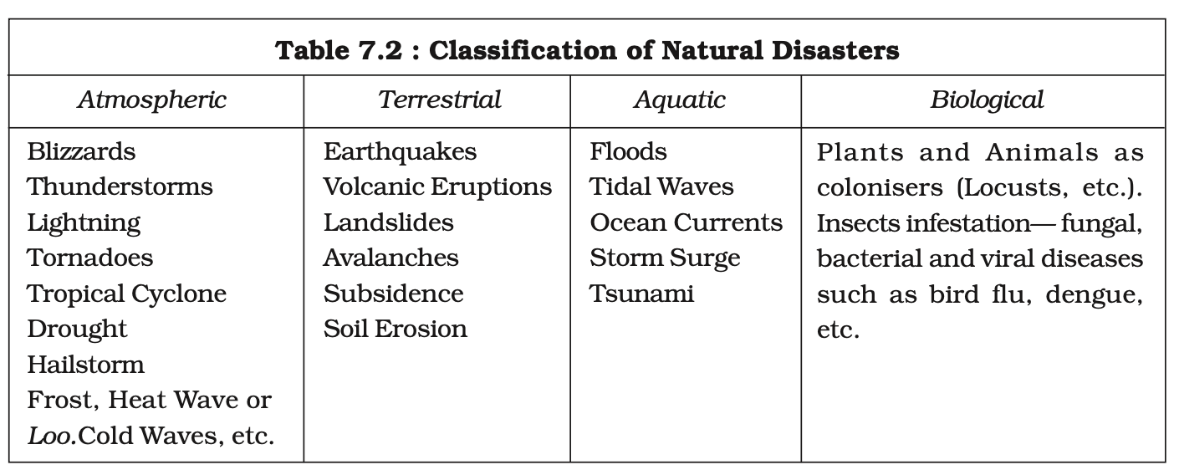
Notified Disasters under DM Act 2005
- Cyclones, drought, earthquake, fire, flood, tsunami, hailstorm, landslide, avalanche, cloudburst, pest attack, frost and cold waves.
Coastal erosion | Cyclones
- According to MoES out of 7500 km long coastline, 34% is under varying degree of erosion
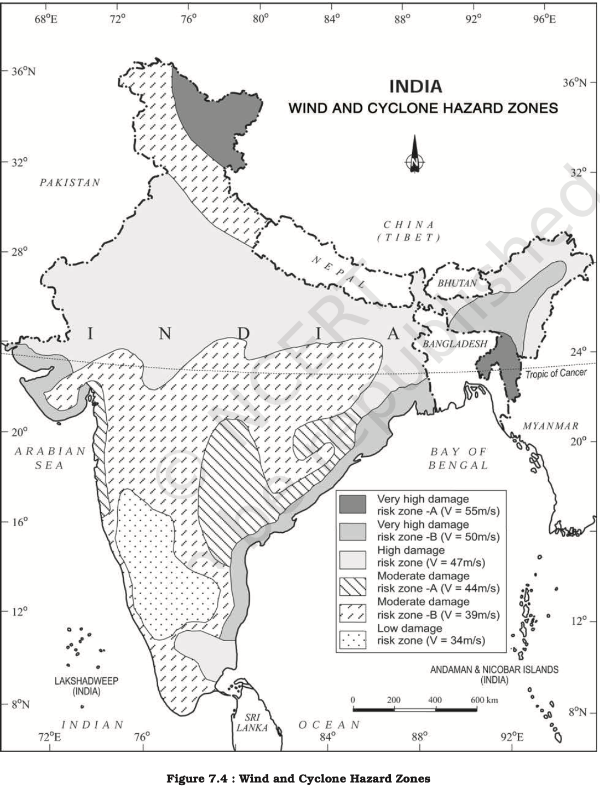
- Cyclone is a system of winds rotating inward to an area of low atmospheric pressure
- 8% of total land area is prone to cyclone
- Causes
- Natural Factors:
- Strong wave action and tidal currents
- Cyclones, storm surges, and tsunami
- Sea-level rise due to climate change
- Heavy rainfall, floods
- Coastal geomorphology (shape of the coastline)
- Human Factors
- Coastal construction (sea walls, groynes)
- Dredging and Sand mining
- Deforestation of mangroves
- Climate change induced alterations in ocean currents
- Natural Factors:
-
Effects
- Loss of fertile land
- Coastal infrastructure damage including roads, building and ports
- Ecological degradation - mangroves, corals
- Changes in landscape - loss of beaches
- Population vulnerability (40% ~ 100km)
- Threat to coastal tourism, fisheries, and other economic activities
-
Measures (preventive, remedial)
- Improving Early Warning Systems
- Hard Engineering:
- Create protective infrastructure - Seawalls, revetments, levees
- Artificial headway
- Soft Engineering:
- Dune stabilization
- Beach nourishment
- Bio-shields - Corals, mangroves and littoral areas (MISHTI)
- Integrated Coastal Zone Management (ICZM)
- Use indigenous knowledge
- Madhav Chitale committee for periodic dredging
- Community participation and capacity building
- 15th FC recommendation to develop norms for erosion mitigation measures
-
Status of preparedness in coastal areas
- IMD’s has deployed cyclone warning system
- Indian Tsunami Early Warning Centre (ITEWC)
- NDMA, SDMA coordinate disaster management efforts
- Coastal Regulation Zone (CRZ) Rules
- Training and capacity-building of local communities
- CDRi
- Mangrove Restoration - MISHTI
Coastal sand mining
- Impact
- Environmental
- Coastal Erosion
- Loss of Biodiversity
- Environmental
Olive Ridley turtle nesting sites in Odisha disturbed
- Saltwater Intrusion
- Destruction of mangroves and sand dunes
- Impact on Marine Ecosystems : benthic organism that live on low lying coastal areas are threatened
- Socio-economic
- Livelihood disruption of fishing communities
- Loss of Agricultural Land
- Illegal sand mining leading to conflict and crimes : mining mafia
- Socio-economic
Tsunami
- A tsunami is a series of powerful ocean waves caused by the displacement of a large volume of water.
- Causes
- Earthquake > 6.5 on Richter scale
- E.g. 2004 Indian ocean Tsunami
- Volcanic eruption
- Deep water Landslides
- Nuclear explosion, Celestial bodies(Asteroids, Meteorites)
- Earthquake > 6.5 on Richter scale
- Tsunamigenic regions
- Indonesian - affects east coast of India
- Makran - affects west coast of India
- Effect
- Measures | NDMA Guidelines
Floods
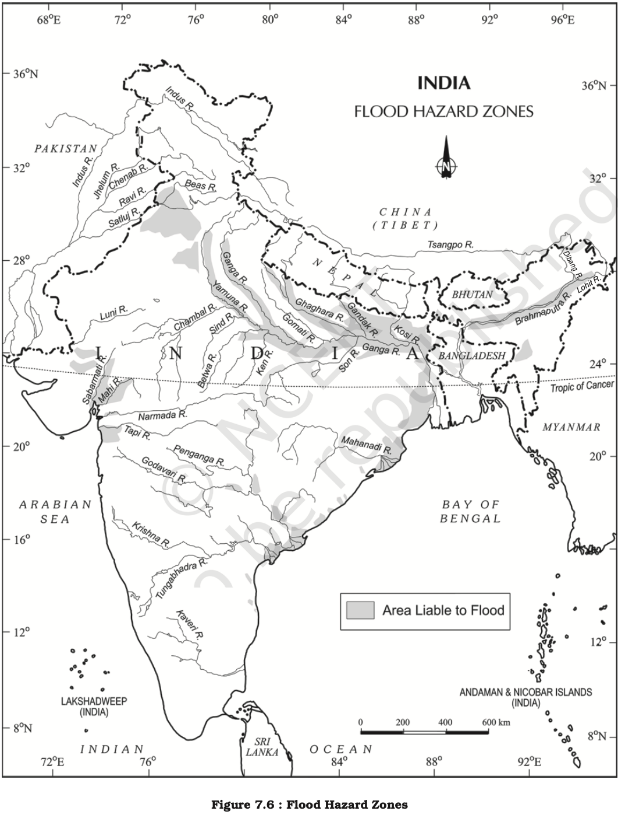
- 30 million hectares affected annually with floods. -MoES
- As per forest survey of india, 50% of forest in the country is fire prone
- Causes
- Heavy Rainfall
- River Overflow : excess rainfall, snowmelt, or dam failure
- Storm Surges : Tropical storms, hurricanes, and cyclones - coastal flooding
- Snowmelt and GLOF
- Dam failure
- Urban flooding
- Deforestation
- Poor Drainage Systems
- Climate Change
- Tsunamis
- Effects
- Loss of lives and injuries
- Displacement of People
- Destruction of Infrastructure
- Economic Losses
- Agricultural Losses
- Waterborne Diseases
- Contamination of Water Supplies
- Environmental Degradation
- Psychological and Social Impact : mental health; PTSD
- Disruption of Education
- Measures
- Flood Forecasting and Early Warning Systems
- E.g. Floodwatch app
- Improved Drainage Systems
- River Channel Management
- Flood protection infrastructure
- dams, levees, embankments, floodgates, and reservoirs
- Wetland Restoration and Conservation
- Land Use and Zoning Regulations
- Community-Based Flood Management
- Afforestation and Reforestation
- Emergency Response Plans
- Public Awareness and Education
- Flood Forecasting and Early Warning Systems
Urban Flooding
- Causes
- Meteorological Factors - Rainfall, Depression, Low pressure area
- Anthropological Factors -
- Improper disposal of solid waste
- Land use Change
Surface sealing
Urban canyons
- Climate Change
- Occupation of the flood plains and waterbodies
- Urban Heat Island Effect
- Hydrological Factors: - Presence of Soil moisture and groundwater level
- Impact
- Way forward
- Urban Flooding Cell (UFC)
- Zoning/mapping in development planning
- Design and Management of Urban Drainage
- E.g. irrigation tanks of Kancheepuram
- Reclaiming wetlands and ecological hotspots
- Creating ‘no development zones’
- Early Warning System e.g. Doppler Weather Radars
- Green Infrastructure
- Example
- Chennai flooding
Draught
-
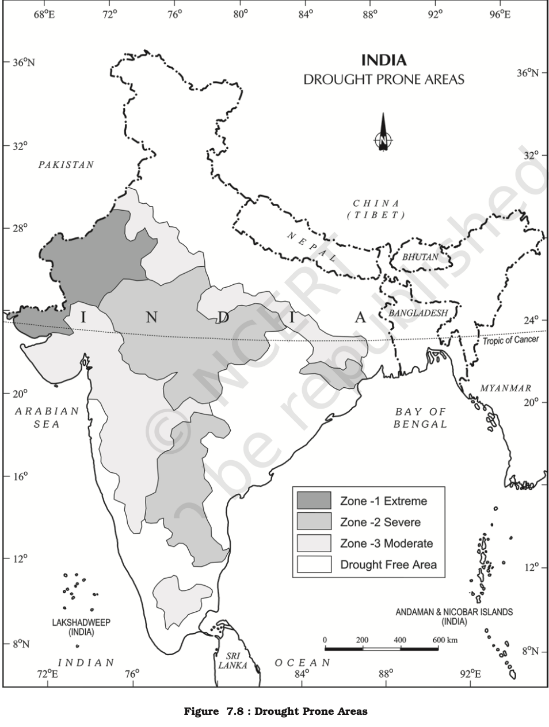
68% population is susceptible to drought -IMD
-
As per forest survey of india, 50% of forest in the country is fire prone
-
Causes - Natural, Anthropogenic
- Excessive evaporation
- Over utilisation
-
Types
- Meteorological - inadequate rainfall
- Agriculture - drought prone
- Hydrological - aquifers, lakes dried
- Ecological - ecological distress due to shortage of water
-
Effects
-
Measures
-
Examples
- Dubai, April 2024
Earthquakes
- sudden and violent shaking of the ground because of tectonic , volcanic or other activities causing great destruction
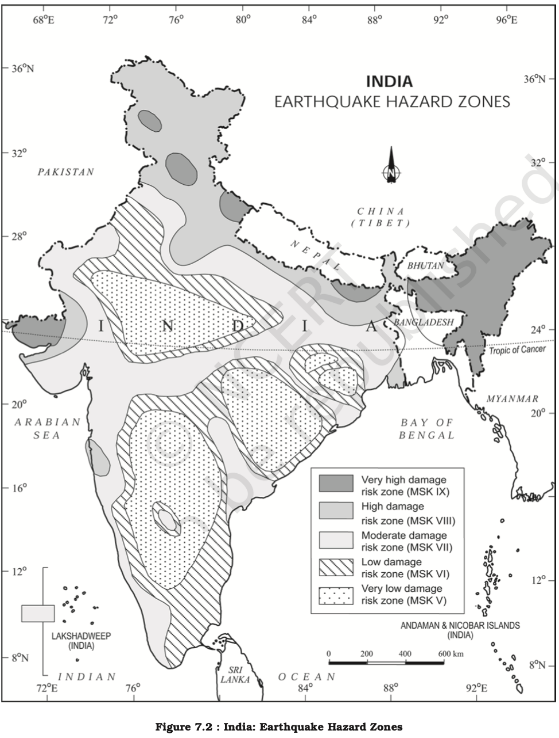
- As per the Vulnerability Atlas of India, 59% of India’s land area is under threat of moderate to severe earthquake.
- Causes
- Natural
- Tectonic : Indian Plate and the Eurasian Plate boundary
- Volcanic
- Anthropogenic
- Mining
- Construction of dams
- Nuclear explosions
- Natural
- Causes of vulnerability (including above)
- High population density in high-risk seismic zone
- E.g. Delhi, Srinagar, and Guwahati
- Non-compliance with seismic-resistant building codes
- High population density in high-risk seismic zone
- Impact (earthquake related hazards)
- Landslides, Glacial bursts, Flash floods, Tsunami, Dam related hazards.
- Major earthquake hazards
- Bhuj Earthquake (2001) - 7.7 on MSK Scale
- 1999 - Chamoli, Uttarakhand
- Uttarkashi Earthquake (1991)
- Bihar-Nepal Border Earthquake (2015)
- 2004 - Indian ocean
- Measures
- Seismological hazard zone mapping
- GPS for monitoring movement of tectonic plates
- Enforcing seismic code
- dissemination of vulnerability risk information
- Surveys and Audits for preparing vulnerability maps
- Disaster resilient infrastructure - using right material (Reducing using concrete in Himalaya’s)
- Follow National building code of India - resilient infrastructure
Landslides
- Landslides are a type of “mass wasting,” which denotes any down-slope movement of rock or debris under the influence of gravity.
- According to GSI, 13.67% of India is prone to landslides
- Indian Landslide Susceptibility Map (ILSM)
- 4.75% very highly susceptible
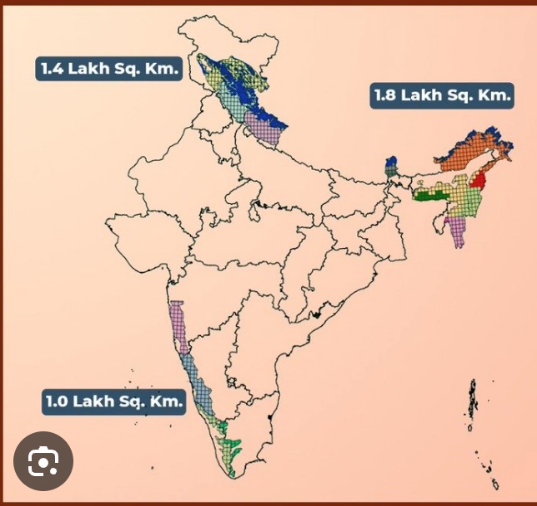
- 4.75% very highly susceptible
| Himalayas | Western Ghats |
| - Tectonically activity - Very steep slopes - Cloudbursts - GLOF - Road construction and mining activities - Deforestation - Sedimentary rocks | - Heavy southwest rainfall - Steep slopes and vertical cliffs - Heavy weathering of rocks - Deforestation and agriculture on slopes - Road construction and mining - Very hard rocks |
-
Causes
- Geological Factors :
- Unconsolidated and fractured rocks
- Plate boundaries
- Natural
- Heavy rainfall
- Earthquakes, volcanic explosions
- Steep slopes and sedimentary rocks
- Freeze-Thaw Cycles; coastal erosion
- Anthropogenic
- Deforestation e.g. shifting agriculture
- Construction activities
- Mining and quarrying
- Terrace cultivation
- Geological Factors :
-
Effect
- Loss of Life
- Economic Losses
- : disrupt transportation, agriculture, and tourism
- Infrastructure Damage : Roads, bridges, and buildings
- Displacement of communities
- Environmental Impacts: soil erosion, pollution of water bodies, and habitat loss.
-
Measures
- Preventive Measures: Land Use Planning; Reforestation ; Slope Stabilization; Drainage Systems
- Geotechnical Monitoring and Early Warning Systems
- Emergency Preparedness: Education and Awareness; Evacuation Plans
- Post-Landslide Actions: Damage Assessment; Rehabilitation
-
National landslide risk management strategy
- Hazard zonation and mapping
- Identification of High-Risk Areas
- Planning and Land Use Management
- Prescribe engineering solutions : retaining walls and drainage system
- Critical Infrastructure Protection
- Community Awareness
- school curricula, community education programmes
- Capacity Building
- Insurance planning : hazard maps to determine premiums and coverage
- Helps in formulating informed policies
- Capacity building and training
- Disaster Preparedness : evacuation plans and emergency response mechanisms.
- Hazard zonation and mapping
-
Bhooskhalan Mobile app
-
Chopra Committee
- Geologically and ecologically sound Sustainable development
-
MC Mishra Committee - > Joshimath issue
-
Ushahidi Framework for empowering locals should be part and parcel of policy making.
Melting of Himalayan Glaciers
- Impact on water resources
- Downstream water drainage
- Flash floods
- E.g. Teesta, Sikkim 2023
- Sedimentation
- Glacial lake outburst floods
- According to the IMD, Himalayan glacial lakes increased by about 9% in number, and 14% in the area
- due to failure of moraine-dammed glacial lakes.
- Causes
Natural
Loose deposits of glacial rocks, boulders, soil
Anthropogenic - CC, GW
- Measures
Dam construction should be avoided
E.g. damages to Chungthang dam, Sikkim
Satellite monitoring
E.g. ISRO’s RESOURSESAT-2
- E.g. South Lhonak lake, Sikkim 2023
- Cascading disasters
- E.g. landslides, avalanches
- Impact on human activities
- Agro practices; industries; tourism; transport; education; healthcare; services
- ICIMOD - Himalayan glacial lakes increased by about 9% in number, and 14% in the area.
- Way forward NDMA -
- using Synthetic-Aperture Radar imagery
- controlled drainage and tunnelling
- land-use regulations for GLOF-prone areas
Cloudbursts
-
According to IMD, cloudbursts are short-duration, intense rainfall events over a small area
-
Mechanism
- Orographic Lift
- Monsoon Dynamics
- Localized Low-Pressure Systems : vertically rising convection currents on heating
- Temperature Inversions
- Cyclonic Disturbances
-
Occurrence
- Himalayas
- Chamoli, 2021
- Amarnath Cloudburst (2022)
- Kedarnath, 2013
- Western Ghats
- Northeast India
- Peninsular India
- Himalayas
-
Causes
- Vulnerable terrain e.g. mountainous region, deserts etc
- Unstable clouds - cumulonimbus clouds
- Upward air movement
- Climate change
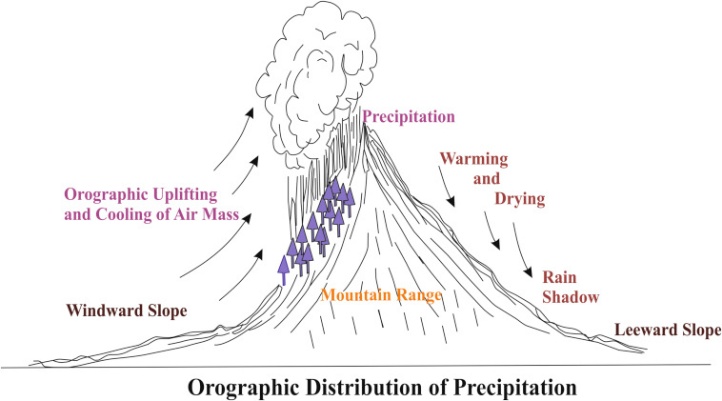
- Measures
- Early Warning Systems : Doppler radar systems by IMD
- Construction of Check Dams and Retention Basin
- Land Use Planning and regulation to avoid construction on flood-prone areas
- Reforestation and Afforestation
- Ushahidi Framework for empowering locals to be part and parcel of policy making.
- Chopra Committee
Heatwaves
-
Prolonged period of abnormally high temperature,
-
4.5 degree - 6.4 above normal; Heatwaves
-
6.4 degree above normal ; severe heatwaves
-
-
Causes
- Climate Change : greenhouse gas emissions trap more heat
- urban heat islands : concrete, asphalt, and reduced vegetation
- Atmospheric Circulation Patterns : Prevalence of hot dry air over a region
- Below average rainfall
- Cloudless skies
- High pressures system - trap warm air
- Anthropogenic Activities: industrial activities, vehicular emissions
- Natural phenomena like El Niño
- Increase in Water Vapor : traps more heat
- Drought Condition
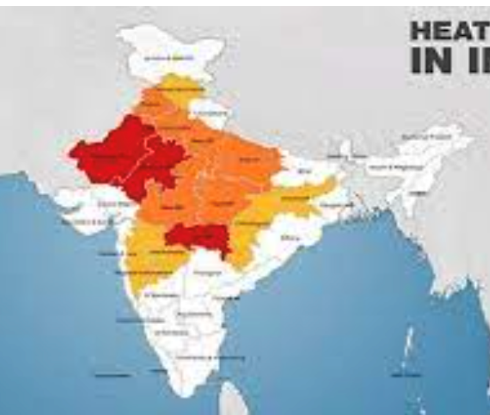
-
Effects
- Health
- dehydration, heat cramps, heat exhaustion and/or heat stroke
- heat-related mortality
- Environmental Impacts:
- Wildfires; Water Resources depletion; reduced agriculture yields
- Infrastructure Impact
- Increased Energy Demand; heat damage - road surface melting, railway track buckling
- Economic Impacts:
- Productivity Loss; Healthcare Costs
- Social
- Disruption of education and recreational activities
- Health
-
Measures
- Heat Alerts and Warnings:
- Hydration and Safety Advice
- Heat action plans (HAPs) at various levels - local, district, national
- creating shaded space, cool water, reorganizing school, college, office schedules
- support for vulnerable groups
- Afforestation and Reforestation:
- Urban Planning and Green Spaces:
- Renewable Energy Transition:
- Water Conservation and Management:
- Restoring water bodies e.g. wetlands, ponds, lakes
- Landfill management
- Public Awareness and Education:
Cold waves
- Prolonged period of abnormally low temperature
- < 4.5 degree - 6.4; coldwave
- < 6.4 degree; severe coldwave
- Causes
- Polar Vortex:
- High pressure area in the jet stream
- La Niña Events:
- Cold air masses
- Radiational Cooling:
- Strong westerlies
- Oceanic Circulation Patterns
- Extensive snow covers over Himalayas
- Effects
- Frostbite and Hypothermia
- Detrimental effects on crops e.g. Wheat, fruits, vegetables and livestock’s
- Increased Energy Consumption
- Measures
Dam failure
- Causes of Dam Failures
- Structural Defects due to poor design or construction flaws
- Unstable or weak foundations
- Excessive seepage through or under the dam
- Earthquakes
- The Koynanagar Dam in 1967
- Extreme rainfall and cyclones
- Banqiao Dam Failure, China (1975) - Estimated 171,000 deaths
- GLOF
- Chungthang dam
- Sabotage
- Measures
- Rigorous Design and Construction Standards
- Regular Inspections and Maintenance
- Real-time Monitoring Systems
- Improved Spillway Design: to handle extreme flood events
- Emergency Action Plans (EAPs)
- Community Awareness and Training
Disaster management
- a comprehensive approach to preventing disasters and dealing with them
Disaster Risk Reduction (DRR)
- is the concept and practice of reducing disaster risks through systematic efforts that involve identifying, assessing, and mitigating the impacts of disaster.
- M-PPP-I-RRR
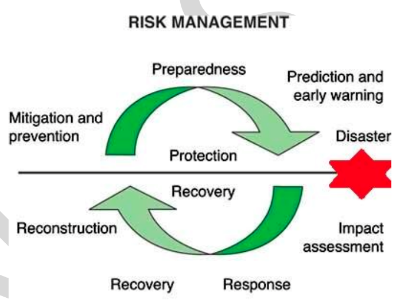
Constraints of DRR
- Lack of coordination
- Limited involvement of community
- Unplanned urbanization
- E.g., repeated incidents of urban flooding
- Low Technological interventions
- E.g., use of robots, drones, Advance Warning System
Measures
Comprehensive Framework
-
National Disaster Management Plan (NDMP), 2016 - Shortcomings - Does not provide precise time frame - Does not set any goals or targets - Early warning system - Doppler weather radars - NAVTEX - navigational text message - Disaster Risk Financing - National Disaster Response Fund (NDRF), SDRF - Preparedness - Urban development - - smart cities mission, AMRUT - Financial preparedness - - PM Suraksha Bima, PM Fasal Bima, Ayushman Bharat - PM Cares Fund - Technological innovations - E.g. Metaverse - simulating disaster drills - Prevention and Mitigation - Gathering Data and Information and prediction - - GAGAN satellite - Avalanche Monitoring Radar (AMR) - Vulnerability zoning maps - (Vulnerability Atlas of India) - Disaster risk mitigation project - e.g. NDMA NCRMP - Public Awareness , local capacity building - Community-Based Disaster Management (CBDM) program - E.g. Quick response teams (QRT) - Disaster resilient infrastructure - CRDI - Local Capacity building - Aapda Mitra Schemes - Response, Relief and Rehabilitation - National Disaster Response Force (NDRF) Expansion - Evacuation, construction of shelters and relief camps, supplying of water, food, clothing and medical aids etc. - Ensure hygiene, sanitation, water, food - Medical facilities - Special care to widows and orphans - Damage Assessment - Recovery - Post disaster need assessment - Restoration of damaged physical infrastructure - Revitalize economic activities - 3R’s -> 3P’s - Rescue, relief and restoration -> prevention, preparedness and proofing.

-
PK Mishra Committee strengthening NDMA and preparation of National Plan should be given due consideration
- 15th FC and CAG recommendation for creation of NDM Fund should be undertaken.
- NCRWC - include disaster management in concurrent list
Vulnerability to disaster
- Susceptibility of community being exposed to hazards
International cooperation
- UN International Strategy for disaster reduction (UNISDR)
- Yokohama strategy
- Disaster management exercises
- BIMSTEC
- Build back better
- Multi Hazard risk management
Sandai framework
- 7 Global targets and 4 Priorities
- Understanding disaster risk
- Strengthening disaster risk governance to manage disaster risk
- Investing in disaster reduction for resilience
- Enhancing disaster preparedness for effective response, and to “Build Back Better” in recovery, rehabilitation and reconstruction
Laws and government initiatives
- NDMA, 2005
- NDM Plan, 2016
- Shortcomings
- Does not provide precise time frame
- Does not set any goals or targets
- Shortcomings
- Indian Coast Guards Remote operating centers
- IMD
- Dynamic, impact based cyclone warning system
- DM act, 2005
- National Disaster Response Force (NDRF)
2nd ARC 3rd Report - Crisis Management
- Disaster management in concurrent list
- Disaster Management in school curriculum
- Use of IT and GIS solutions
- State government in leading role
- National Policy on Disaster Management
Disaster Resilient Infrastructure
- Planning
- Risk assessment
- Building codes
- Construction
- Appropriate materials
- Local sourcing
- Maintenance
- Operational measures
- Early warning systems
- Emergency response plans
- Disaster risk financing
Conclusion
- Following Prime Minister’s Ten Point Agenda on Disaster Risk Reduction
Desertification
- Causes
- Overgrazing,
- Unsustainable agricultural practices
- Overextraction of groundwater
- Deforestation
- Green house gas emission
- Overuse of fertilizers and irrigation leading to salinization and alkalinization of land
- Climate change : changing precipitation patterns, draughts, extreme weather events
- Examples
- Sahel Region of Africa
- Aral Sea
- Amazon Rainforest
- Punjab Plains
- Steppes
- Way forward
- Reforestation
- Sustainable agriculture
- Watershed development and rainwater harvesting
- Land management practices like sand fences, shelterbelt, windbreaks
Vulnerability
-
Vulnerability is the potential for damage due to disaster. It encompasses various dimensions, including physical, social, economic, and environmental aspects.
-
Characterizing Vulnerability
- Exposure : degree to which people, property, and infrastructure are located in disaster-prone areas.
- Sensitivity : The degree to which people and systems are affected by hazards.
- Resilience : ability to adapt and recover for impact of hazard
- Coping capacity : resources and skills available to cope with disaster
-
Types of Vulnerability
- Physical :
- Quality, location, and design of buildings and infrastructure
- population density
- Social :
- Factors like age, gender, disability, and health status influencing capacities.
- E.g. elderlies more prone
- Levels of education and awareness
- Factors like age, gender, disability, and health status influencing capacities.
- Physical :
-
Economic :
- Low income levels
- Dependence on vulnerable livelihoods like forest, agriculture, fishing
-
Environmental :
- Degradation of ecosystems such as deforestation, wetland loss
- Changes in climate patterns
-
Institutional : effectiveness of government agencies and institutions
Carbon cycle
- Weathering of plant material
- Microbial Decomposition
- Cellulose Breakdown into simpler sugars like glucose.
- Fermentation glucose into organic acids, alcohols
- Mineralization