Vocab
- Agroforestry
- Agro-climatic
- Biological soil fertility
- Contour lines
- Cropping intensity: Gross area sown/net area sown
- Conservation Agriculture (CA)
- Geospatial data
- Intercropping
- Integrated farming systems
- Leaching
- Leguminous
- Manure and fertilizers
- Nitrogen fixing
- Organic farming
- Productivity of land and labour
- Precision agriculture techniques
- Permaculture
- Subsistence farming
- Sustainable agriculture
- Yields and stability
- Zero budget natural farming (ZBNF)
- Primary Agricultural Credit Societies (PACS)
- Vermicompost
- Mulching: layer of material applied to surface of soil for preventing soil moisture, improving fertility, reducing weed growth.
Agriculture and Related Activities
- Introduction
- As per PLFS, 1% agricultural growth is 2 times more effective in poverty alleviation as compared to 1 % growth in non-agricultural sectors.
- Significance
- Employ about around 55% of the population
- Agricultural exports were valued at around $53 billion in 2022-23. [APEDA]
- Cultural : Festivals like Baisakhi, Pongal, and Makar Sankranti are centered around harvest seasons.
- Food security
- Major component of Agriculture Sector
- Crop Production
- Food Grains: Staples like rice, wheat, maize, and millets.
- Commercial Crops: Cash crops like cotton, jute, sugarcane, tea, and coffee.
- Horticulture
- Fruits and Vegetables: Diverse range including mangoes, bananas, and tomatoes.
- Fruits: Mangoes, bananas, oranges, and apples are major fruits.
- Vegetables: Potatoes, tomatoes, onions, and brinjals.
- Floriculture: Cultivation of flowers for commercial use.
- Fruits and Vegetables: Diverse range including mangoes, bananas, and tomatoes.
- Animal Husbandry
- Livestock Production: Dairy, poultry, and meat production.
- Fisheries: Marine and inland fish production.
- Forestry
- Timber and Non-Timber Products: Provides wood, bamboo, and medicinal plants.
- Agro-processing
- Crop Production
- Problems with Indian agriculture - Economic | Environmental | Financial | Governance | Technological
- Small and fragmented land holdings
- Example: Average farm size in India is about 1.15 hectares
- Low Agricultural Productivity
- poor irrigation, outdated farming techniques, and inadequate use of technology
- Inadequate Irrigation and Water Management
- only around 48.5% of the net sown area is irrigated
- Low Mechanization
- Mechanization - 50% (OCED - 90%)(NABARD)
- Indebtedness and Limited availability of affordable credit
- population 86% but get only 50% of all loans disbursed
- Overuse of chemicals and fertilizers leading to
- soil degradation
- Example: Nearly 30% of India’s land area is undergoing degradation. - UNCCD
- Skewed N/P/K
- Soil Organic Carbon (SOC) - 0.5% for more then 60% land ( ideally - 1.5-2% as per World Food Laureate)
- Create import dependency : India spent $6.5 billion to import 10.2 million tonnes of urea in FY22.
- soil degradation
- Adverse effects of climate change on crop yields and farming practices
- Disguised unemployment
- 55% workforce and 18% of GDP
- Poor economic outcomes
- Avg income of farm households- 10k per month -NSO
- Lack of proper land records
- Lack of private sector investment
- only 2.4% of total investment in Agri sector
- Inadequate Infrastructure
- Transportation networks, power shortages, and inadequate logistics and storage facilities
- Example: Post-harvest losses account for 10-20% of total production.
- Scarcity of technology
- Only 5% households have tractor and 0.2% have harvester -NABARD
- Issues with marketing of agriculture products
- Cartelization by APMC’s
- Lack of diversification of crops
- 80% for wheat, rice, sugarcane
- Lack of certified seeds
- more than 50% seeds not certified. If done, it may improve the productivity by 25% -min of agriculture
- Excessive ground water extraction
- 90% of all water used in agriculture
- Small and fragmented land holdings
- Solution
- Diversification [ASHOK GULATI]
- dairy farming, poultry, horticulture, livestock rearing and aquaculture.
- Mission for Integrated Development of Horticulture
- Irrigation coverage
- Pradhan Mantri Krishi Sinchayee Yojana (PMKSY)
- Unified agriculture market
- Over 500 mandis online on National Agriculture Market (e-NAM)
- Crop insurance
- About 58 crore farmer applications enrolled under Pradhan Mantri Fasal Bima Yojana (PMFBY)
- Precision agriculture refers to the use of advanced technologies and data analytics.
- Rashtriya Krishi Vigyan Yojana (RKVY)
- Promoting soil health management.
- Over 23 crore Soil Health Cards issued by 2023.
- Promoting sustainable farming
- National Mission for Sustainable Agriculture (NMSA)
- Organic farming - Target to cover 2 lakh hectares under Paramparagat Krishi Vikas Yojana (PKVY)
- Credit support
- Credit guarantee fund - NABARD
- Kisan Credit Card (KCC) Scheme
- Sustainable use of fertilizers
- PM PRANAM
- Income support to farmers
- Pradhan Mantri Kisan Samman Nidhi Scheme (PM-KISAN)
- Leveraging information technology
- Farmer’s Portal of India
- Digi stack (Budget 2023)
- Export promotion
- Agri Export Policy 2018 targets to reach $100 Billion in next few years [ASHOK DALWAI committee]
- Financing infrastructure projects.
- Example: Rs. 1 lakh crore fund for post-harvest infrastructure through Agriculture Infrastructure Fund (AIF)
- Promoting food processing industries
- PM Kisan Sampada Yojna (PMKSY) targets to leverage investment of Rs. 11000 crore benefitting about 28 lakh farmers and generating 5.5 lakh direct/indirect employment.
- Diversification [ASHOK GULATI]
- Conclusion
- We should promote culture of sustainability which would result into evergreen revolution -MS SWAMINATHAN
- ASHOK DALWAI Committee to improve resource use and efficiency at mission mode so that our agriculture can compete at international level
- Article 48 states that State shall endeavour for organisation of agriculture and animal husbandry on scientific lines.
Major Crops
- Food grains
- Cereals - 54 per cent of total cropped area in India.
- Fine grains -
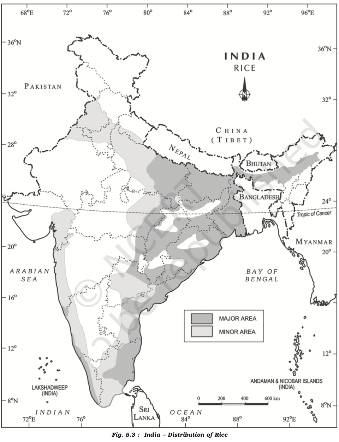
- Rice - tropical zone, kharif
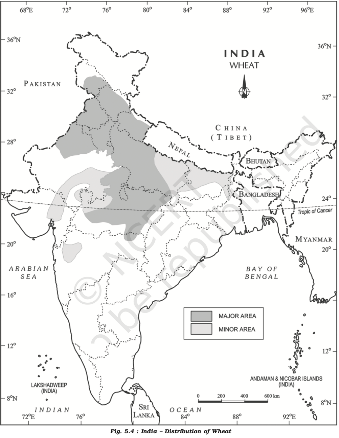
- Wheat - temperate zone, rabi
- Reasons for success
- HYV seeds : IR-8 rice and HD-2967 wheat varieties
- Irrigation infrastructure : Bhakra Nangal and Indira Gandhi canals facilitated irrigation in Punjab, Haryana, and Rajasthan.
- Policy support - MSP
- Fertilizers and pesticide use : Fertilizer consumption in Punjab rose from 37 kg/ha in 1970 to over 200 kg/ha by 2000.
- Farm mechanization :
- Agro-climatic suitability : fertile alluvial soil and suitable temperatures
- Institutional measures - land reforms, tenancy reforms, cooperative farming
- Technology - micro irrigation
- Demand - food preference
- Issues with rice and wheat system
- Soil Degradation
- Overextraction of groundwater
- Stubble burning - air pollution and environmental degradation
- Fiscal challenge - MSP procurement
- Pest and Disease vulnerability
- Overuse of chemical fertilizers, pesticides - import dependency
- Way forward
- Crop diversification : pulses, oilseeds, and vegetable
- ARVIND SUBRAMANIAN committee
- Sustainable Agricultural Practices : zero-tillage, crop rotation, and organic farming.
- Efficient micro-irrigation systems
- Agricultural marketing reforms
- Soil Health Restoration : cover crops, green manuring, natural amendments
- Integrated Pest Management (IPM) : biopesticides, pheromone traps, and natural predators
- Strong forward and backward linkages
- Food processing, FMCG
- Changing MSP Policy - millets
- Rice - tropical zone, kharif
- Fine grains -
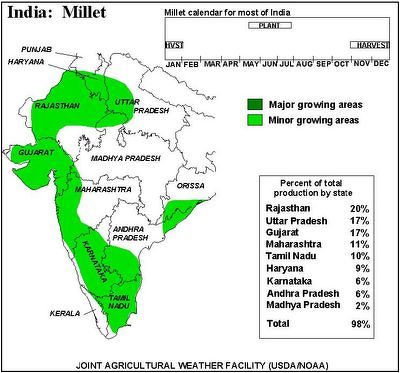
- Coarse grains : Millets - The coarse cereals together occupy about 16.50 per cent.
- India produces 40% of world’s millets (largest producer and 2nd largest exporter)
- Historical evidence of consumption of millets by Indus valley people
- Jowar(MH, kharif), Ragi, Bajra(RAJ), Maize(KA, MP)
- Black soil, Red soil, Arid Soil
- Advantages
- Of Production
- Climate smart grains - draught, excessive rainfall
- Income security
- Crop diversification
- Sustainable agriculture
- Very less water, less fertile soil and warm and arid regions, shorter growing season of 70-100 days
- Less energy consumption
- Dual purpose - food and fodder
- Improve soil quality
- Of consumption
- Hidden hunger - Nutri-cereals - 7-12 % Protein, 15-20% dietary fibers
- Reduces risk of heart disease, diabetes, obesity, gluten free, anaemia (57% women anaemic)
- Of Production
- Challenges
- low-yield per hectare
- Digestive issue - high fibre - bloating, gas, constipation
- Low glycaemic index
- Don’t eat millets
- Thyroid issues - millets creates issues iodine absorption
- Gluten sensitivity
- Way Forward | Government Initiatives
- Budgetary support to make India a global hub for ‘Shree Anna’ (millets)
- Long term measure
- Attitudinal and behavioral changes of consumers
- Short term measures
- More Procurement of millets under NFSA, 2013
- Poshan 2.0 - millets rich mid day meal
- Increase farmer income
- Tejaswi programme of MP - increased farmers income 10 times
- PDS, MSP, Awareness, Promotion
- Conclusion
- SDG 2
- Pulses - Pulses occupy about 11 per cent of the total cropped area in the country.
- Chickpea (Gram), Pigeon Pea (Tur/Arhar), Lentils
- Gram, tur(arhar), Groundnut (India produce 18.8 per cent of world, kharif in north, GJ, RAJ)
- India is world’s largest producer of Pulses - 25% of world
- legume crops - nitrogen fixing
- Pulses development scheme
- Cereals - 54 per cent of total cropped area in India.
- Oilseeds - 2.5 per cent of total cropped area in the country (RAJ, HAR, MP)
- 60% import dependence
- Groundnut, Rapeseed, Mustard, Palm
- Rai, sarson, toria, taramira
- frost sensitive crops
- Soybean and sunflower (MP,MH)
- Government initiatives
- Mission Oil Palm
- Fibre crops
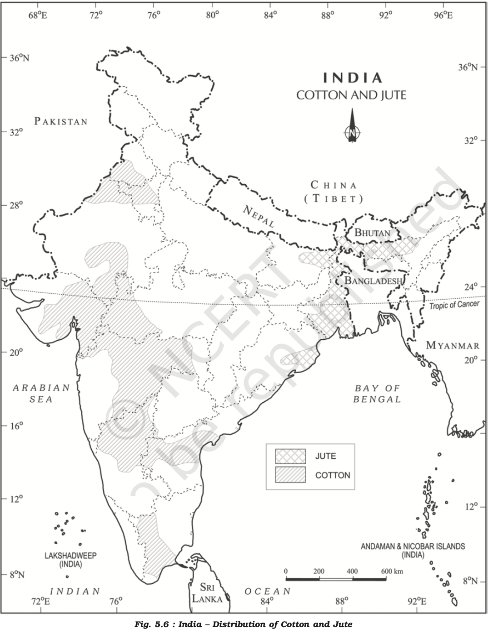
- Cotton (Kharif, Tropical, needs clear sky during flowing period) - 4.7 per cent of total cropped.
- Jute
- Other crops
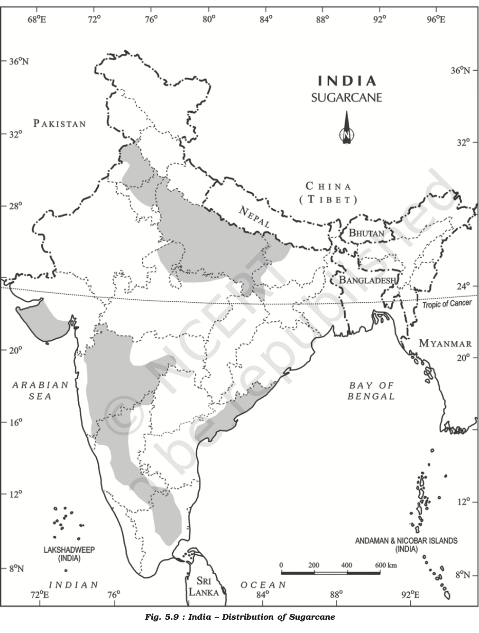
- Sugarcane (tropical, UP, MH, GJ)
- India is largest producer of sugar in world
- India is largest producer of sugar in world
- Tea - 21.22 per cent of total production in the world.
- Coffee (arabica, Robusta and Liberica, Karnataka largest producer)
- India produces more Robusta since last decade.
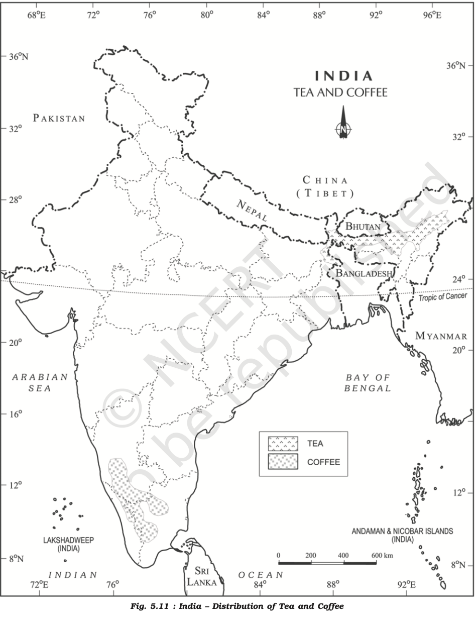
- India produces more Robusta since last decade.
- Rubber
- Kerala accounts for 67%. others - Karnataka, Tamil Nadu, Assam and the other North Eastern States
- Silk
- India produce all the 5 types of commercial verities of silk
- Mulberry
- Oak tussar & tropical tussar
- Muga
- Eri
- India produce all the 5 types of commercial verities of silk
- Sugarcane (tropical, UP, MH, GJ)
- Threats to crops -
- Pests
- Disease
- Weeds
- Development
- High yielding varieties of seeds, chemical fertilisers, pesticides and farm machinery.
- Government schemes
- (PM-AASHA) Scheme
- Integrated scheme of Oilseeds, Pulses, Oil Palm and Maize (ISOPOM)
- National Food Security Mission
- National Horticulture Mission (NHM)
- Boosting Production
- Expansion of area under cultivation of horticultural crops
- Introduction and promotion of high-yielding and disease-resistant varieties.
- diversification of crops
- training and capacity-building programs for farmers
- Improving Productivity
- Adoption of advanced horticultural techniques such as drip irrigation, mulching, and protected cultivation
- integrated nutrient and pest management
- development of infrastructure such as nurseries, cold storage, and processing units.
- Horticulture crop research
- Increasing Farmers’ Income
- Facilitated market linkages to sale produce
- value addition through processing and packaging
- export of high-value horticultural produce
- Alternative income source throughout year
- Limitation to consider
- Uneven benefits - small farmers don’t have capital and capacity to invest
- Market fluctuation lead to price volatility
- Boosting Production
- Advantages of organic farming
- Ecological
- Soil Health Improvement through the use of compost, green manure, and crop rotation.
- Biodiversity Conservation by eliminating synthetic pesticides and fertilizers
- Preventing water pollution by preventing chemical runoff
- Increasing carbon sequestration in soil
- prevent land degradation and desertification
- Enhanced ecosystem services like nutrient cycling
- Economic
- Premium pricing increasing farmers’ income.
- Reducing input cost on pesticides and fertilizers
- Eco-tourism
- Export Opportunities
- Employment Generation : Organic farming practices are labor-intensive
- Ecological
- Challenges
- Conclusion
- SDG #2
- ASHOK GULATI
- Direct Seeding Method
- Seeds are directly drilled into the fields. There is no nursery preparation or transplantation involved in this method.
- Requires laser levelling of land and one pre-sowing irrigation.
- Advantages
- 15% of Water Conservation
- Labour Efficiency (transplanting of saplings from nursery is no more required)
- Time, Yield, Soil Health मस्त
- Challenges
- Weed Management
- Vulnerability to Climate Extremes
- Initial Learning Curve
- High seed requirement
- Compulsory land levelling
Cropping patterns
- Cropping pattern is defined as the spatial distribution of crops that are being produced in an area in a given sequence of time.
- Importance of Cropping Pattern
- Issues in Cropping Patterns
- Rice-Wheat dominance system
- Monoculture
- Neglect of coarse grains
- E.g. 16.5%
- Less diversification
- Types of Cropping Pattern
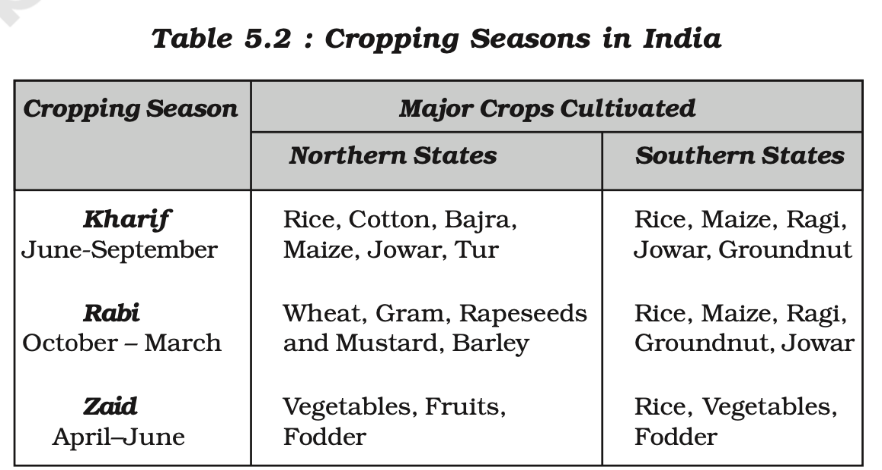
- Cropping practice
- Monocropping -
- Practice of growing one crop species in a field at a time -
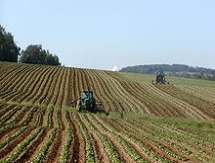
- Widely used in commercial agriculture
- Continuous monoculture -> monocropping : growing same crop year after year
- Practice of growing one crop species in a field at a time -
- Intercropping

- Two complimentary crops simultaneously
- Crop Rotation - different crops in a sequential order
- Strip Cropping - different crops in alternate strips
- retain soil moisture, prevent runoff, and improve soil structure.
- Relay Cropping - planting a second crop in a field before the first crop is harvested
- Mixed Cropping: different crops simultaneously without any distinct row patterns or arrangement
- Mixed farming : a system of farming which involves the growing of crops as well as the raising of livestock.
- Agroforestry
- Shelterbelts and Windbreaks - rows of trees planted along the edges of fields
- reduce wind erosion, microclimatic benefits.
- Monocropping -
- Reasons Why Cropping Pattern Differ
- Biophysical factors - Climatic, edaphic, topographic, biotic
- Socio-economic - market demand, profitability, labour availability
- Technological - availability of seed, fertilizers, pesticides, mechanization
- Policy and institutional - subsidies and price support, infrastructure, credit availability
- Factors Influencing Cropping Pattern
- Long-Run Effects of Current Trends in Cropping Pattern
- Emerging Trends in Cropping Pattern
- Shift to High-Value Crops : fruits, vegetables, and dairy
- Climate-Resilient Farming like growing millets
- Emphasis on Pulses and oilseeds:
- Organic Farming
- MP emerged as highest producer of organic farming products
- Agroforestry Practices
- Precision Agriculture
- Adaption Biotechnology and GM Crops
- Bt cotton - 95% cotton area, nano-urea
- Zero-Budget Natural Farming (ZBNF)
- Sustainable Farming Practices like crop rotation, mixed farming, agroforestry
- Integrated Pest Management (IPM)
- Water-Smart Agriculture
- Tapping in export potential : basmati rice, spices, and fruits
- Government policies
- MIDH (Mission for Integrated Development of Horticulture)
- National Food Security Mission
- National Mission on Sustainable Agriculture (NMSA)
- Difference
| Zero-Budget Natural Farming (ZBNF) | Organic Farming |
| No reliance on purchased inputs | Allows certain natural inputs |
| Emphasise on Soil health and indigenous knowledge | Ecological balance and third-party certification |
| Low cost and high profitability | Can be more expensive, but may fetch higher market prices |
| Primarily focused on local markets | May target premium organic market |
| Diverse crop rotation and intercropping |
- Integrated Farming system
- Is a holistic approach to farming involving farm activities like cropping, livestock rearing, poultry farming, fishery, forestry and other allied activities in a synergistic manner.
- Significance
- Diversification of income:
- Efficient resource utilization - with optimal use of farm resources like water, feed, and fertilizer
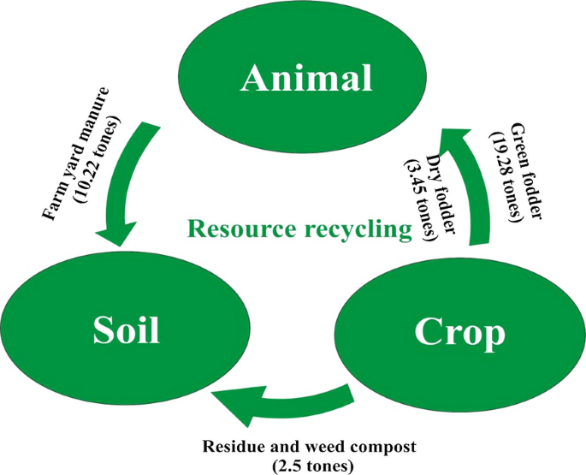
- Food and nutrition security : vegetables, milk, and eggs produced
- Soil health : Integration of legumes and millets
- Risk mitigation
- Environmental sustainability
- Rural employment and entrepreneurship
- Reduce Agriculture distress
- Controlling migration
- Lower Input Costs
- Challenges
- initial investment
- Knowledge and training
- Market access
- Case studies
- Sikkim’s Organic Mission:
- Kuttanad : rice-fish farming system
- Andhra Pradesh’s Zero Budget Natural Farming (ZBNF) : crop diversification, natural manure
- Crop diversification
- Crop diversification refers to the practice of cultivating a variety of crops
- Present Challenges
- Economic Viability : farmers prefer rice and wheat for higher market value
- Lack of robust market linkages and storage facilities for diversified crops.
- Inadequate cold storage for horticultural products
- limited knowledge and awareness in farmers
- Limited access to credit for investing in new crops
- Limited farm mechanization and technologies supporting diverse crops
- Policy barriers : Minimum Support Price (MSP) and FRP benefits few crops
- Opportunities Provided by Emerging Technologies
- Genetic Engineering and Biotechnology: can provide high-yielding and resilient crop varieties
- GM mustard
- Remote Sensing and GIS: planning and monitoring of diversified crop areas.
- Vertical and Hydroponic Farming : allow cultivation with minimal water use.
- Precision Agriculture: data analytics, IoT, and GPS can help to optimize crop selection
- Artificial Intelligence (AI) : identifying disease, pest and nutrient deficiencies
- Mobile apps and internet : real-time market information, weather forecasts
- Drones : efficient planting, pesticide and fertilizer application
- Agroforestry Systems : help in integrating crops with livestock and silviculture
- Genetic Engineering and Biotechnology: can provide high-yielding and resilient crop varieties
- Way forward
- ASHOK DALWAI Committee recommendation to encourage livestock enterprises
- Rainbow revolution - MS SWAMINATHAN
Irrigation System
- Introduction
- Irrigation is the artificial application of water to the soil to assist in the growing of crops.
- According to Water Resources Assessment Report by Ministry of Jal Shakti -
- 67 % of total irrigation is groundwater based.
- Atal Bhujal Yojana (Atal Jal) - to improve ground water management
- 20% of irrigated area is covered under micro irrigation
- 54% population faces high water stress - NITI Aayog
- 67 % of total irrigation is groundwater based.
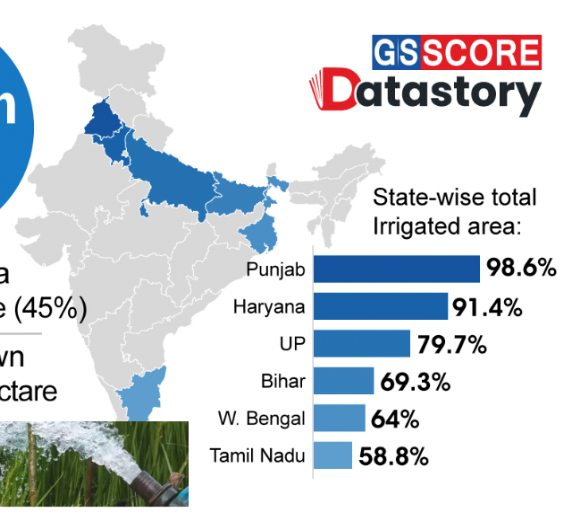
- (Water Stress पूछे तो इसका उल्टा कर दो)
- Type of irrigation schemes
- Major - > 10000 hectares
- Medium : 2000 to 10000 hectares
- Minor : < 2000 hectares
- Sources of Irrigation
- Rainfed
- Irrigated
- Types of irrigation system
- Surface
- Flood Irrigation
- Furrow Irrigation : Water flows in small channels between the crop rows.
- Sub-surface
- Basin and Perforated Pipe Systems
- Sprinkler - save 40% water vis-a-vis flood irrigation
- Or Drip irrigation - save 75%
- Micro-irrigation : refers to the delivery of water directly to the root zone of plants through drips or sprinkler
- Features
- Using emitters, sprinklers and drips
- Low volume of water
- Low pressure, high frequency
- Advantage
- Water Use Efficiency : reducing loss through evaporation and runoff
- Increased crop yield:
- efficiently delivery of water and nutrients
- Ideal moisture level in the root zone
- Automation, Flexibility and precision - control the flow rate, duration, and frequency of irrigation
- Reduced energy consumption
- Soil health and erosion control - reduce salinization, alkalisation
- Reduce fertilizer usage
- Reduce runoff and eutrophication
- Fertilizer subsidies about 6500 crore rupees
- Reduce weeds and pests
- Prevent waterlogging
- Compatible with sustainable practices
- Organic farming, natural farming
- Turns water intensive to water effective crops
- Sugarcane, rice etc.
- Features
- Issues
- Limited irrigation coverage
- Financial and technical constraints
- Regional variation
- Limited awareness and training about benefits and maintenance
- Surface
- Choosing an Irrigation System
- Problems Associated with Irrigation
- Intrusive irrigation
- Progress of Irrigation Under Five Year Plans
- Environmental Effects of Irrigation
- Irrigation system storage
- Extensive irrigation
- Watershed Development
- Warebandi system
- Irrigation System Storage
- Surface Storage Systems :
- Reservoirs and Dams
- Traditional
- Tanks and Ponds
- Groundwater Storage
- Aquifers and Wells
- Rainwater Harvesting
- Farm Ponds and Rooftop Harvesting
- Check Dams and Percolation Tanks
- Surface Storage Systems :
- Importance of efficient irrigation and storage system
- Maximizing crop yields
- Draught mitigation
- Climate resilience
- Sustainable agriculture
- Need for Systemic Irrigation Reforms | Measures
- Rainwater Harvesting :
- SWAMINATHAN committee
- Recycling grey water
- Water Storage Infrastructure development
- Modernize Irrigation Systems
- Drip irrigation, sprinkler irrigation
- Improve Canal Networks: interlinking of rivers
- Revive traditional water conservation methods
- E.g. step wells (Gujarat), Tankas (Rajasthan)
- Crop diversification and rotation :
- “Sahi Fasal” campaign
- Millets
- Public awareness
- Jal Shakti Abhiyan: Catch the Rain (JSA:CTR)
- Technology -
- soil moisture sensors, GIS systems, precision agriculture
- IoT sensors and automated systems for precise irrigation.
- Solar pumps [PM KUSUM]
- Legal and regulatory measures - promote water conservation, prevent over-extraction.
- Awareness and training
- E.g. Apna taalab abhiyan
- Jal Shakti Abhiyan
- Nal se Jal
- Subsidies and financial incentives
- Research and development
- Policy
- National Water Policy
- Community based governance
- E.g. Hiware Bazaar Model
- Rainwater Harvesting :
- Government Initiatives
- Pradhan Mantri Krishi Sinchayee Yojna (PMKSY) target to cover 10 million hectares.
- National Mission for Sustainable Agriculture (NMSA)
- Atal Bhujal Yojana
- Jal Shakti Abhiyan
- Conclusion
- MIHIR SHAH Committee recommendation on watershed development can be implemented.
- National water commission

- National water commission
- MIHIR SHAH Committee recommendation on watershed development can be implemented.
E-Technology in the aid of farmers
- Introduction
- Precision Agriculture
- Use GPS, IoT, and data analytics in field mapping and soil health monitoring
- Variable Rate Technology (VRT) for fertilizers and pesticides application based on specific field conditions
- Remote Sensing and GIS in yield estimation and real time crop monitoring
- Mobile Applications and Platforms
- E-Marketing Platforms like E-NAM
- Weather Forecasting Apps
- IMD’s Meghdoot app
- Advisory Services on best practices, pest control and crop management
- Digital literacy programs for farmers.
- MOOCs and online courses on modern agricultural practices.
- Example : AgriPathshala
- Online farmer communities
- Internet of Things (IoT) and Smart Farming
- IoT enabled Automated Irrigation Systems
- Smart Sensors for monitoring soil moisture, temperature, crop health
- Wearable sensors for cattle
- Data Analytics and Big Data
- Crop Yield Forecasting
- Supply Chain Optimization
- Information technology
- Kisan Call Centres
- Agri-Tech Start-ups
- Kisan Credit Card (KCC), Direct Benefit Transfer (DBT)
- Supply Chain Management Systems:
- Streamline logistics and reduce post-harvest losses.
- Online Training and Capacity Building:
- Educate on modern farming practices
- Digital Payment Systems:
- Facilitate secure and prompt transactions between farmers and buyers.
- E-Commerce platform : to reach wider customer base
- Agri tech Startups
- Farmers Fresh Zone and DeHaat - marketing
- NinjaCart; AgriBazaar - D2C
- Skymet - advisory
- EM3 Agri Services - mechanization
- KrishiHub offer soil testing kit
- Liquid Nano Urea - Introduced by IFFCO
- Biotechnology and genetic engineering
- Genetically modified (GM) crops - enhanced yield, pest resistance, nutritional content, draught tolerant, better seed quality
- E.g. Bt Cotton, GM Mustard
- Reduced Input Costs: reducing need for chemical pesticides and fertilizers -> savings and sustainability
- E.g. Nano Urea
- Enhanced Crop Quality - Increased shelf life, enhanced nutritional value, and better taste.
- Improved Storage and Shelf-Life
- Higher Market Value : e.g. High-protein maize varieties
- Stress-Tolerant Crops: -
- Improved Soil Health : e.g. application of azotobacter bio-fertilizer
- Access to International Markets - producing desired crops
- E.g. export of Bt cotton
- Genetically modified (GM) crops - enhanced yield, pest resistance, nutritional content, draught tolerant, better seed quality
- Issues
- Herbicide Resistance:
- lead to the development of superweeds and increased herbicide use
- Impact on biodiversity and ecosystem balance
- Impact on Non-target Organisms
- horizontal gene transfer to wild plants or microorganisms
- Long-term Effects
- Herbicide Resistance:
- Digital Platforms and E-commerce
- farmer-to-consumer interactions
- Drone
- Irrigation, monitoring crop health, planting, crop spraying, soil analysis
- Artificial intelligence
- Precision Agriculture:
- data analytics
- valuable insights on soil health, crop growth, and irrigation needs.
- data-driven decisions
- Crop Monitoring and Disease Detection
- Smart Irrigation:
- precisely schedule irrigation
- Crop Yield Prediction
- real-time data on weather patterns, soil conditions, crop growth,
- farmers plan their harvesting, storage, and marketing activities
- Farm Automation
- Market Intelligence:
- price trends, demand patterns, and consumer preferences.
- crop selection, timing of sales, and marketing strategies. -> maximise their profits
- Farm Management Systems
- track farm inputs, monitor livestock, manage inventory,
- Precision Agriculture:
- National Strategy for AI - Agriculture priority
- Robotics
- Detection of weeds
- IOT based sensor networks
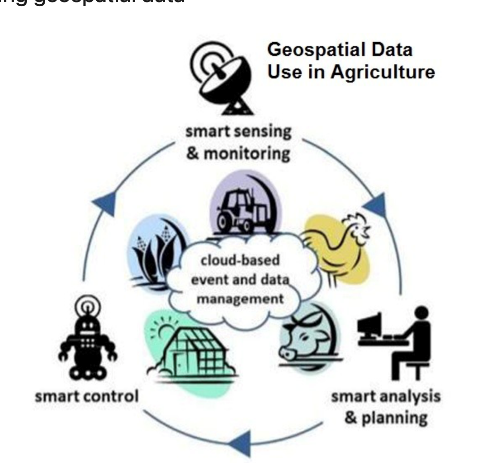
- Geospatial Knowledge Infrastructure (GKI)
- In agriculture
- Precision farming - Precision farming combines the power of artificial intelligence (AI), Global Navigation Satellite System (GNSS), and Big Data.
- This data later helps in Crop scouting, Soil sampling, Weed location, accurate planting, and harvesting. (SWAH)
- Better crop forecasting
- Better implementation and risk assessment
- PM Fasal Bima Yojana
- Increased Landholding size: Along with the SWAMITVA scheme by Land pooling.
- In allied sectors
- Fisheries - PM Matsay Sampada Yojana
- Enhanced fish production of 22 million metric tons.
- Increase of contribution of Gross Value Added (GVA) of fisheries sector to agriculture GVA to 9%.
- Reduction of post-harvest losses to about 10% (currently 25%)
- Fisheries - PM Matsay Sampada Yojana
- In agriculture
- Dairy
- Minor Forest Produce
- Revolutions
- Green Revolution - HYV seeds, fertilizers, pesticides.
- White Revolution - operation flood
- Blue Revolution - fisheries, aquaculture, marine products
- Golden Revolution - fruits, honey, horticulture crops
- E.g. bananas, mangos, coconut, spices.
- Yellow Revolution - Oilseed - mustard, sesame etc.
- Measures
- Agriculture accelerator fund to boost agritech startups.
- Digital Agriculture Mission (DAM) initiative
Transport and Marketing of Agriculture Produce, Issues, Related Constraints
- Introduction
- Indian agriculture has expanded significantly since the country’s independence. However, though, the need is to create a competitive marketing systems and efficient transportation infrastructure.
- The marketing of agricultural products in India involves several processes from production to consumer delivery.
- Broadly categorized into upstream (production and supply chain) and downstream (distribution and sales) activities.
- Process of Agricultural Marketing - Marketing Channels, Functionaries, Costs, etc.
- Agricultural marketing is a process that involves the assembling, storage, processing, transportation, packaging, grading and distribution of different agricultural commodities across the country.
- Role of FCI
- Regulated Markets
- Warehousing
- E-NWR
- Cooperative Marketing
- Shortcomings of Current Agricultural Marketing Process
- APMCs (Agricultural Produce & Livestock Market Committee)
- National Agricultural Market (NAM)
- Farmer Producer Organisations (FPO)
- Advantages
- enhance their bargaining power
- leverage economies of scale
- reduction in cost of production
- enhancing farmers’ incomes through aggregation of their agricultural produce
- Advantages
- Contract Farming
- Futures Trading in Agricultural Commodities
- Main Constraints in Transportation
- Inadequate Infrastructure : Poor road connectivity,
- Lack of Cold Chain Facilities : lead to high post-harvest losses
- Fragmented Supply Chains : multiple intermediaries between farm and market raise costs and reduce efficiency.
- High Transportation Costs: constitute up to 25% of the total cost reduce competitiveness
- limited Access to Advanced Technology : GPS tracking systems for monitoring
- Bureaucratic Delays : time-consuming procedures at check-posts and toll gates
- Main Constraints in Marketing
- Market Infrastructure Deficiency : poorly maintained market yards and mandis without basic facilities like grading, sorting, and storage.
- Middlemen domination
- Fragmented and Regulated Markets : farmers restricted to sell in APMCs
- Information Asymmetry: leads to high price volatility and lack of transparency in price discovery
- Monopolistic Practices : cartelization of APMCs - skipping the auction route
- inadequate digital infrastructure (leads to delay in processing of applications and payment failures).
- Bottlenecks in Upstream and downstream process of marketing
- Upstream
- Poor Quality of Inputs : substandard seeds, fertilizers, and pesticides
- Fragmented land holding : Average farm size in India is about 1.15 hectares
- Difficult to achieve economies of scale
- Low efficiency
- Lack of Institutional credit
- E.g. NABARD - only 60% take institutional credit
- Poor logistics and transportation infrastructure
- Lack of storage Infrastructure:
- E.g. warehouses, cold chains, irrigation systems.
- 30% of fruits and vegetables perish due to lack of cold storage. [NABARD]
- Policy constraints : Subsidies and MSP focus predominantly on rice and wheat leading to imbalance
- Extreme climate events
- E.g. heatwaves, frequent flooding, draughts
- Low Adoption of Technology:
- E.g. lack of GIS, remote sensing, drones
- Seasonal Imbalances
- E.g. prices of tomatoes, onions, lime etc.
- Downstream
- Fragmented markets
- E.g. Divided in APMC’s
- Middlemen domination
- Lack of standardization in quality and grading.
- Only 50% farmers use certified seeds - MoA
- Market Infrastructure Deficiencies - overcrowded and poorly maintained mandis
- Price volatility and lack of information affects farmers income
- Limited Export Opportunities
- Cartelization of markets
- APMC agents manipulate price
- Lack of transparency in price discovery
- Inefficient Distribution Networks
- delays, spoilage, and higher costs
- Limited Processing and Value Addition
- Leads to wastage and post-harvest losses
- Regulatory and Policy Constraints:
- MSP, minimum export prices, and quality standards prevents exports.
- Lack of Direct Marketing Channels to consumers
- Farmers’ markets (Raithu Bazaars) are very few
- Protectionism and trade wars limit exports
- USA, EU, imposing tariffs barriers
- Changing food demands
- E.g. organic food, low carb diets
- Lack of awareness
- E.g. eNAM, market demand, prices, and best agricultural practices
- Fragmented markets
- Upstream
- Role of E-commerce in overcoming this bottlenecks
- Improved Market Access
- E.g. customers in both urban and rural areas.
- Efficient and streamlined process
- E.g. online ordering, inventory management, and order fulfilment
- Real-Time Data and Analytics
- helps in demand forecasting, inventory optimization, and decision-making
- Better supply chain management
- Direct-to-Customer
- Bypass middlemen’s , win-win for both farmer’s and consumers
- Improved Logistics and Delivery
- E-commerce focuses on last-mile delivery capabilities
- Transparent pricing, product information, and customer reviews
- Improved Market Access
- Role of supermarkets in supply chain management
- Direct Procurement from farmers and FPOs
- Strict quality controls
- Advanced logistics and supply chain management systems
- Sophisticated inventory management systems
- Engage in value addition by cleaning, sorting, grading, and packaging produce
- Advanced tracking and traceability systems used by supermarkets
- How they Eliminating Intermediaries:
- Direct Sourcing Agreements
- Contract Farming:
- In-House Distribution Centers
- Digital Platforms and e-marketplaces
- Price Stability and timely payments to farmers
- Way forward
- Agricultural Marketing Infrastructure scheme
- market information and intelligence
- Research and Information Network (MRIN), Agmarknet
- Digital Public Infrastructure in agriculture
- Direct marketing channels (Krishi Udaan, Agri-Export Policy, GrAMs).
- National Mission on Seeds
- Promoting contract farming (Model Contract Farming Act)
- Mandi reform measures (model APLM Act 2017)
- Agri-Tech Solutions and Digital Marketing:
- AgriBazaar and DeHaat platforms
- Agricultural Export Policy (2018)
- 3L - Land leasing, land records, land titles
- GI Tagging
- Centralized database for better policy and planning
- Cooperative marketing
- ASHOK DALWAI committee
- National Agricultural Market (NAM)
- Private sector participation
- Model agriculture produce and livestock marketing act
- Promote FPO’s ( minimum target - 12000)
- Conclusion
- Reforms in transporting and marketing are much needed to increase the farmer’s income and achieving sustainable development goals (e.g. 1,8,10,12)
Subsidies
- Introduction
- Subsidies are transfer payments from the government where there is no exchange of goods and services in return.
- Agricultural Pricing Policy
- Types of Subsidies
- Issues
- Direct Subsidies : financial support
- Minimum support price (MSP)
- Fertilizer subsidy
- DBT Schemes like PM-KISAN
- Crop insurance - PMFBY
- Irrigation subsidies : PMKSY; PM KUSUM
- Indirect Subsidies : cost reduction
- Power subsidies
- Public irrigation infrastructure: Government investment in dams, canals benefits farmers
- Public Distribution System (PDS)
- Tax exemptions: Income from agriculture
- Subsidized agricultural credit: Farmers get loans at concessional interest rates
- Fertilizer subsidies
- Urea subsidy
- Nutrient based subsidy for NPKS percentages - for DAP, MOP
- Rationale for Subsidies
- Prevents distress selling
- Incentivize production
- Ensure minimum farmer’s income
- Safety net for small and marginal farmers
- E.g. cyclic shocks like extreme climate, covid-19
- Problems of subsidies
- Financial burden on government
- Promotion of Monoculture
- Cereal centric - E.g. rice due to cheap electricity and MSP in Punjab
- Overuse of resources
- Fertilizers and pesticides causing pollution
- Disincentivise technological adaption
- Resource diversion towards one time benefits
- Opportunity cost
- Inhibits capital formation in agriculture sector
- Increase wastage
- Power subsidies
- Increased carbon footprint
- Distort market prices
- WTO Compliance Issues
- Clash with WTO Agreements
- Market Distortion : price support measures like MSP are considered under Amber Box
- Public stockholding program : contested for distorting international trade
- Lack of transparency: WTO seeks clearer documentation and reporting of all agricultural subsidies
- Breach of De Minimis Limits
- India’s Arguments
- Development needs: crucial for supporting small farmers and ensuring food security for a large population.
- Developed countries’ subsidies : high levels of support provided by developed countries as well.
- De minimis provisions : India claims its subsidies fall within permissible limits under WTO rules.
- find a balance between development needs and fair trade practices.
- Advantages of DBT
- Reduces leakages and diversions
- Eliminate duplication and inclusion error
- Ability to make choices based on needs and preferences
- Promote competition and efficiency in market
- Reduction in Administrative Costs
- Financial Inclusion
- E.g. Jan Dhan Accounts
- Data-Driven Decision Making
- Evidence-based policy-making, program evaluation, and targeted interventions
- Reduction of Market Distortions
- Recommendations
- Targeted Subsidies
- Promote Sustainable Practices
- Example: Incentivizing organic farming and water-efficient crops.
- Gradual reduction of subsidies while promoting market-based pricing mechanisms.
- Government Initiatives -
- PM AASHA Scheme - aaya aanadata sanrakshan abhiyan
- Price support schemes
- Price deficiency payment scheme
- Private procurement and stockiest scheme
- PM AASHA Scheme - aaya aanadata sanrakshan abhiyan
- Conclusion
- Increasing farmer’s income …
MSP
- Introduction
- MSP is a government policy designed to ensure farmers a guaranteed price for their crops, providing them with a safety net against fluctuating market prices.
- Cabinet committee on economic affairs notifies chaired by PM at the start of the sowing season for specific crops.
- Need for MSP
- Protecting farmers from price volatility
- Improving farmers’ livelihood
- Issues
- Regional Disparities
- Example: Punjab and Haryana dominate MSP procurement, whereas states like Bihar and Odisha see minimal MSP operations.
- Procurement Challenges
- Insufficient warehousing and transport facilities
- Delays in payment to farmers
- Market Distortion
- Price distortion leading to artificial inflation of certain crop prices.
- Disincentive for Quality Improvement
- Environmental Impact
- Over-extraction of groundwater due to extensive rice and sugarcane cultivation
- Disincentivizing diversification
- Soil degradation
- Economic Implications
- Fiscal burden on government exchequer
- Opportunity cost
- Capital investment and rural infrastructure
- Research and development, modern technology has taken back seat.
- Social and Equity Concerns
- Impact on consumers : High MSPs are inflationary
- Larger farmers with better access benefit more
- Only 6% of Indian farmers have benefitted from MSP- NSSO 70th round
- Middleman domination
- Regional Disparities
- How it will rescue farmers from low income trap
- Safety net against price fluctuation
- Guarantee for procurement of produce
- Protects against Speculative and hoarding market practices
- Encourage farmers to adapt to new technology and crop production
- Provides minimum assured income
- Reduce their reliance on informal credit sources
- provide greater bargaining power while selling in open market
- protecting the interests of small and marginal farmers
- Recommendation for improvement
- Expanding range of crops and equitable regional distribution
- Example: Including more pulses and oilseed
- Improving storage and transportation infrastructure
- Promoting Sustainable Practices
- Example: linking MSP to water-efficient crops and organic farming practices.
- Reducing Middlemen Influence
- Example: Encouraging farmer producer organizations (FPOs)
- Continuous Assessment
- Example: Independent audits and feedback mechanisms to improve MSP schemes.
- Expanding range of crops and equitable regional distribution
- Way forward
- Price deficiency payment system
- Pradhan Mantri Annadata Aay Sanrakshan Abhiyan (PM-AASHA).
- Diversification in procurement
- E.g. Millets
- APMC Infrastructure development
- (e-NAM)
- Price deficiency payment system
- Conclusion
- RAMESH CHAND Committee - include social criteria’s and long term plan in determining MSP

- RAMESH CHAND Committee - include social criteria’s and long term plan in determining MSP
Public Distribution System, Objectives, Functioning, Limitations, Revamping
- Introduction
- Public Distribution System (PDS) is a government-led initiative in India aimed at ensuring food security by distributing subsidized food and non-food items to the poor.
- India’s Public distribution is the largest food security programme in the world. It covers nearly 92% of population and costs close to 1.4% of national income.
- Objectives
- Food Security
- Price Stability
- Poverty Alleviation
- Nutritional Security
- Emergency Relief
- Functioning - Fair Price Shops, FCI, Ration Cards, Aadhar Linking, etc. - PSTD
- Procurement
- Centralized Procurement: Government agencies like Food Corporation of India (FCI) procure.
- Issues
- Purchase is highly cereal centric - wheat, rice are purchased
- Not available throughout the country
- Way forward
- More decentralized procurement
- Promote Farmers produce organization(FPOs)
- eNAM - national agriculture market
- Stocking and Storage
- Issues
- Lack of proper warehousing
- Way forward
- Negotiable Warehouse Receipt (NWR) System
- Public - private partnership
- Issues
- Transport
- Issues
- High Logistical Cost
- Lack of Rural Infrastructure
- Way forward
- GPS Tracking
- Computerized warehouses
- Issues
- Distribution
- Issues
- Only 50% fair price shops (FPS) have e-POS machine
- Way forward
- Digitization of ration card using Aadhar
- DBT in PDS system
- Home delivery
- Issues
- Targeting Beneficiaries
- Ration Card
- categorized into APL, BPL, and Antyodaya Anna Yojana (AAY) cards.
- Ration Card
- Procurement
- Challenges Associated with PDS
- Procurement
- Crop concentration - rice and wheat
- Quality Issues
- Complaints about low-quality or adulterated food grains
- Poor grain quality, inadequate weight, and improper packaging
- Storage
- Inadequate infrastructure - warehouses
- Transportation
- Inefficient Supply Chain Management (PSTD)
- High logistics cost
- Distribution
- Targeting
- Inclusion and exclusion errors
- lack of updated data - last census 2011 - leads to inaccurate targeting
- Leakages and Corruption
- illegal sale, pilferage, middlemen’s
- Lack of awareness
- about their entitlements, prices, and distribution schedules
- Targeting
- Financial sustainability:
- Rising subsidy costs
- E.g. 4.22 lakh crore revised estimates
- Rising subsidy costs
- Procurement
- Measures to Improve the Loopholes & Lacunae’s Associated with PDS
- Implementation of Direct Benefit Transfer (DBT)
- End-to-End Computerization
- Example: e-PDS initiatives
- E.g. MP model of GPS tracking of delivery
- Biometric Authentication
- Aadhaar seeding in PDS
- Periodic reviews : to eliminate duplication, improve targeting, and enhance transparency.
- Social Audits and Transparency Portals to address leakages and corruption
- Online Depot system - to bring all FCI godowns online, check leakages
- Regular Quality Checks
- Example: strong quality control mechanisms
- Enhancing Operational Efficiency:
- Improving infrastructure - Upgrading storage facilities and transportation networks
- Grievance Redressal Mechanism
- Example: Helplines, mobile apps, and grievance redressal forum
- Awareness campaigns to educate beneficiaries about their rights, entitlements, and the functioning of the PDS.
- Targeted subsidies : based on vulnerability to poverty
- Strengthening Institutional Capacities -
- Building the capacity of PDS officials
- instituting stringent penalties for corruption
- Government initiatives
- Salient Features of the National Food Security Act, 2013:
- Provides a legal right to food
- Coverage : covers 75% of the rural population and 50% of the urban population
- Over 800 million people covered
- Entitlement : 5 kg of food grains per person per month at subsidized rates.
- Subsidized Food Grain : rice at ₹3 per kg, wheat at ₹2 per kg, and coarse grains at ₹1 per kg.
- Targeted Public Distribution System (TPDS) : eliminate leakages and improve efficiency
- Integrated Child Development Services (ICDS) program : provide nutritious meals to children
- Maternity Benefit : ₹6,000 as maternity benefit for pregnant women and lactating mothers.
- Pradhan Mantri Matru Vandana Yojana
- Transparency and Accountability : mandate social audit and public display of records of PDS
- Empowerment of Women : eldest woman in the household is issued ration card
- Way forward
- SHANTA KUMAR committee recommendations
- DBT
- Geo tagging
- Digitization
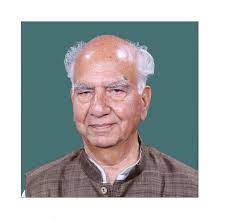
- SHANTA KUMAR committee recommendations
- Conclusion
- With around 16.5% population below poverty line (MPI - UNDP), effective PDS is sine qua non for ensuring food security.
Issue of Buffer Stock and Food Security
- Buffer stock refers to the reserve of food grains maintained by the government to ensure food security and stabilize prices.
- Food security
- Availability, accessibility, affordability, nutrition, food safety, sustainability, equity
- Importance of Buffer Stock
- Stabilize food grain prices by controlling supply
- Provide emergency relief during natural disasters
- Ensures consistent supply of food grains for PDS
- Supports food security initiatives
- Example: Mid-Day Meal and Integrated Child Development Services (ICDS)
- Issues Related to Buffer Stock Management
- Overstocking leads to wastage
- Financial Burden: Maintaining large buffer stocks incurs high storage and maintenance costs.
- Insufficient modern storage facilities
- Inefficient handling and management practices
- Leakages and Diversion
- Example : Reports of PDS being siphoned off to the black market.
- Poor Quality Control
- Need for Food Security
- Basic Human Right
- Preventing Malnutrition
- Productive Workforce
- Reducing Poverty
- Supporting Farmers
- Challenges to Food Security
- Increasing Demand due to population growth
- Climate Change reducing crop yields and crop failure
- Urban-rural divide in access to nutritious food
- Overuse of natural resources threatens sustainable agriculture.
- Inefficient supply chains lead to significant food wastage.
- Price fluctuations in food prices can lead to affordability issues.
- Impact of Government Procurement & Distribution
- NFSM And other Food Security Related Government Initiatives
- Measures
- Comprehensive Agricultural Reforms:
- Organic farming, crop diversification, and conservation agriculture.
- Irrigation
- Land pooling and cooperative farming
- Technological Innovations
- Example: Precision farming, drip irrigation, and genetically modified crops.
- Strengthening Public Distribution Systems
- Social Safety Nets
- Example: PM POSHAN, NFSA 2013
- Community Participation
- Example: Engaging Farmer producer organizations (FPOs) and self-help groups (SHGs) in rural India.
- International Cooperation
- Example: FAO Programs
- Entrepreneurship
- Localized Food processing
- Comprehensive Agricultural Reforms:
- Fisheries
- Contribute 1.09% and over 6.72% to the country’s GDP and agricultural GDP respectively.
- Pradhan Mantri Matsya Sampada Yojana
- Fish Farmers Development Agencies (FFDAs)
- National Marine Fisheries Action Plan (NMFAP)
- State of World Fisheries and Aquaculture (SOFIA) by FAO
- Blue Revolution
- Fisheries and Aquaculture Infrastructure Development Fund (FIDF)
- Poultry
Technology Missions
- Technology Missions are focused initiatives aimed at enhancing agricultural productivity, sustainability, and profitability through the integration of advanced technologies.
- National Mission on Sustainable Agriculture (NMSA)
- Soil Health Card Scheme
- Pradhan Mantri Krishi Sinchai Yojana (PMKSY)
- National Food Security Mission (NFSM)
- Input Management: Distribution of high-quality seeds and fertilizers.
- Integrated Pest Management: Use of bio-pesticides and traditional practices.
- National Horticulture Mission (NHM)
- Mission for Integrated Development of Horticulture (MIDH)
- National Mission on Agricultural Extension and Technology (NMAET)
- Kisan Call Centers (KCC)
- Mobile apps like mKisan
- National Mission on Oilseeds and Oil Palm (NMOOP)
- SIR M. VISVESVARAYA and Water Engineering:
- Irrigation Expertise
- Krishna Raja Sagara Dam, Karnataka
- Flood Control systems
- Musi river, Hyderabad
- Block System of Irrigation
- Industrial Water Supply Schemes
- Water storage and irrigation projects for arid regions of Deccan Plateau
- Advocated for engineering education
- Hydropower generation
- E.g. Shivasundaram Karnataka
- Irrigation Expertise
- DR. M. S. SWAMINATHAN and Agricultural Science:
- Green Revolution
- High-Yielding Varieties
- E.g. Wheat
- Food fortification
- E.g. Vitamin A and Zinc
- Crop Improvement
- Sustainable Agriculture
- Agricultural research : M. S. SWAMINATHAN Research Foundation (MSSRF)
- Biotechnology Advancement
- Farmers’ Welfare
- Evergreen revolution
- Revolutions
- White - Milk and milk products
- Yellow - Oil seeds
- Blue - Marine products
- Golden - Honey , fruits
- Golden Fiber - Jute
- Silver - Cotton
- Pink - poultry and Meat
- Brown - cocoa
- Grey - fertilizers
Economics of Animal Rearing
- Introduction
- Livestock sector plays an important role in Indian economy. It contribute 4.11% of GDP and 25.6% of total Agriculture GDP.
- Growing at 13% CAGR from 2014-15
- Animal rearing, or animal husbandry, involves the breeding and raising of livestock for various purposes, including meat, milk, fibre, eggs, and labour.
- Economic Importance of Animal Rearing
- significant source of income for farmers
- generates employment opportunities in rural areas
- Example: creating jobs in breeding, feeding, and processing.
- Vital for food security
- Example : milk, meat, eggs - important dietary component
- Supports crop farming through manure
- Potential
- India has 56.7% of the world’s buffaloes, 12.5% cattle, 2.4% camel
- India accounts for 20 percent of the world’s livestock population.

- Women - 70% of the workforce engaged in the livestock sector. [NABARD]
- Issues | Challenges
- High Input cost in fodder and veterinary services
- Nutritional Deficiencies : Shortage of feed and fodder leads to malnutrition and shunted growth
- 35% deficit in green fodder and a 10% deficit in dry fodder
- Resource constraints : 2.3% of the land area of the world to maintain nearly 10.7% of global livestock.
- Animal Health: Increased susceptibility to communicable diseases
- Example: Avian influenza outbreaks
- Low productivity
- Annual milk yield of Indian cow is only about 50% of the global average.
- Inadequate Infrastructure
- like cold chain storage facilities, dairy processing units, meat processing plants, etc.
- Unorganized Markets: leads to high price fluctuations and exploitation of farmers.
- Limited Extension Services
- veterinary services, farmer training
- Climate Change Impact like heat stress, flooding and diseases
- Measures for promoting
- Promoting breeding programmes
- Establishing breed improvement centres
- National Artificial Insemination Programme
- Nutritional Initiatives : balanced feed rations
- Fodder and Feed Development Program
- Vaccination and Disease Control:
- Lumpi Provac, Goat Pox vaccine
- Market Reforms
- Technological Advancements
- Raising Awareness in farmer’s
- On modern livestock rearing practices, animal health, nutrition, and breeding techniques.
- Access to institutional Credit
- SHG’s, Specialized loan schemes, microfinance options
- Credit Guarantee Scheme under AHIDF
- Animal Healthcare Services
- well-equipped veterinary clinics, mobile veterinary units
- vaccinations, disease control programs, and preventive care
- Fodder Development
- Encourage production of millets
- Ensure adequate nutrition for livestock
- Formation of Farmer Producer Organizations (FPOs)
- Cooperatives like Amul
- Provide collective bargaining
- Entrepreneurship (National Livestock Mission, Dairy Entrepreneurship Development Scheme)
- climate-smart livestock practices
- Punganur cows; biogas generation; agrosilvi-pastoral systems
- Promoting breeding programmes
- Skill Development and Training
- Value Chain Integration
- Policy Support and Institutional Reforms
- National Livestock Mission (NLM)
- Technology Adoption
- digital platforms, mobile applications, and smart farming technologies
- data-driven decision-making
- Way Forward
- Integrated Farming Systems
- Waste Management
- Example: Biogas production from cattle dung for renewable energy.
- Promoting organic methods of livestock rearing
- E.g. using natural feed
- Government initiatives
- National Livestock Mission
- Rashtriya Gokul Mission
- National Programme for Dairy Development (NPDD)
- National Cattle and Buffalo Breeding Project
- Credit Guarantee Scheme for Livestock Sector
- The trust worth Rs. 750 crores established
- Interest subvention of 3%.
- Loans up to 90% of the total project cost
- Animal Husbandry Infrastructure Development Fund (AHIDF)
- Conclusion
- Farmer’s income, SDG (1,3,8,10,12)
Food Processing
- Introduction
- Food processing means transformation agricultural products into consumable food items or ingredients
- E.g. wheat to biscuit
- contribution to GDP (10.5 % to manufacturing and 11.5 % to agriculture sector)
- Food processing means transformation agricultural products into consumable food items or ingredients
- According to FAO, The Indian food processing sector is projected to grow at around 7.6% CAGR until 2030.
- 13.7% employment in unorganized sector.
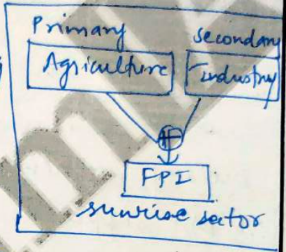
- Data
- India is 2nd largest producer of agriculture and allied sectors products. However there are untapped market in secondary and tertiary food processing.
- Only 10% of India’s food is processed.
- Accounts for 32% of the country’s total food market.
- Contributes
- 14% of Gross Value Added (GVA) in industries
- 6% of total industrial investment.
- Scope & Potential in India
- Diverse Agro-Climatic Conditions: allow cultivation of a wide range of crops.
- Large Consumer Market: with over 1.4 billion people and increasing urbanization
- Export Potential: due to cost-effective production.
- Contribute 13% of India’s exports which can increase significantly
- Value Addition : Conversion of fruits into juices, purees, and dried forms.
- Employment generation :
- Can generate 9 million jobs (ASSOCHAM)
- Significance
- Reduction of Post-Harvest Losses:
- 1/3 of global food gets wasted - World Resources Institute (WRI)
- Employment Generation
- E.g. in processing, packaging, logistics, and marketing sectors.
- SAMPADA scheme - 5.6 lakh jobs (ES 2020)
- Crop diversification
- Improve productivity of agriculture sector
- E.g. Adopting modern agricultural practices, technologies
- Food Security
- Reducing wastage
- Preserve the shelf life of perishable food produce
- For e.g. Frozen peas/ corn
- Export potential
- For e.g. Indian Basmati rice, spices, marine products, meat, and ready-to-eat meals.
- Rural Development
- reduces rural-urban migration
- Social impact
- Empowers local communities, particularly women.
- Curb distress migration
- Health and Nutrition benefits
- fortifying foods, promote healthy food choices for consumers
- Technology Adoption
- modern machinery, processing techniques, and packaging technologies
- Drives Research and innovation in agriculture
- E.g. biotechnology
- Consumer Convenience
- Ready to Eat (RTE) and Ready Serve (RTS) Food
- Support for Allied Industries:
- stimulates growth in packaging, logistics, and refrigeration industries.
- Reduction of Post-Harvest Losses:
- Opportunities
- Growing market
- E.g. largest population, growing middle class
- Increasing Urbanization and Changing Lifestyles
- Greater preference for convenience foods, processed snacks, and packaged meals.
- Rising Health Consciousness
- demand for healthier food options, organic and natural products
- Government Initiatives and Support
- Pradhan Mantri Kisan Sampada Yojana, Make in India, and Ease of Doing Business
- Export Potential: due to strong emphasis and increasing FTAs
- Merchandise Exports from India Scheme (MEIS)
- Growing market
- Challenges | reasons for poor acceptance
- Inadequate Infrastructure
- Lack of Cold chains, and processing unit, preservation techniques
- logistics, transportation, storage, and quality control
- Fragmented supply chains due to lack of integration between producers and processing units
- Raw Material Quality and Availability
- Seasonal variations, fluctuations in yield
- Fragmented unorganized nature of industry
- Poor marketing
- Lack of innovation in introducing new products to meet evolving consumer preferences
- Quality Control:
- contamination risks, at farm level, policy and regulatory level
- Lack of institutional credit
- Lack of standardization
- FPO mark - food safety and standards act, 2006 - होना चाहिए
- Informalization of the sector
- 75% unorganized sector
- Shelf Life and Preservation
- Regulatory Compliance
- Food safety clearances; labour laws
- Supply Chain Efficiency
- timely delivery, and optimizing inventory management.
- Inadequate Infrastructure
- How food processing can increase farmer’s income
- Value addition
- Converting tomatoes to ketchup
- Reduce post harvest losses
- 30% post harvest losses - NABARD
- Contract Farming ensure assured prices and market for farmers.
- ITC’s e-Choupal initiative
- Access to Better Inputs : like seeds, fertilizers, and technical know-how from food processing companies
- PepsiCo’s contract farming for potatoes
- Price stability : by creating demand for processed good enable stable income for farmers
- Value addition
- Measures | Government policy and initiatives
- Pradhan Mantri Kisan SAMPADA Yojana (PMKSY):
- Mega food parks scheme : 42 mega food parks across India established
- 100% Foreign Direct Investment (FDI):
- PM Formalization of Micro Food Processing Enterprise Scheme (PMFME)
- Agro processing clusters
- Agri Export Zones
- Promoting farmer producer organizations(FPO), SHG, cooperatives
- Enable microenterprise
- PPP with MNC’s like Cadbury, Dabur, ITC.
- कृषि सम्मान Awards
- Way forward
- Align SEZs and Food Parks
- Supply chain management
- Promotion of agricultural markets (mandis) for procurement
- Integrated Cold Chain, Value Addition and Preservation Infrastructure.
- Subsidizing infrastructure development, tax benefits
- SURJIT BHALLA committee recommendation of standardization and internationalization of food processing.
- Conclusion
- Food processing has potential to solve the key challenges faced by India. Considering it’s importance there is need for reform and proactive policies.
Land Reforms
- Land Reforms
- Introduction
- Land reform refers to changes associated with redistribution of land to ensure social justice enhancing agricultural productivity
- Rationale for Land Reforms
- Reducing inequality
- Income, vocation and security to Landless, poor and marginal farmers
- Improving agricultural productivity
- Food security
- Promoting social justice
- Reducing inequality
- Types of Land Reforms - R-Rtz-SC
- Abolition of Zamindari
- Tenancy Reforms - security of tenure, fair rents
- Land Ceiling on land holdings
- Redistribution of land
- Cooperative farming
- Regulation of rent
- Needed one
- Consolidation of Land holdings
- Updating Land Records
- (a) abolition of intermediaries like zamindars, jagirdars, inamdars, etc; (b) tenancy reforms like security of tenure, fair rents, etc; (c) imposition of ceilings on land holdings; (d) distribution of surplus land among the landless labourers; and (e) cooperative farming.
- Problems in Implementation of Land Reforms
- Resistance from powerful landowners
- Difficulties in implementation : due to lack of political will, administrative capacity
- Incomplete and Inaccurate Records
- Fragmented Landholdings:
- Success of Land Reforms
- West Bengal
- Kerela
- Positive Impact of Land Reforms
- Tenancy reforms increased income and prevented arbitrary eviction
- E.g. 1 crore tenants got ownership rights in Assam, WB, Kerela
- Land redistribution
- Economic - investment, mechanization
- Social - protect farmer’s from getting debt ridden, reduce farmer’s suicides.
- Land Ceiling led to redistribution among landless farmers.
- Ownership encouraged investment in land increasing productivity
- Land ownership facilitated access to institutional credit
- Joint titling provided women with land rights
- Social justice : dismantled traditional feudal structure
- Social mobility : Ownership enhanced social status
- Cooperative farming reduced input cost increasing efficiency
- increased political awareness and participation
- Access to credit and insurance
- Improved land use planning and resource management
- Tenancy reforms increased income and prevented arbitrary eviction
- Arguments for land ceiling
- Redistributing land to smaller farmers increase cultivation intensity and productivity per hectare
- Reduces Inequality
- Arguments against
- Discourages investment in modern infrastructure and technology
- Implementation challenges in enforcing land ceilings
- land fragmentation
- Way forward
- Comprehensive Surveys and Record Updates:
- Invest in robust digital infrastructure
- Integration of technologies like blockchain for tamper-proof record-keeping and GIS for precise mapping
- Agriculture friendly land reforms
- Model Land Leasing Act, 2016
- Government initiatives
- The Agricultural Land (Ceiling and Holding) Act of 1960
- State Abolition of Intermediaries Act
- Tenancy Acts
- The Bhoodan Movement : under leadership of ACHARYA VINOBA BHAVE
- Recent Initiatives -
- Land Leasing, Land Acquisition, Rehabilitation & Resettlement Act, etc.
- Model agriculture land leasing act
- Role of Blockchain technology
- Real-time traceability and transparency
- Data integrity
- Digital India Land Records Modernisation Programme (DILRMP)
- Creates an audit trail and tamper-proof records
- Components
- Unique Land Parcel Identification Number (ULPIN)
- National Generic Document Registry System (NGDRS)
- Bhu-Naksha
- Survey of Villages Abadi & Mapping with Improvised Technology in Village Areas (SVAMITVA) Scheme
- Bhoomi Project (Karnataka)
- J.C. KUMARAAPA Committee
- Abolition of intermediaries
- Land consolidation
- Land redistribution and land ceiling
- Tenancy reforms